Celeriac Schnitzel
August 31, 2025On my quest to find vegetarian alternatives for meat-based meals,
I often stumble across a lot of amazing things.
But one thing that blows away everything else is Celeriac Schnitzel.
Once you eat one, you can’t hold back.
Ingredients
- Celeriac (obviously)
- 3 eggs
- Flour
- breading mix / breadcrumbs
- salt & pepper
What you’ll also need:
- a large pan (for frying)
- about 1.5 L of oil (depending on the size of the pan)
- basic kitchen utensils
Cutting slices
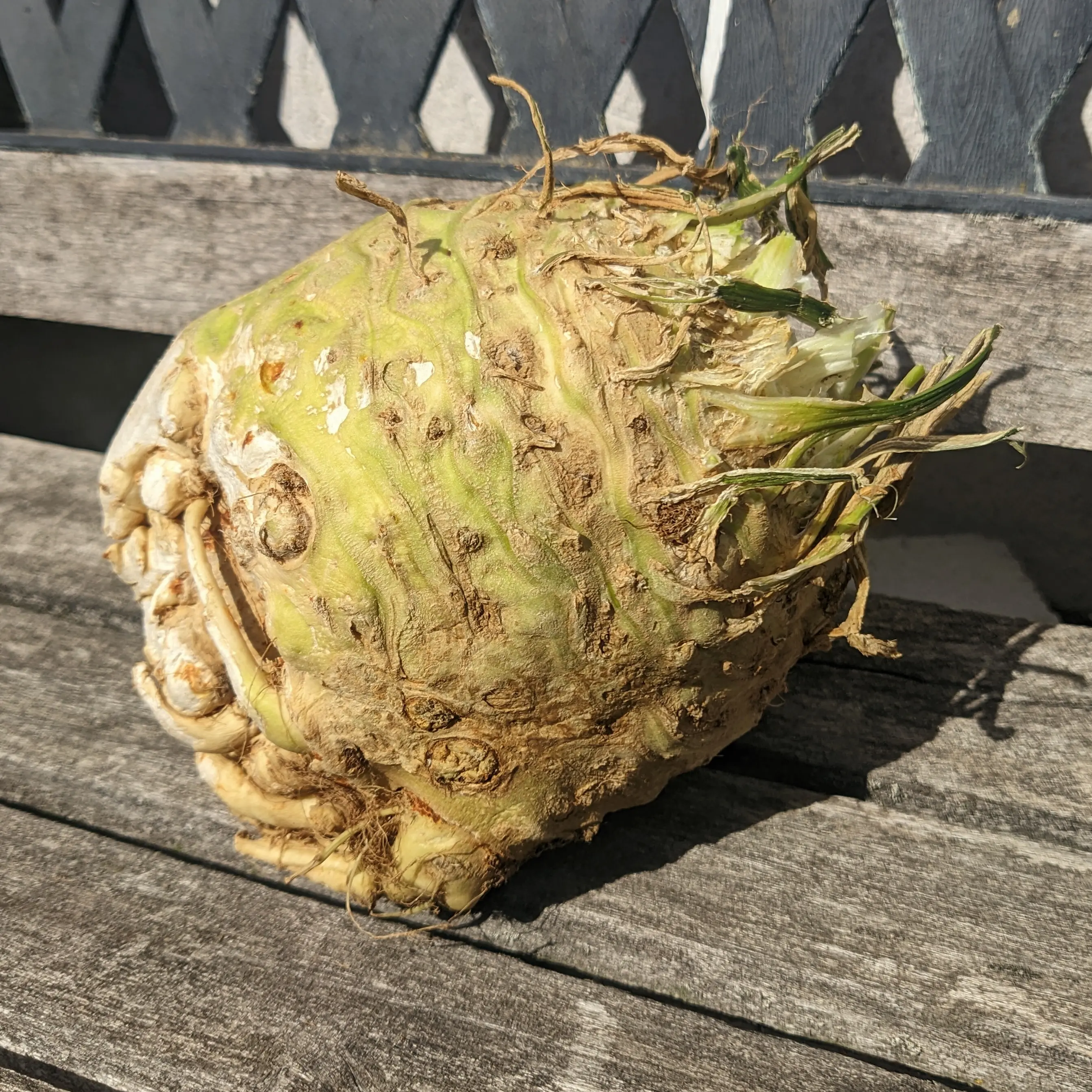
As we are starting with a fresh celeriac for this recipe,
the first step is peeling the celeriac.
I prefer to use a large, sharp knife to cut off the skin until I reveal the white inside.
It doesn’t leave a perfectly round result, but that doesn’t matter as long as the skin and green parts are gone.
Afterwards, I use the same knife to cut the celeriac into slices that are about 8 mm thick.
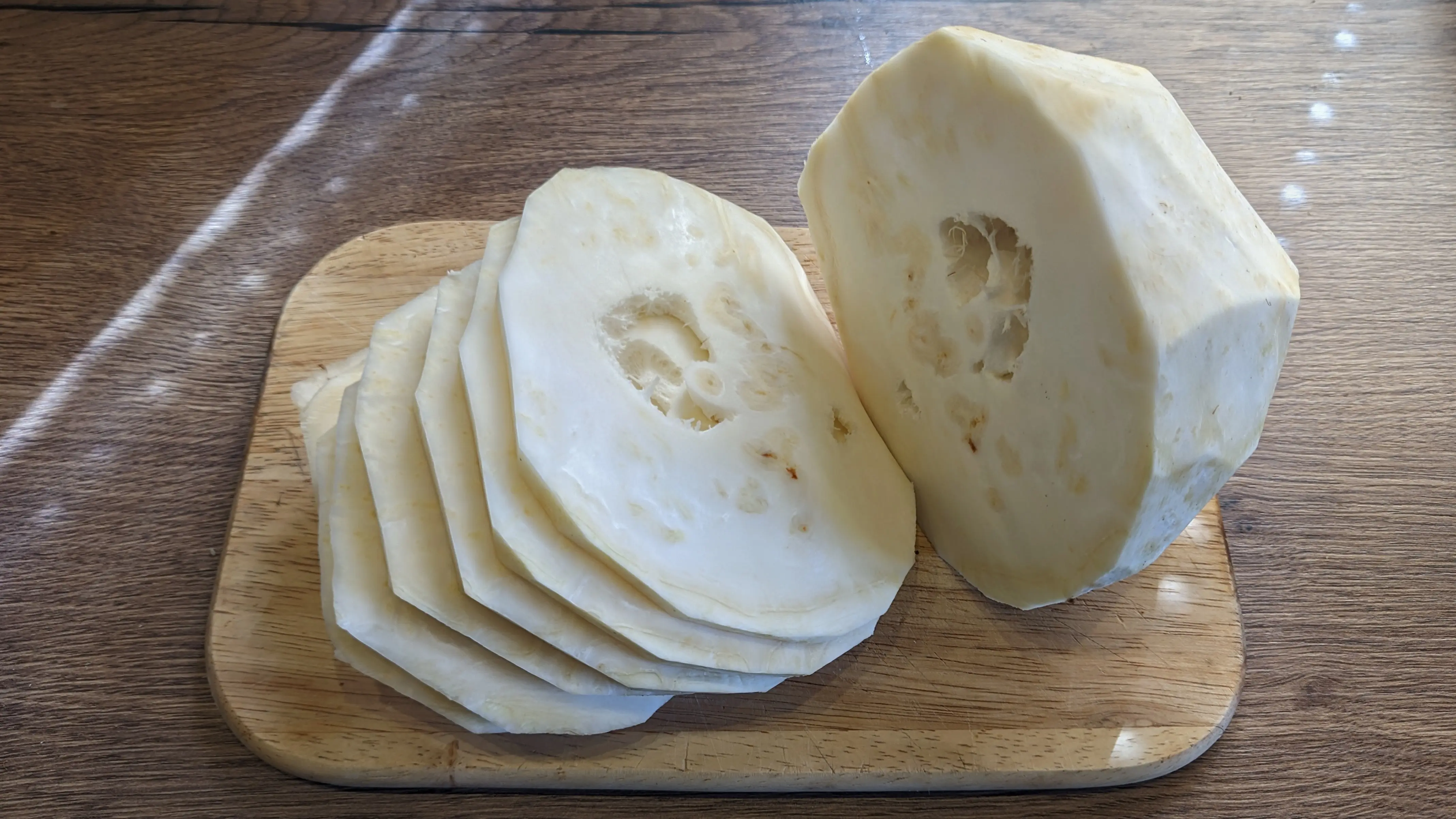
Depending on the size of your celeriac, you might end up with fairly large disks.
If you prefer, you can cut them in half.
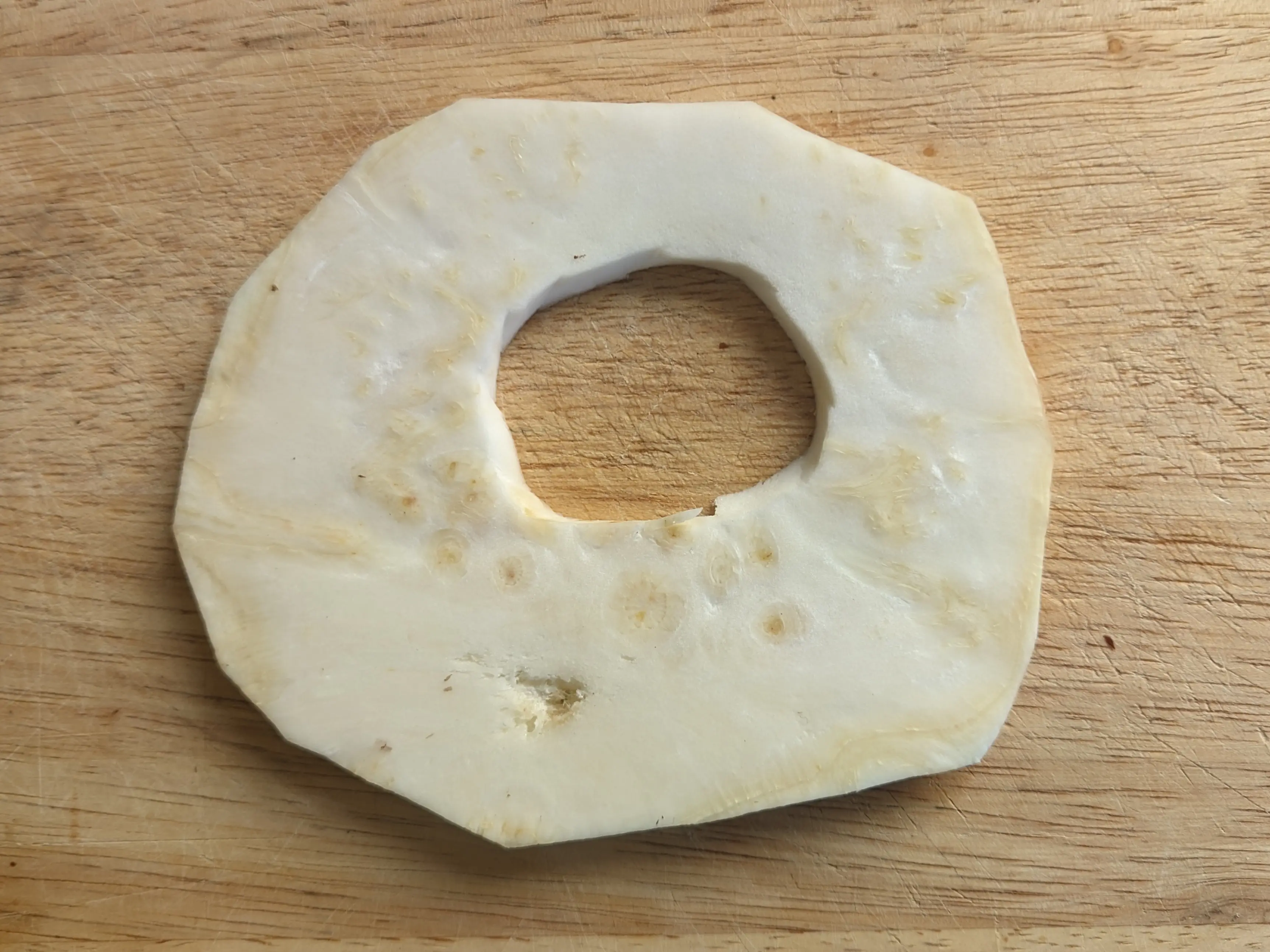
Instead of cutting them into smaller pieces, I prefer using a knife to even out the small inside holes for larger pieces.
This makes it easier for the breading to stick and allows using a fork to flip the slice later.
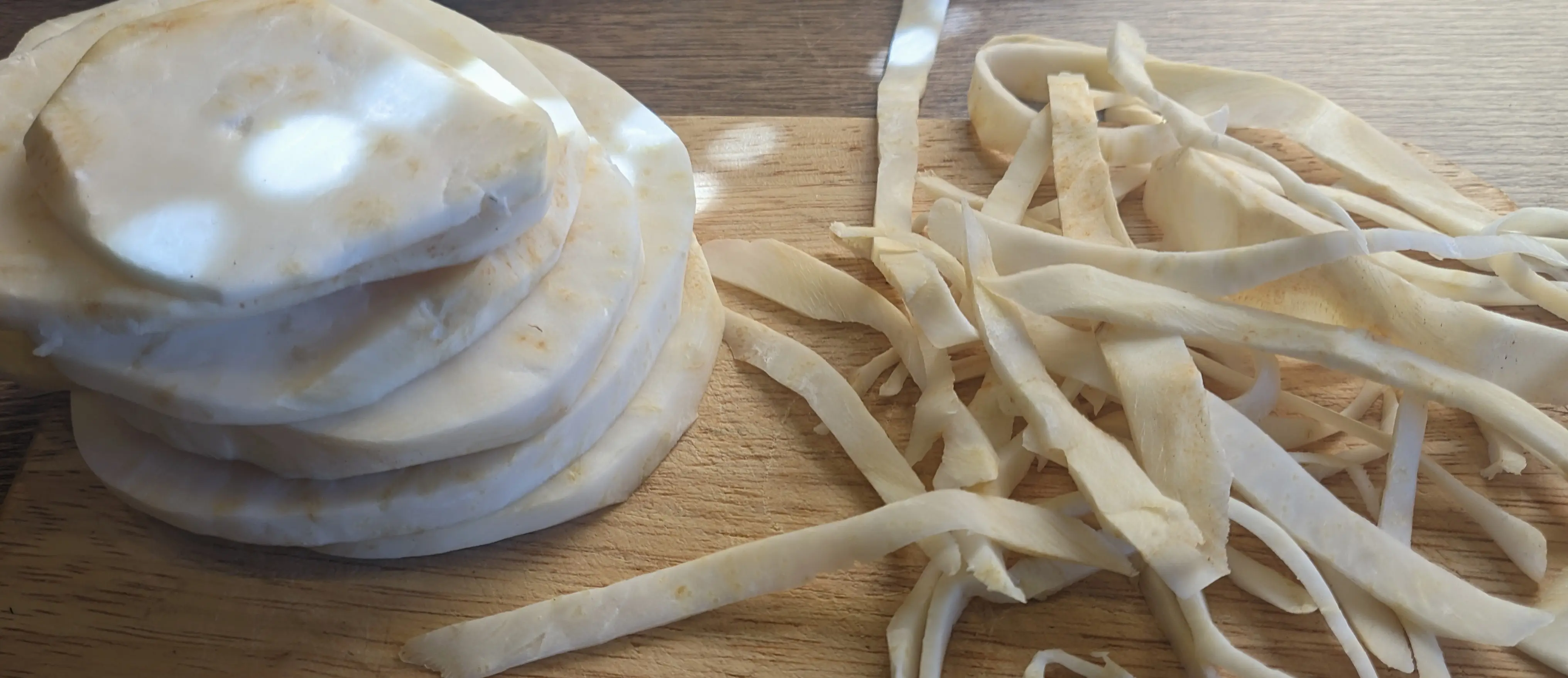
As a last touch, I also like using a carrot peeler to even out the outside by running the peeler around a couple of times.
That way you end up with a straight edge, which gets you a more uniform result later.
Unfortunately, this results in some off-cuts, but luckily you can freeze them and use them for a soup or something else.
Breading
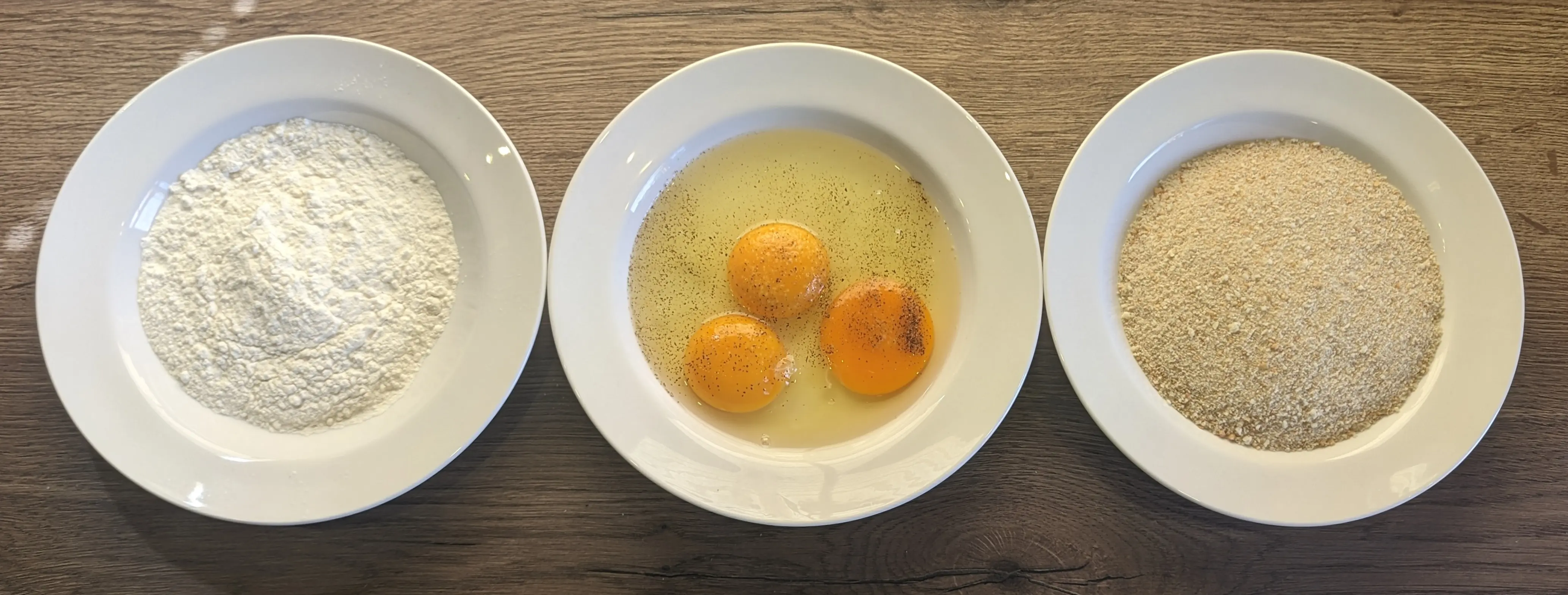
We’ll be following a normal breading procedure by first coating the slices in flour on all sides,
moving them into a beaten egg mixture, and then coating them in breadcrumbs.
You can probably also get away with using vegan alternatives, as long as you can make them stick to the celeriac.
Ideally, you shouldn’t leave the celeriac slices sitting uncoated for too long,
as it will cause them to dry out.
When they are freshly cut, they are still slightly wet, which improves the flour adhesion
and thus ensures the breading will stick to it.
I used three large eggs in total, which I added to a small plate, beat together, and added some salt and pepper.
The exact amount of flour, eggs, and breadcrumbs depends on the amount and size of your celeriac slices.
If your mixture stops sticking to the celeriac, the slices have either dried out too much,
or one of your plates doesn’t have enough flour/eggs/breadcrumbs on it.
I often run out of breadcrumbs, so I leave them close by to refill the plate.
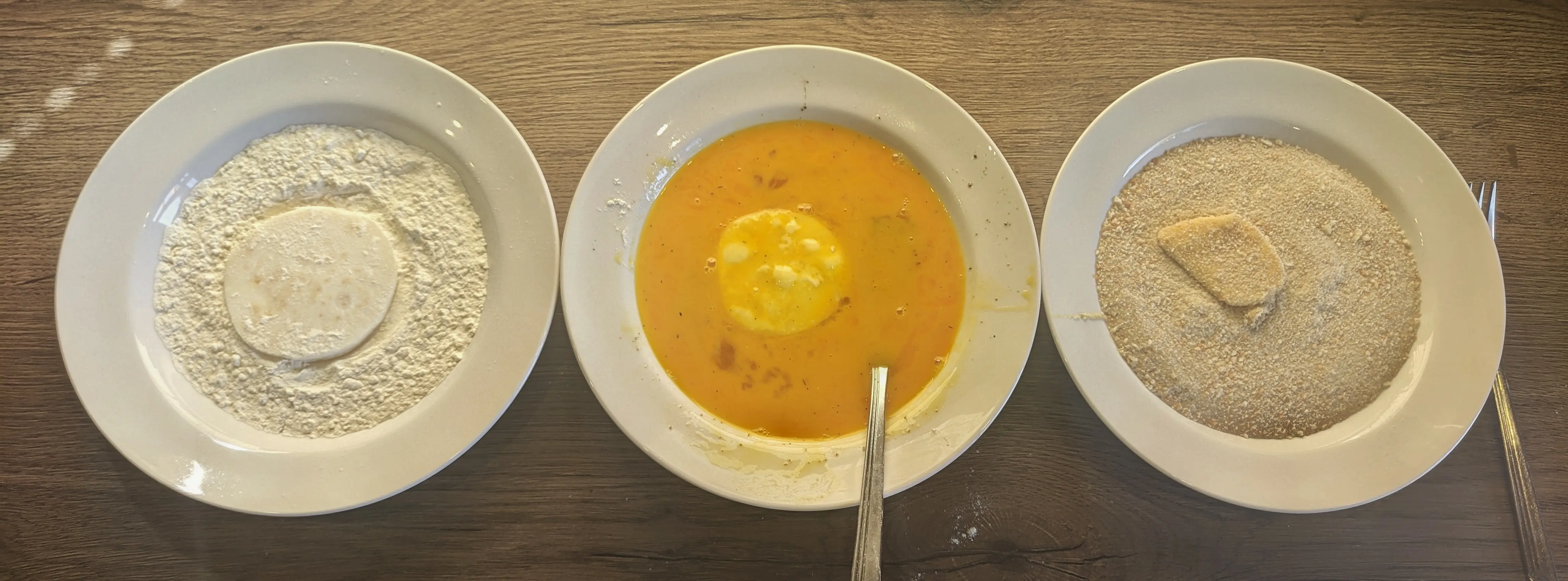
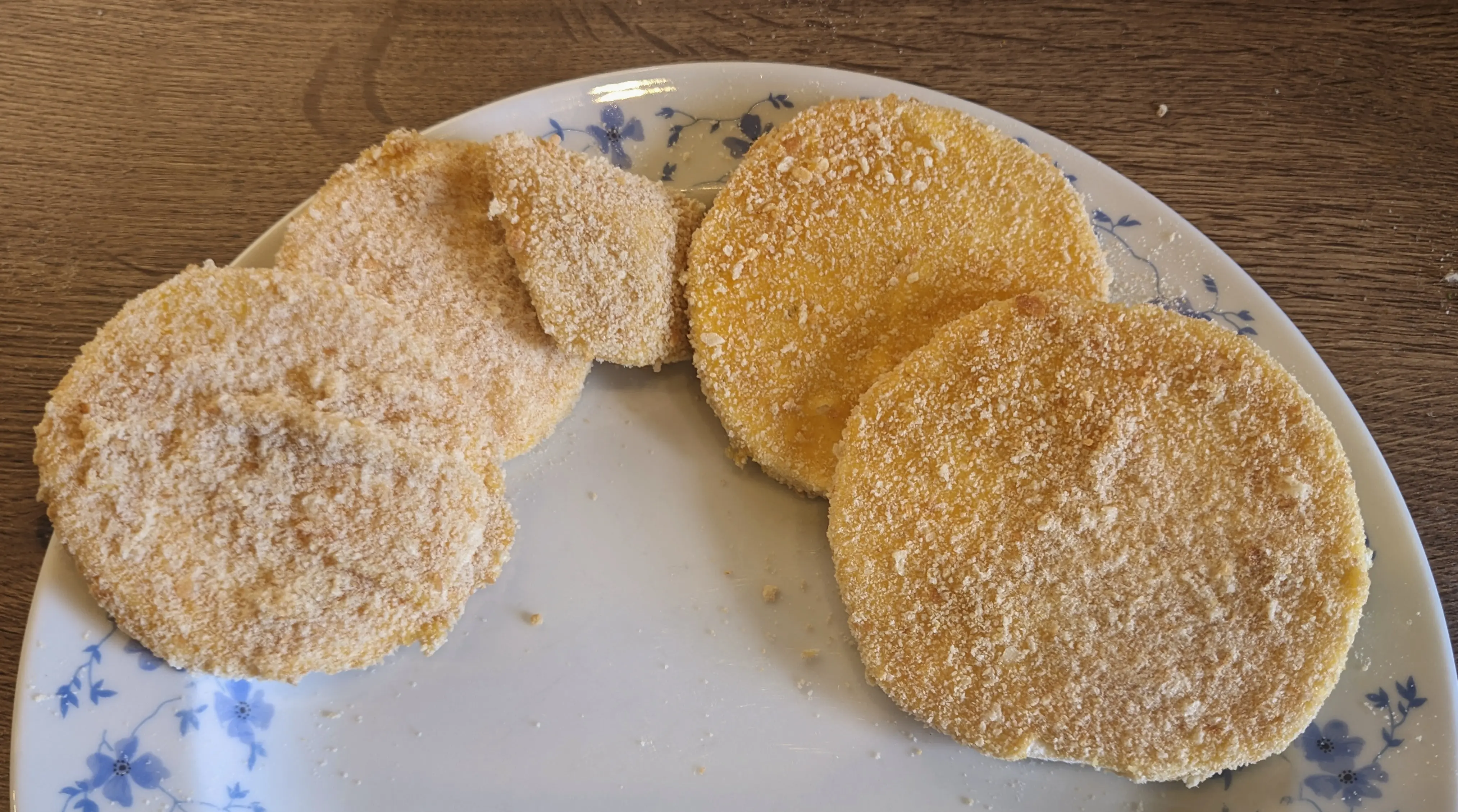
I move all slices through this three-step process and then store them on a plate until I can get them into the oil bath.
You can also place them in a frying pan directly, but that can be more stressful.
Frying
After preparing all the slices, we can finally fry them.
I prefer using a large, deep frying pan for this, filled about 2 - 3 cm deep with oil,
as you don’t want the celeriac touching the bottom of the pan.
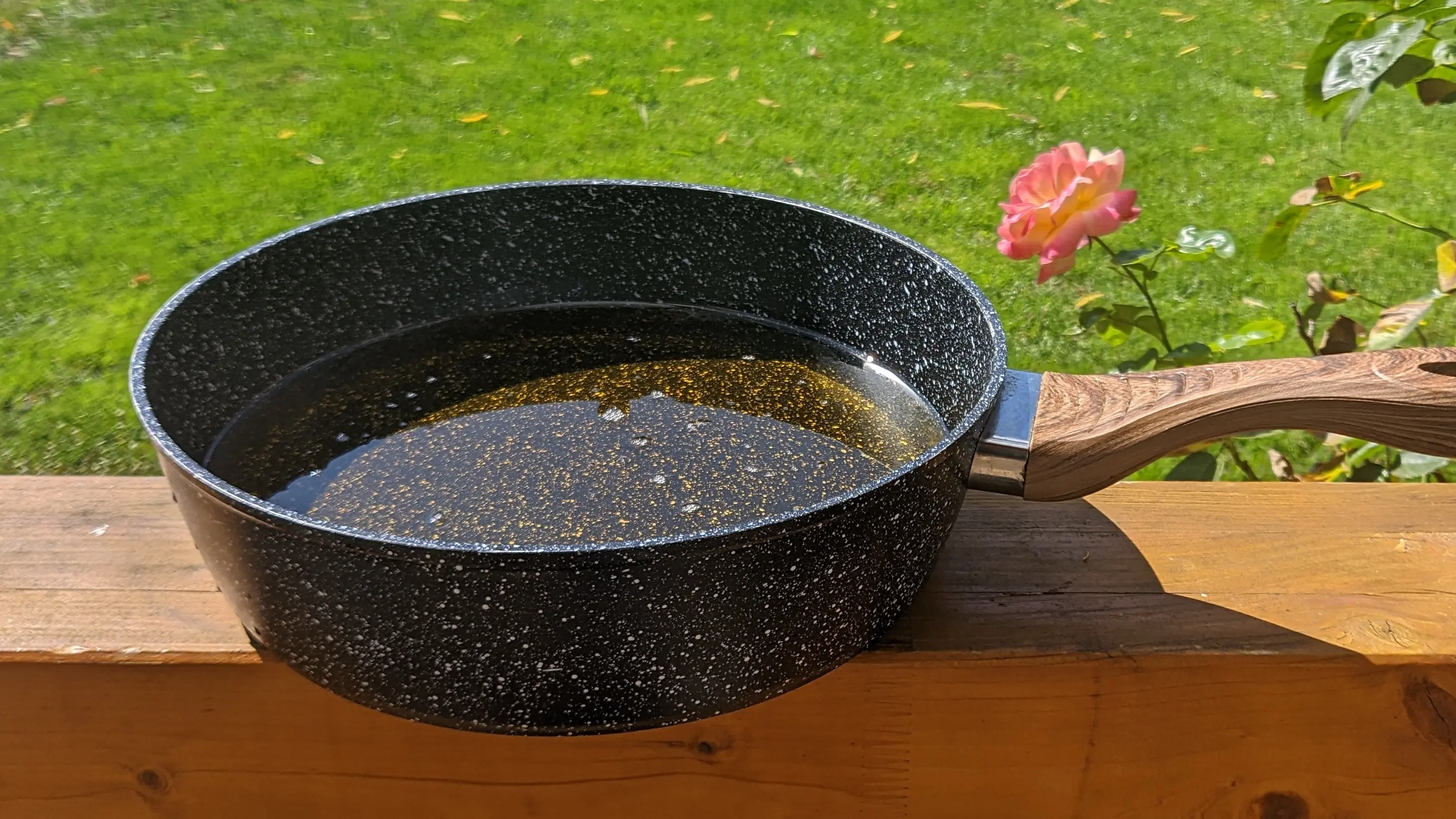
I put the pan on maximum heat and wait till the oil is hot.
You can either use a wooden stick and check for bubbles or just put a small sample piece into the pan
when you think it is hot enough and see how long it takes.
Afterwards, place about 3 to 4 slices into the pan at the same time.
You don’t want them to touch each other, as they could stick together or break off the breading.
Flip the slices after about one minute and leave them in the pan until they are golden brown.
I move mine onto a plate with a paper towel on it to absorb excess oil.
I also like to sprinkle them with some salt directly after taking them out of the oil bath. As I find that the salt interacts with the fresh and hot oily surface, almost melting it into the breading.
Also, don’t forget to let them cool slightly before trying one.

After frying, the celeriac goes somewhat soft, not nearly as hard as before, but still with some bite to it.
Because of its uneven texture, ripping it also makes it look like fibrous strands, vaguely similar to what you might expect from meat.
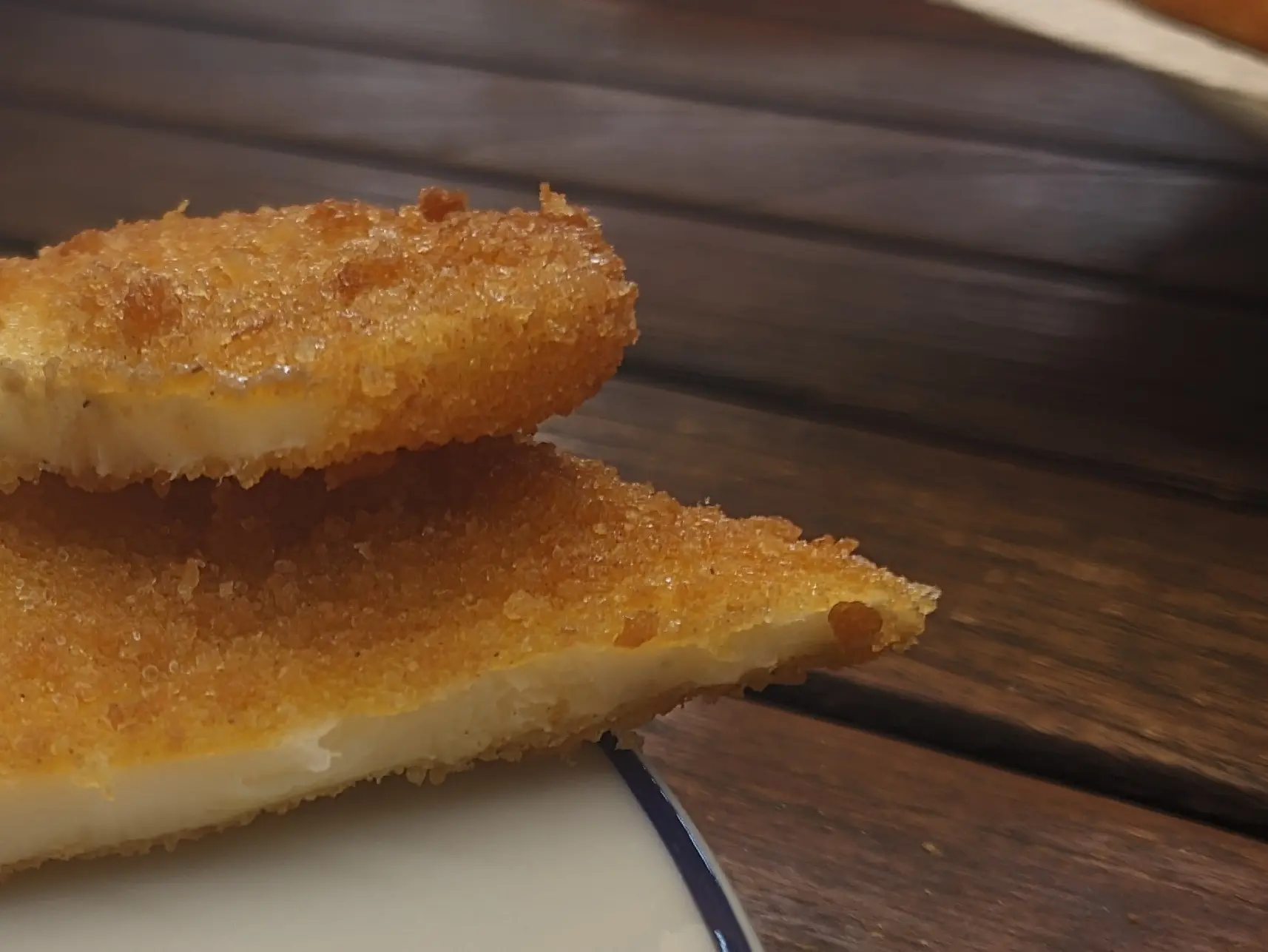
I often eat a couple of them before even finishing frying the entire batch.
But they are also great alongside potato wedges and a creamy carrot-kohlrabi sauce.