From old make new
October 30, 2025Sometimes stuff breaks,
but instead of throwing it away,
more often than not, you can simply recycle the old parts into something new to enjoy.
Today I’ll take you along on a mission to make fashionable earrings from old headphones.
(It’s pretty easy, actually.)
The headphones
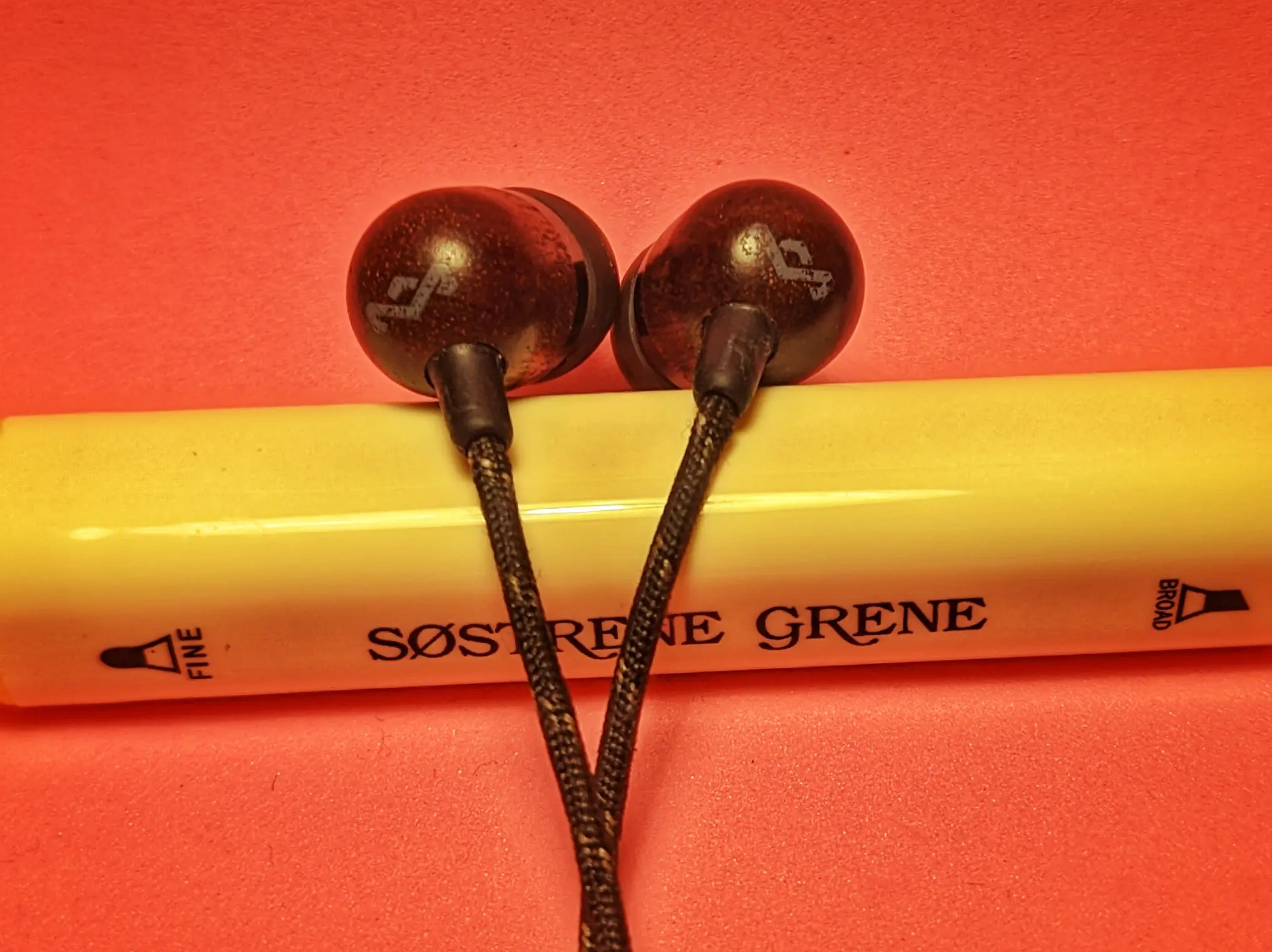
I’ve been using the same type of House of Marley headphones for a couple of years now.
I’ve actually ordered my second pair a while back, after the first one broke.
Unfortunately, the new pair also died recently,
and after having had some mild success making earrings from the first piece, I decided to try again.
As you might be able to tell from the photo shown above,
the headphones have a wooden outer shell, which comes together to a round section on the end.
We are trying to extract that curved dome section to make round, small, curved earrings.
Obtaining the wood
The earpieces are actually sealed against water from the outside, but it is fairly easy to cut the seal by running a utility knife along the seam between the wood and the metal core.
Afterwards, you should be able to pull out the core, leaving you with a rubber lining and the wood.
It can be removed by simply grabbing it using a pair of pliers and pulling on it until it comes off.
The adhesive sort of cracks when the elastic is stretched, making it come off cleanly.
Removing the logo
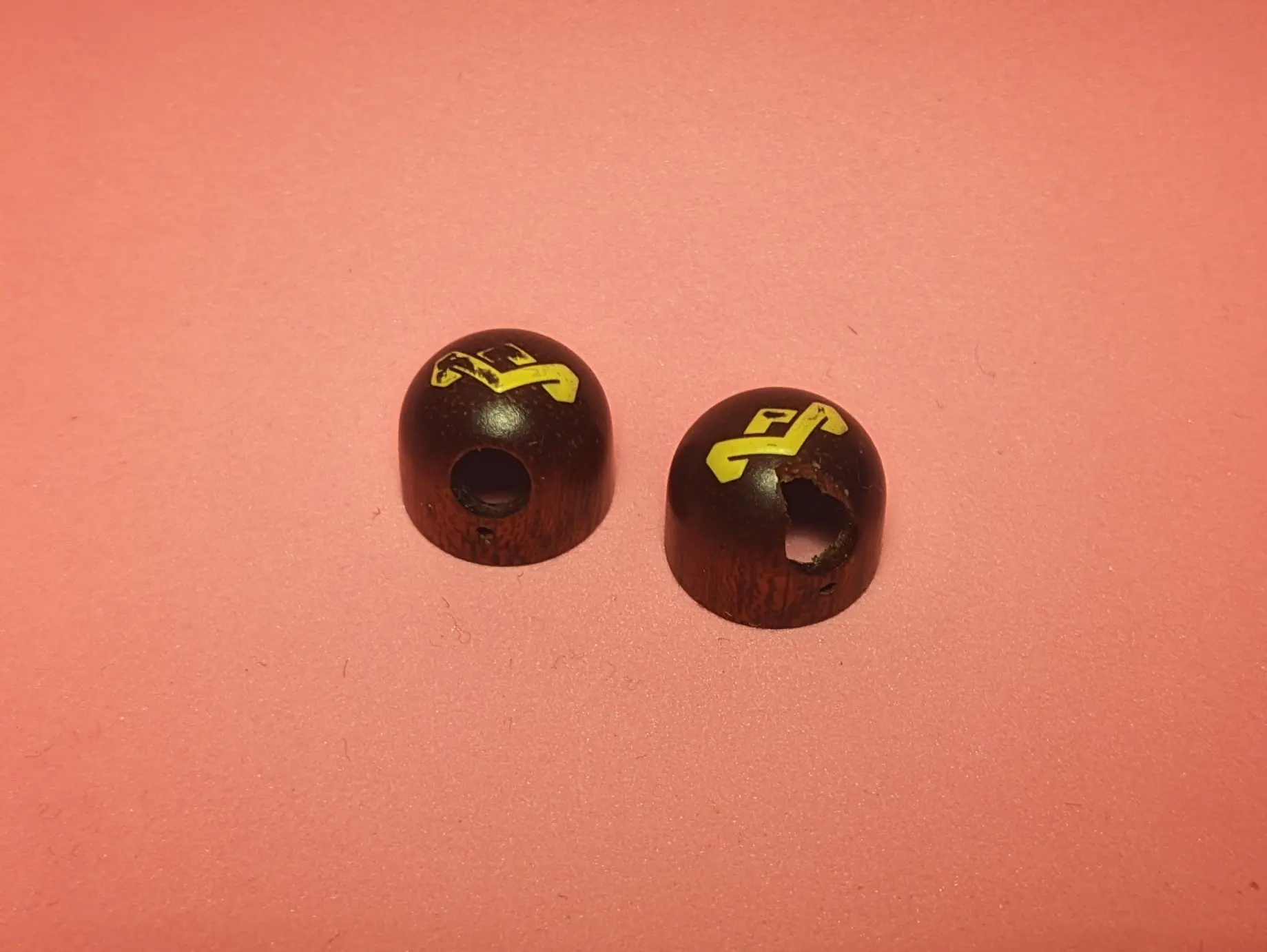
You might also have noticed the House of Marley logo right on the curved section.
The first thing we want to do is remove it, as right now, the earpieces are still fairly easy to hold on to.
As I’ve explained above, this is not the first time that I’ve made earrings from broken House of Marley headphones,
and I’ve found that using 180-grit sandpaper does an amazing job at removing the logo.
Sometimes a little paint residue is left along the edges of the logo,
but you can simply use a utility knife to scratch it off.
Don’t worry about leaving marks. As long as the scratches from the sandpaper are not too deep, they’ll be sanded flat when finishing the pieces.
Extracting the dome
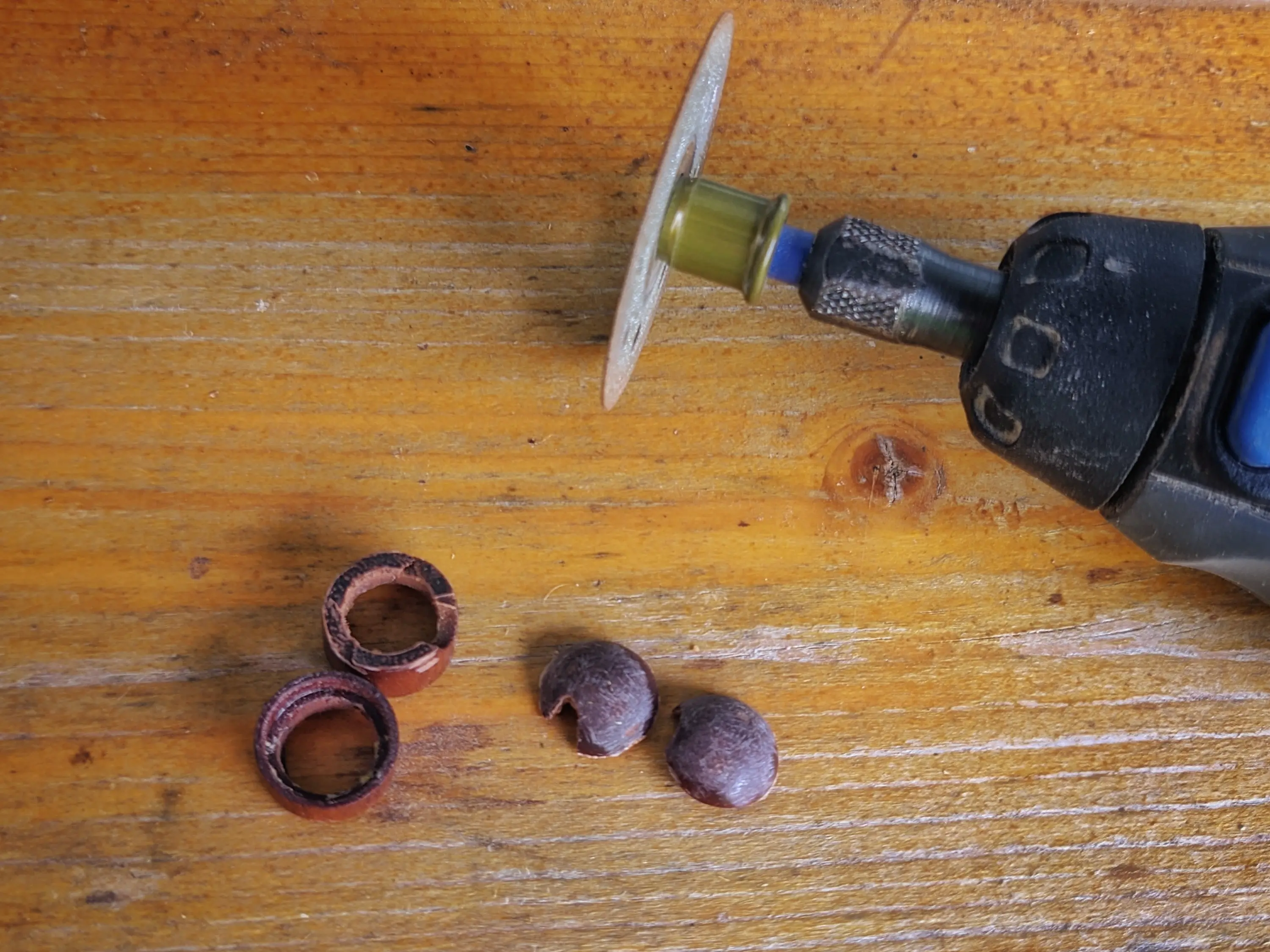
As most of the earpiece is made up of a straight cylindrical piece, we can use a Dremel to cut along the seam of the spherical section and the cylindrical base
I used a small rotary wheel on the Dremel and held the pieces using a pair of pliers.
I found it quite hard to do this with a vise, as the vise grips can easily break the wood.
To reduce burn marks, I’d also recommend going slowly around the entire object instead of trying to cut everything from one side.
Achieving the desired size
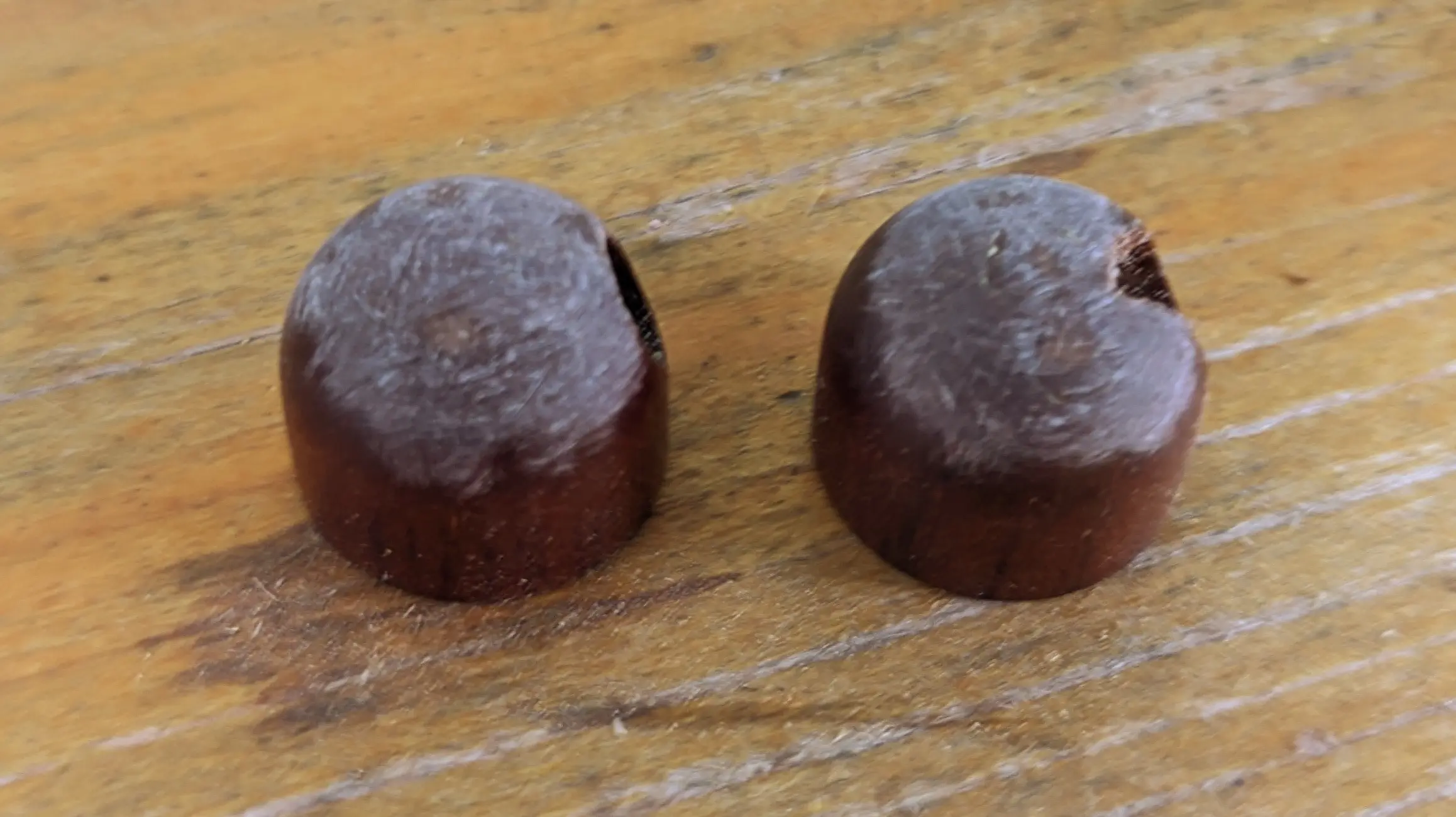
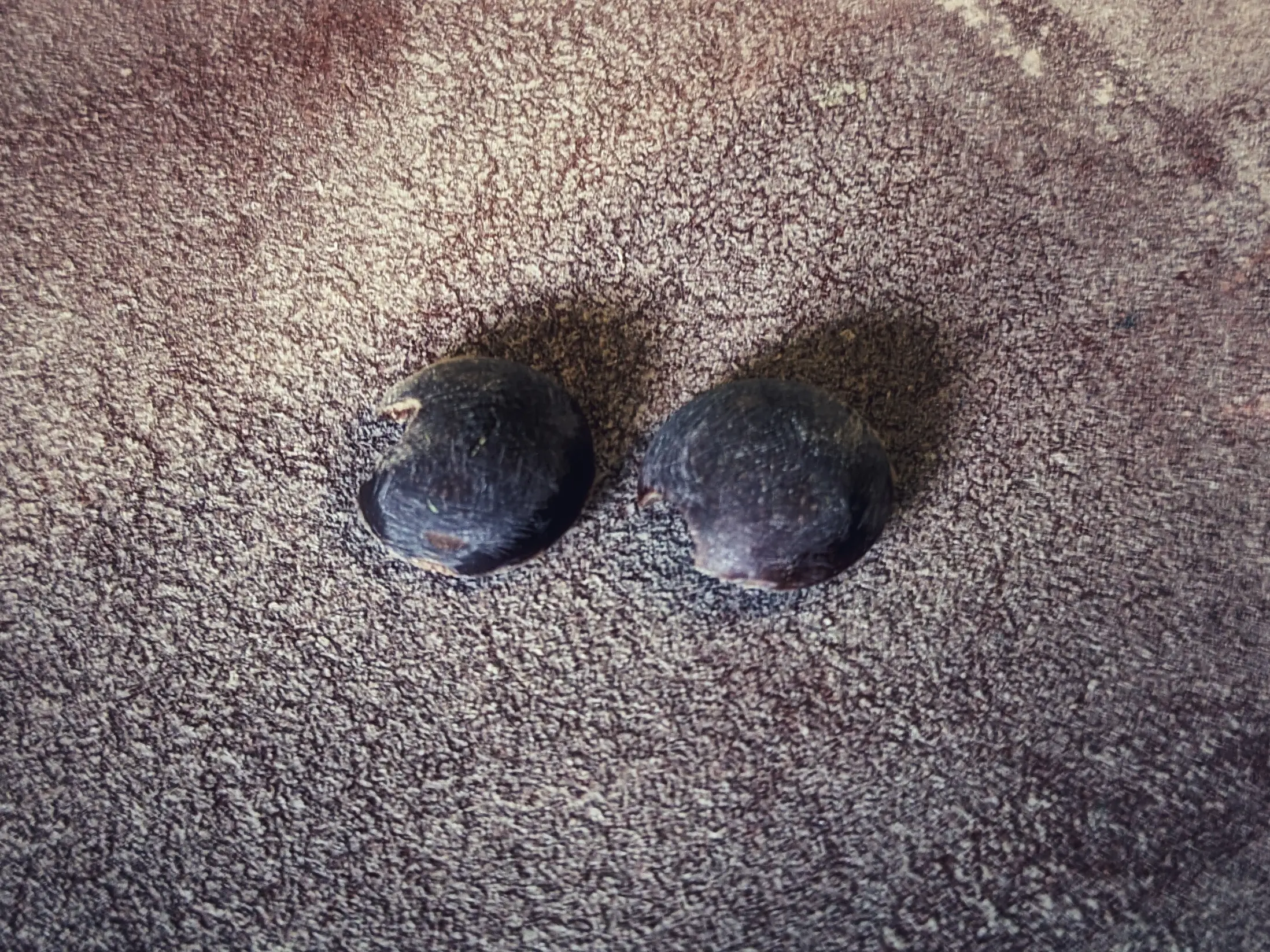
After looking at a couple of wooden reference earrings, I decided that 8 mm in diameter would be the perfect size, as they don’t appear massive when wearing it.
As the pieces are quite delicate, I decided on using 120-grit sandpaper to sand them flat,
checking the thickness and diameter every so often.
Once I got close to the 8 mm I used a screw head for size reference and as a guide to round off the edges.
Unfortunately, I broke off a piece of wood from one of the earpieces
and had to sand that part at an angle to give it a circular appearance.
This slightly offset the center of the sphere, but I reckon you won’t even notice it once I’m done.
Attaching the rod
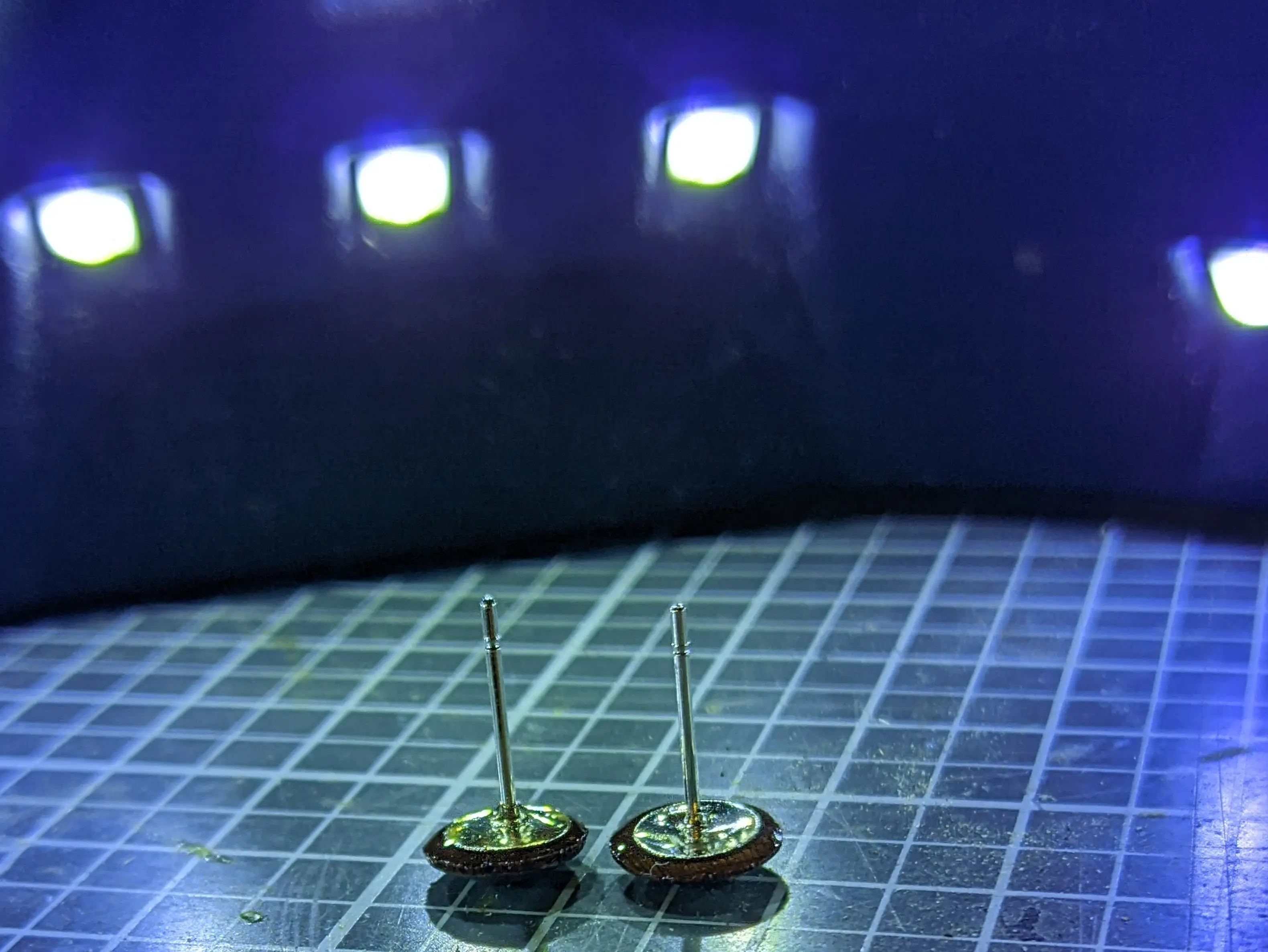
The wooden pieces are almost done now, but as they are quite small, I figured that sanding them with finer sandpaper and applying a topcoat would be easier after attaching the earring rods.
Similar to the last time I made earrings, we’ll be attaching the rods by dropping some UV resin on the back of the wood. Pushing the rods into the blob and slightly moving them around to equally distribute the resin. Afterwards, they are left to cure under a UV lamp for about four minutes. (I prefer rotating them every 30 seconds or so, to cure them more evenly.)
Finishing
With the wooden pieces safely attached to the rods,
you can hold them in your hand and sand them smooth.
I found that going from 400-grit to 600 and then to 1200 works wonders.
Lastly, I went ahead and put an applicator-pad attachment on the Dremel
and applied some wood-turning wax to them.
After leaving it to soak for a couple of minutes,
I simply wiped it off using an old piece of cloth.
Conclusion
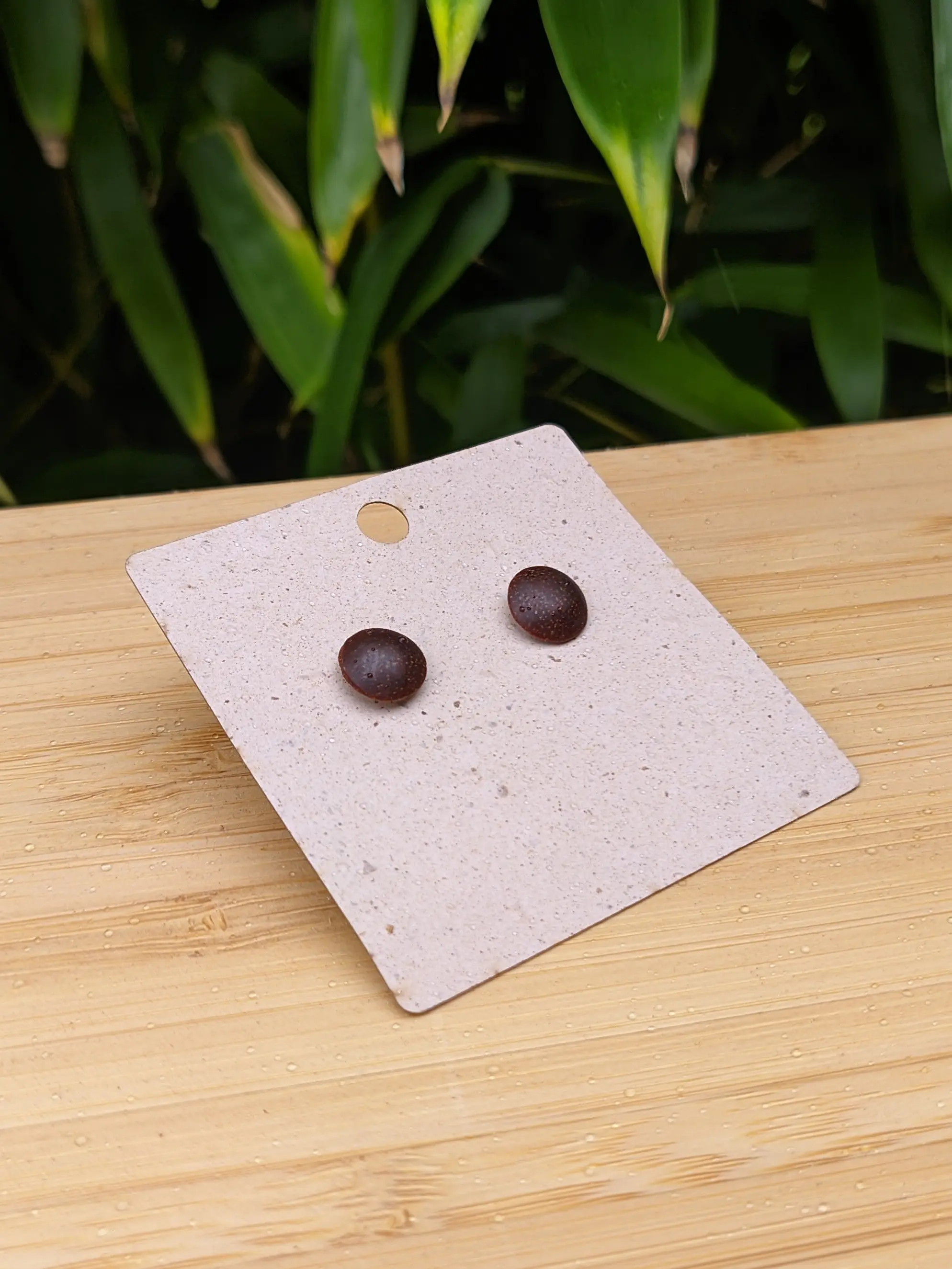
After adding the earrings to a display card, they look perfectly new,
almost as if they didn’t have years of being headphones behind them.
I guess that is what I like most about these: making something new from something that would have otherwise been thrown away.
While they look amazing, I think it is also sad that these headphones broke in the first place.
They are the fourth pair of these headphones, that I know of, that break at the same point.
Which just shows how they aren’t properly designed to last.
And whilst I’ve found a way to repurpose the Bluetooth receiver with some external speakers
and the wooden parts as earrings,
that still doesn’t excuse them breaking in the first place.
In the end, recycling gives these pieces a second life,
which they wouldn’t have had had I just thrown them away.
So next time when you want to throw something away,
consider giving it a second life first.1
Afterword: I’ve actually started checking eBay to see if people are selling broken House of Marley headphones for cheap, as it would be nice to make more recycled earrings, but for whatever reason, I haven’t been able to find a single one.
I’m not sure if there weren’t enough people buying these (House of Marley actually stopped selling them) or people just don’t realise that there is still value in them after they cease to function. ↩︎