It's Canvas: Time to finish
April 7, 2025I published the first It’s Canvas post on January 27, 2025.
And ever since then, I published a new episode roughly every month.
This is the last episode in this series (for now, unless there will be a season 2…).
If you are new here, you probably want to start from the beginning.
All previous posts, including this one, can be found in the series overview.
In the previous parts, we have covered three techniques you can use to transfer images onto canvas.
This episode will focus on a couple other aspects of the process,
and thoughts I noted down whilst working on the project.
Applying a top coat
I’d always recommend applying a top coat to your finished product,
to protect it from dust or being damaged.
Depending on the technique used, you might damage the paint or rip the plastic film,
if you accidentally hit the canvas.
It can also be a great way to make it look more expensive, if you want to give it away.
I’ve tried different types of top coats, and they could probably use their own miniseries. However, I’ll only touch on them very briefly here.
When I started out with putting images on canvas, I used Mod Podge.
Because the color pigment sits on top of the canvas,
you have to be really careful when applying the top coat,
as you do not want to rip off the color,
which is why I would recommend using spray-on finish.
If you are using normal Waterslide Paper,
you already put on a top coat as part of the process, when spraying the plastic film with spray-on acrylic.
However, you could still apply a second coat to really lock the plastic film in place, especially on the back.
The same goes true when using Tattoo Paper. But the top coat also serves the purpose of protecting the plastic sheet and getting rid of the sticky outer layer.
I personally had a lot of success with glossy acrylic spray. (Ignore the bumps on the next photo; they are caused by improper Mod Podge application.)
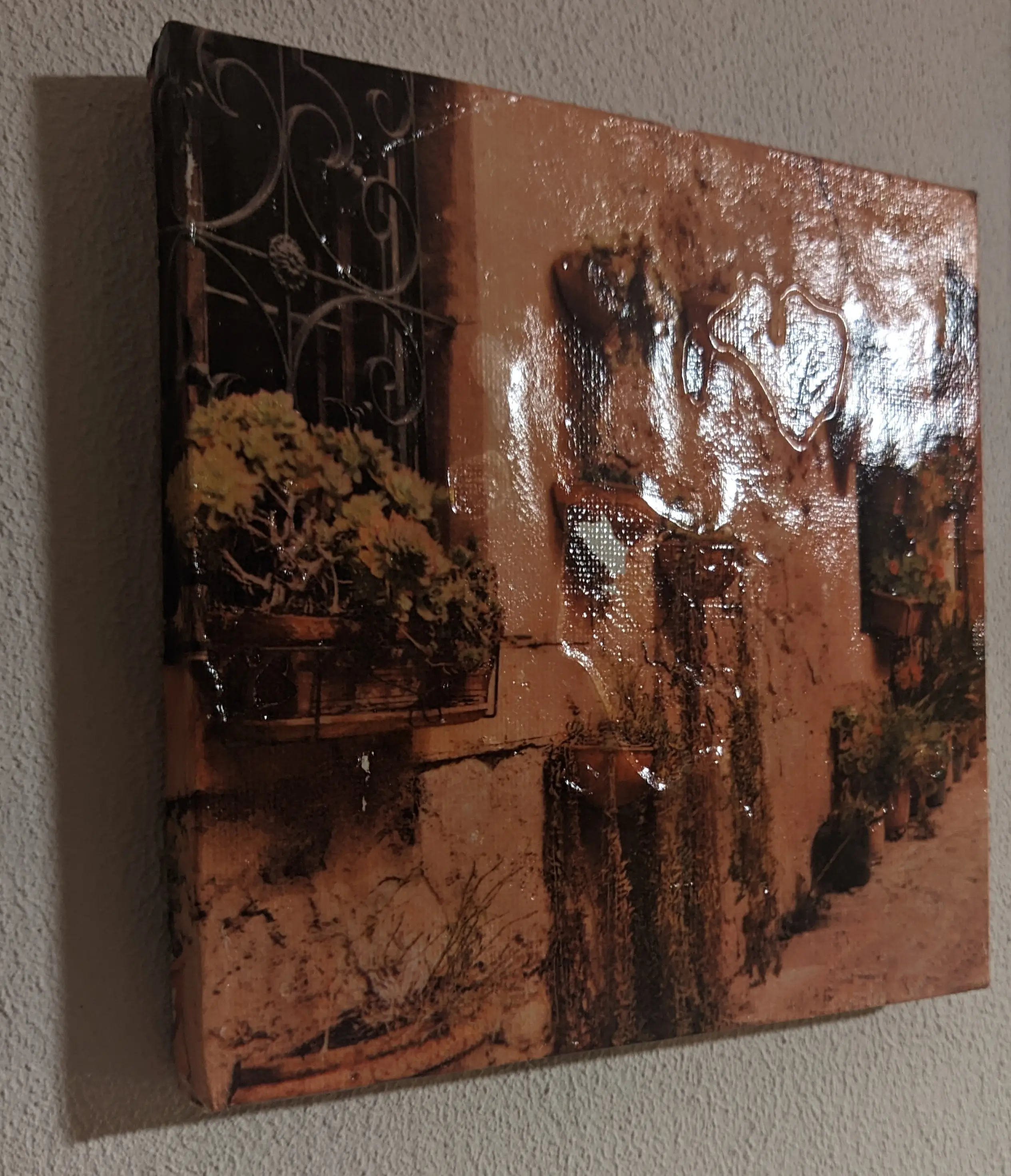
Sometimes the glossy effect can distract from the artwork itself,
which is why I also tried matte spray paint.
Unfortunately, it actually cracked during the winter,
probably because it got too cold in my room.
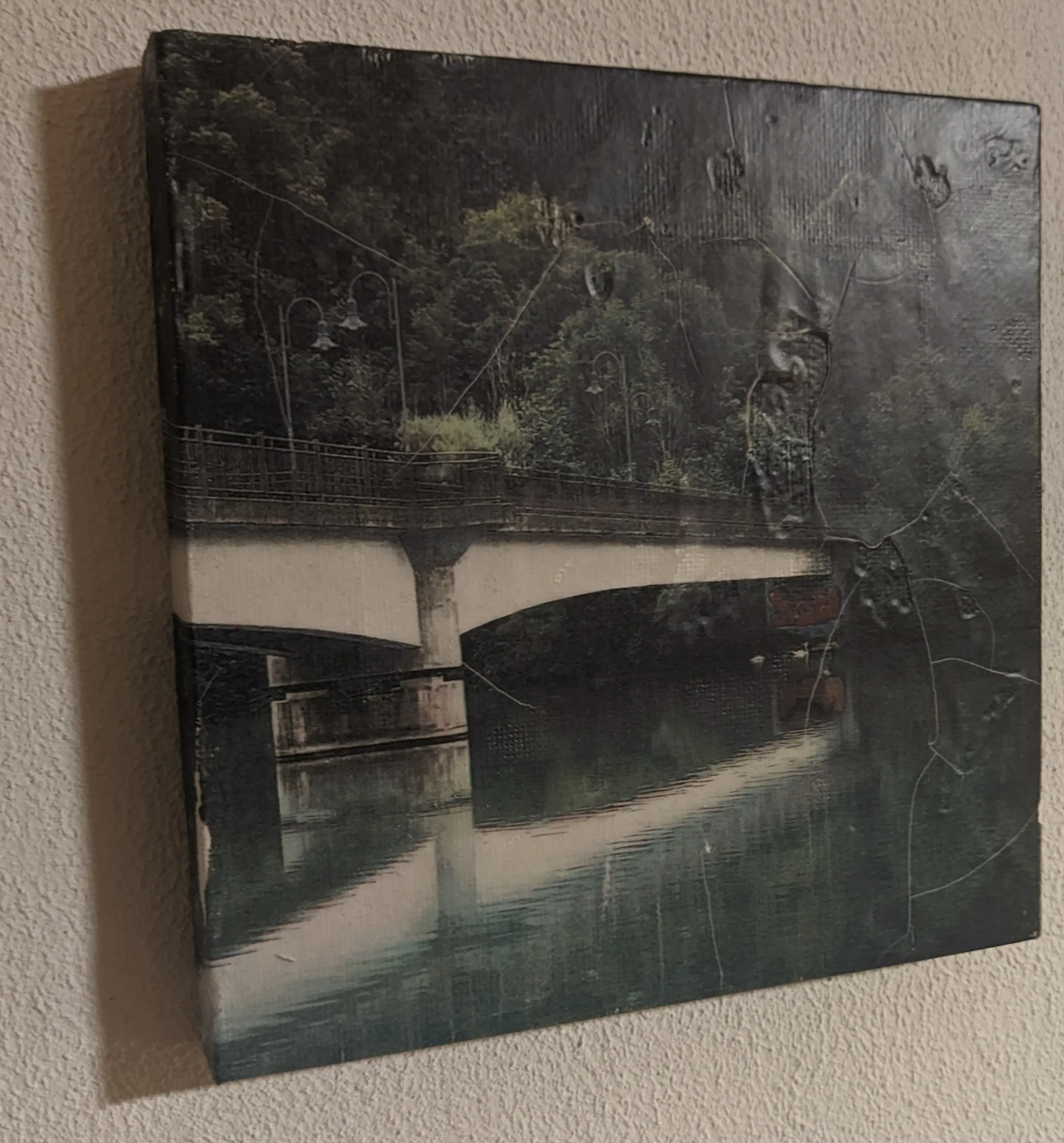
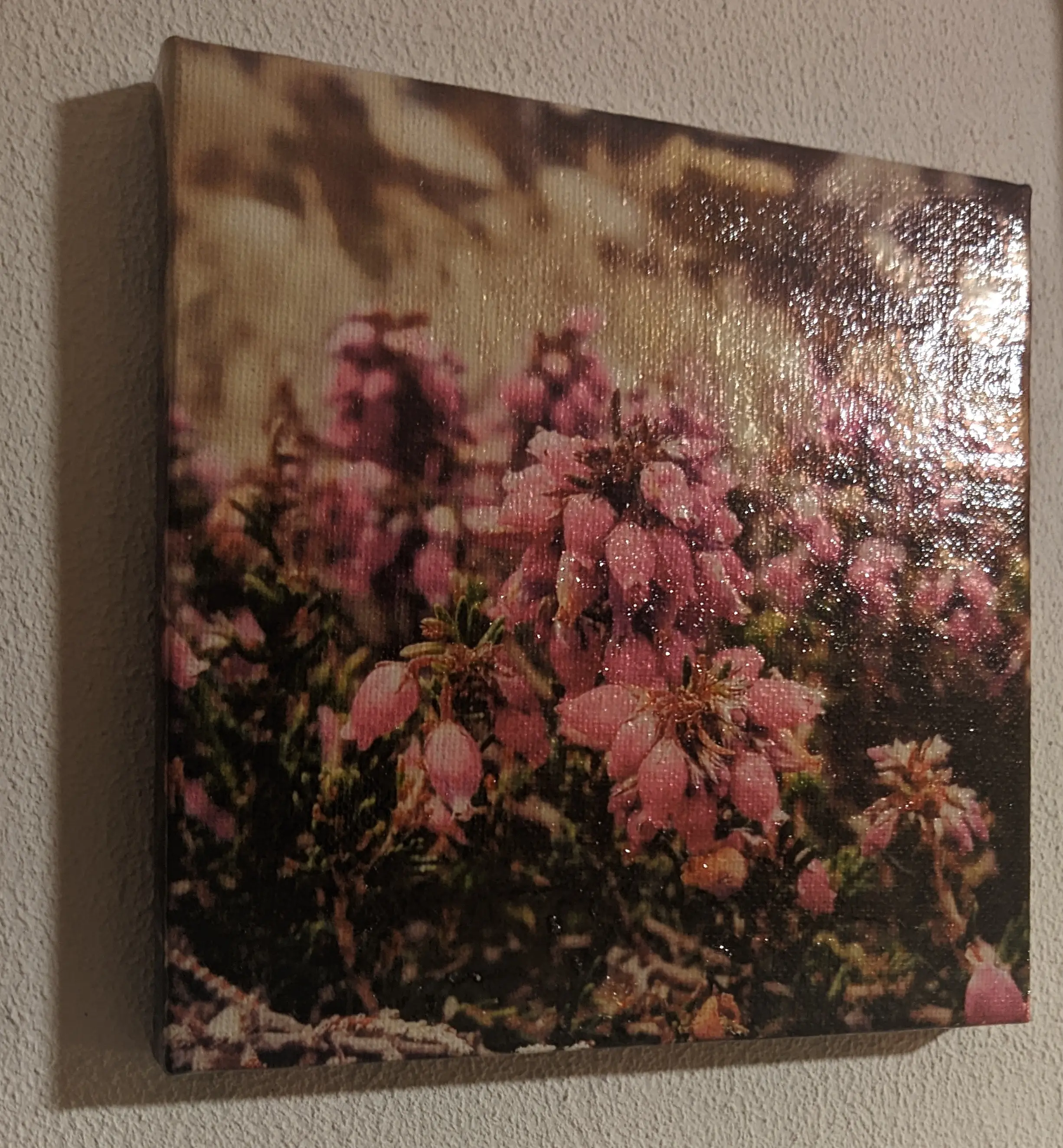
You can also use brush-on transparent acrylic paint,
when you are working with Waterslide Paper or Tattoo Paper.
By applying it with a brush, you leave a brush stroke pattern on the canvas,
which can really complement the artwork.
In the end, whether or not you want to apply a top coat,
is your choice and depends on the look you are trying to go for.
I did not apply a top coat to the pieces I did most recently, because I wanted to preserve the canvas pattern.
Do you need really need Mod-Podge
While working on the Mod Podge episode,
I started wondering wether or not you actually needed Mod Podge.
To answer this question, I collected a couple of types of glue, which I really wanted to try:
- UHU All Purpose Adhesive
- Transparent Acrylic Paint (The same that I used as a top coat above)
- White Acrylic Paint (I figured that if transparent acrylic paint worked, this should work as well and also add a white backdrop to bring out the colors)
- Off-brand Craft Glue
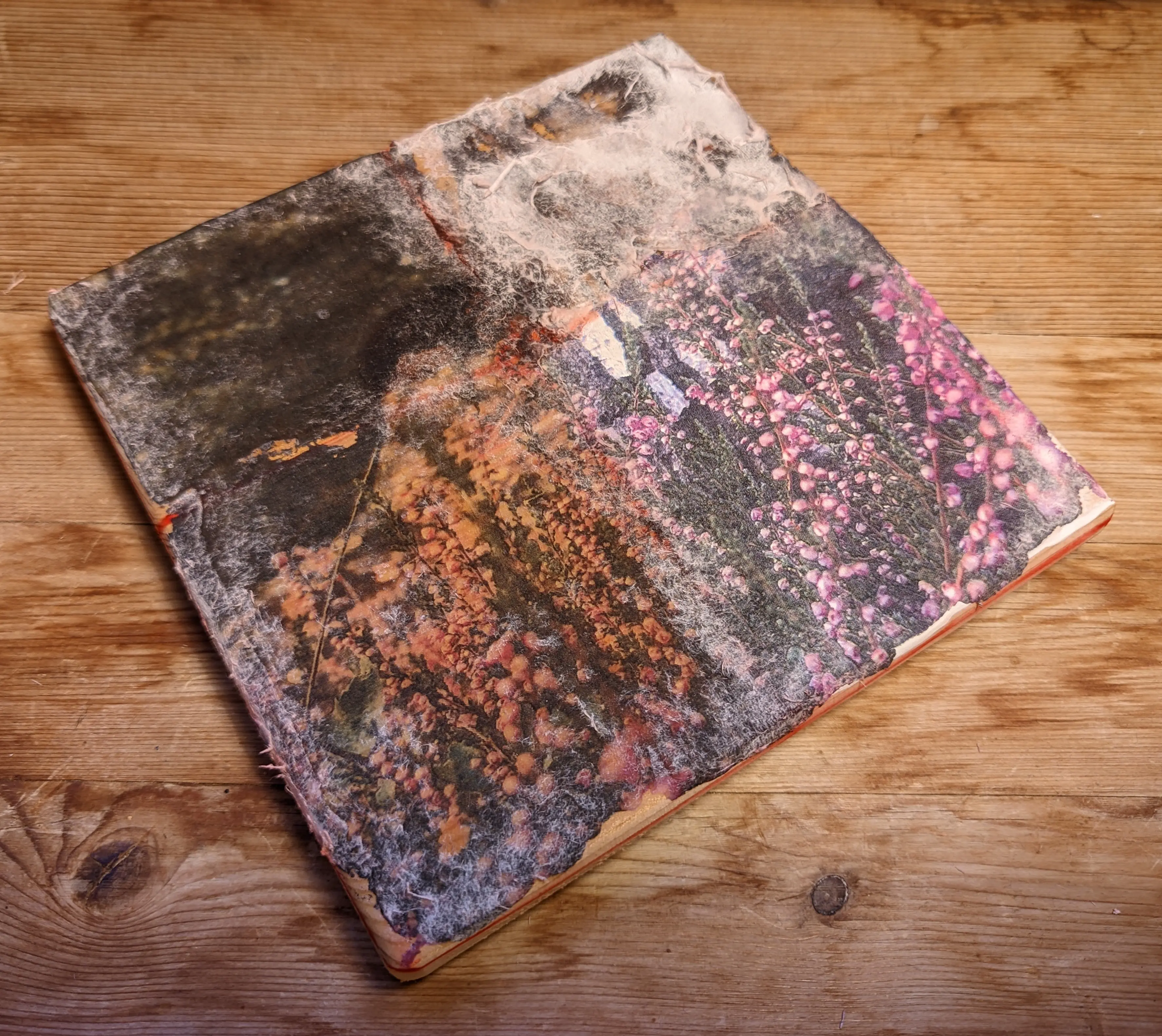
Unwilling to risk a canvas for the experiment, I picked an old piece of wood from our firewood stack. And after giving it a sand, I marked out four areas, one for each type of glue, and basically went through the same process, which I used to apply the Mod-Podge.
To my surprise, most of the glue seemed to be dry after only a couple of hours, but I still let them set overnight, just to be sure.
Getting the paper off required more water than what I’m used to.
However, this could also be because the wood might be soaking up some of it.
Whilst rubbing, it also became clear that the craft glue didn’t work at all,
as the water dissolved it and left behind a gooey mess.
Luckily, the other three showed better results.
All the other types of glue had no real problem sticking to the wood.
I’d say, that in terms of general results, the UHU glue probably did the best.
While some areas, where I applied the acrylic-based paint, came loose,
most of them stayed attached properly.
This might be because different types of glue got mixed in those areas,
or I didn’t sand the wood flat enough. Or maybe there just wasn’t enough glue.
To my surprise, the white acrylic paint seems to have mixed with the color pigment,
making the colors appear muted, as if parts of the paint are blocking the colors.
I was actually hoping for a better result, as it would allow painting over the wood
and sticking on the image in one go (if you want a white backdrop).
Arguably, applying a white base coat and applying the glue to it once it has dried
is probably good enough.
Techniques & Materials
I had so much fun working on this series.
My room is now filled with so many photographs on canvas,
mostly photos of plants or places,
of memories.
They are amazing pieces of decoration
that make my walls look less empty,
and motivate me to take more photos when I’m out and about.
As I’ve continued working on the different techniques,
I actually ended up replacing some of the older pieces I did
with newer ones.
I personally like the Tattoo Paper the best,
as it does such a great job at preserving the canvas texture
and sticking to the canvas itself without air pockets.
I haven’t even bothered to apply a top coat,
as it would ruin the canvas pattern,
and I don’t plan on touching them again or giving them away.
I’ve recently stocked up on a 20 sheets pack of Waterslide Paper,
because it does a good enough job at preserving the canvas texture,
whilst also requiring less ready-made materials.
I prefer this, because I don’t want to rely on something that might not be available in the future.
This is why I also liked the first approach,
especially, after figuring out that you can use any type of glue.
It is probably the most accessible of all the techniques we looked at,
because you can literally go to a copy shop and get a laser printed photo.
Whereas, you probably have to get your own printer, if you want to put custom materials into it.
Final thoughts
Could this have been a video? Maybe.
However, instead it is a 5000+ word blog series,
something you don’t have to pause,
something that allows you to discover aspects for yourself,
something more minimalistic,
something that hopefully inspires you to create.
If you do end up making these for yourself or someone else, feel free to tag me at @comcloudway@gts.ccw.icu.
And if somebody asks what these beautiful artworks on your wall are made of,
tell them:
It’s Canvas.