It's Canvas: Waterslide Paper
March 3, 2025I honestly didn’t intend taking this long to publish the next part of this series. This is, partially, because a different project is taking up more time than expected, but also because I initially put all my effort into preparing a different part of this series. However, while writing the other part, I realized that it would make more sense to focus on this technique first, as it introduces some fundamentals.
Well, so here we are, part three of It’s Canvas,
the multipart series where I’m exploring different techniques
you can use to transfer photos onto canvas.
If this is the first part you are reading,
I’d recommend you start at the beginning,
where I explain the idea behind this series
and walk you through the photo preparation process.
You can also find a list of all parts in the series overview.
In this part, we will be using Waterslide Paper to transfer the photo to the canvas. Whereas last time, we used glue to stick the color pigment to the canvas, this time we will wrap the image around the canvas by printing on a thin flexible film.
What is Waterslide Paper
Waterslide paper consists of multiple layers.
The bottom layer is the paper backing,
which provides additionally support for the second layer during printing.
The second layer is a thin plastic film, which has a water-activated adhesive layer on the back.
As the paper is coated with some sort of non-water-resistant adhesive, soaking it in water
allows it to slide off easily, leaving the now activated plastic film exposed.
Normally you would slowly remove the paper backing, whilst sticking the film to a glass,
candle or model object.
After drying (or baking), it would then be hardened and pretty much stuck to the object.
We are going to make use of this hardening process by sticking it to the canvas and waiting for it to dry.
Requirements
- A4 Waterslide Paper
- Glossy acrylic spray (mustn’t be water-soluble)
- An inkjet printer
- A framed canvas (you can buy them at most arts and crafts stores)
- A picture to print out
- Oven dish (or other container that can fit the image)
Step 1: Preparing the Decal
Load one sheet of the A4 Waterslide Paper into your printer and print out the image as described in the getting ready to print guide. I would recommend setting the print size slightly larger than expected to make alignment more forgiving. You also don’t want to enable mirror printing, as we will be wrapping the film around the canvas with the top facing up.
To protect the ink from being washed off, we have to spray on an acrylic top coat.
Pin or tape the printed-out sheet onto a piece of cardboard.
Spray on a top coat. I normally spray over the entire paper once from all sides.
Make sure to work in a well-ventilated area (i.e., outside).
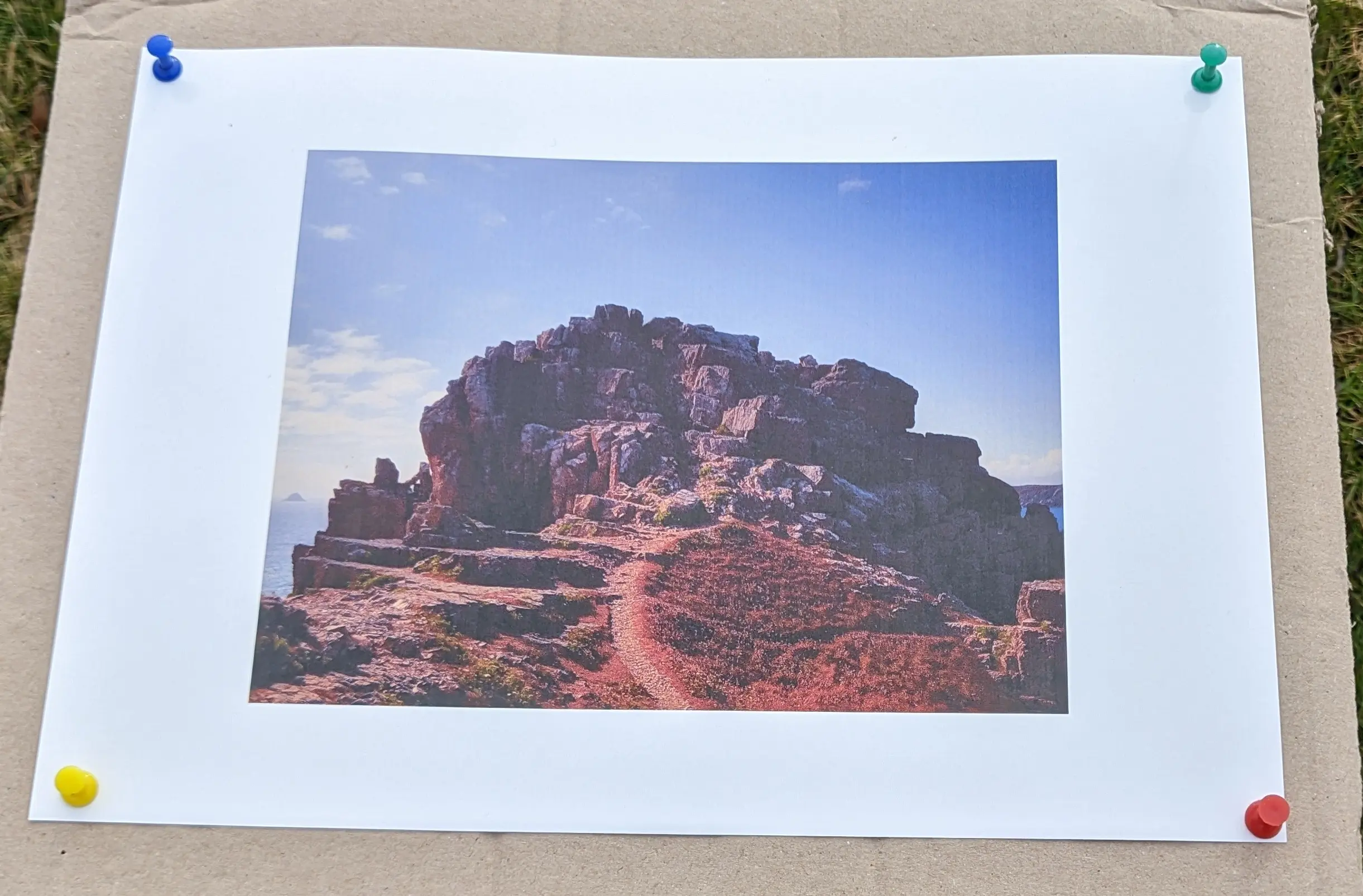
Afterwards, leave to dry. The exact amount of time depends on the type of spray you used. Mine takes between 30 and 60 minutes to harden, but I would always recommend waiting longer to make sure it is completely hardened, as otherwise you might ruin your picture.
Step 2: Wrapping the canvas
Once the top coat is dry, use a pair of scissors to cut out the image, leaving about 1 cm margin.
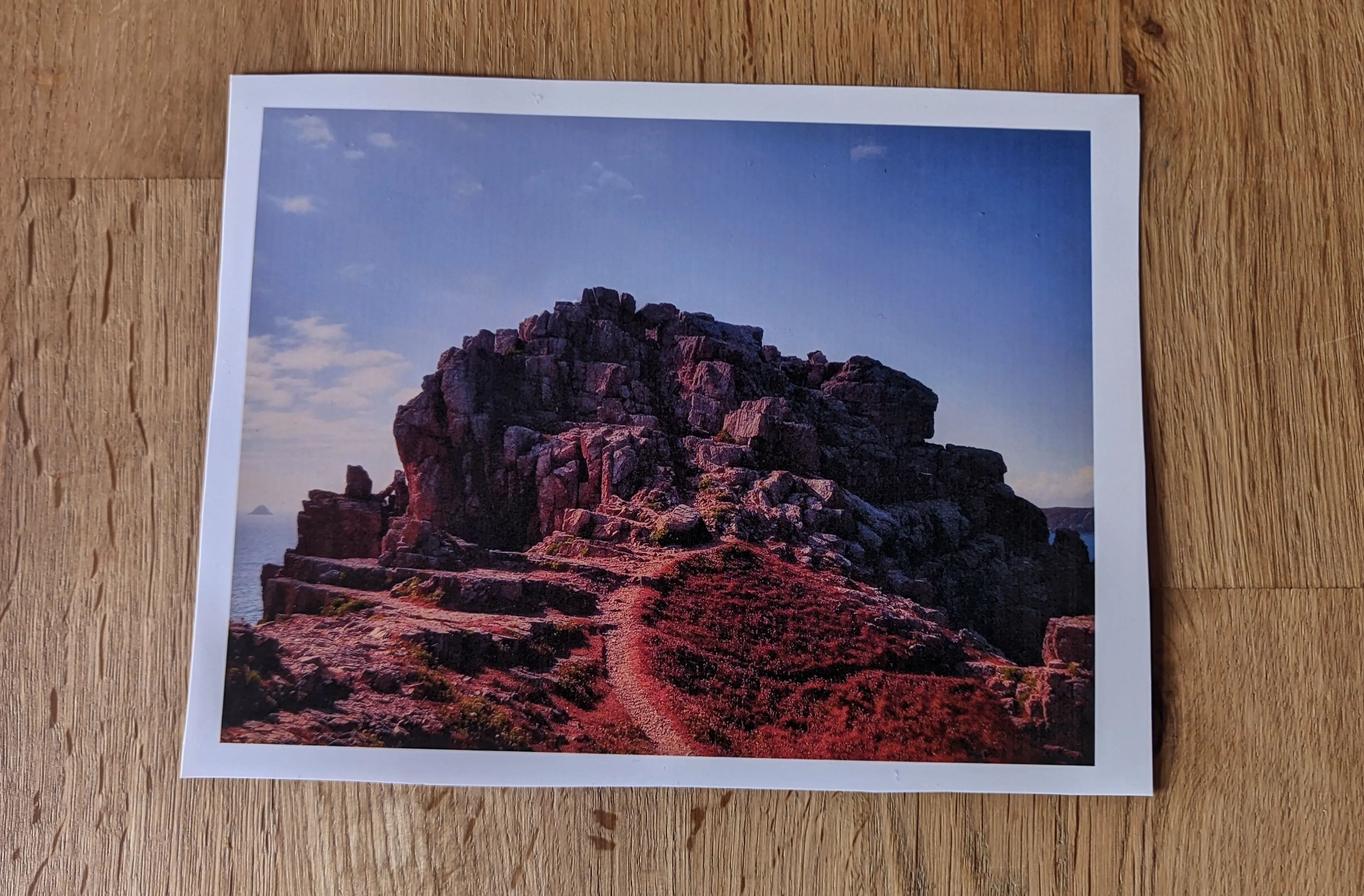
You will also want to prepare the work area.
Place down a protective sheet, or work on a surface that can get wet, because the process can drip a lot.
Fill an oven dish (or other container large enough to fit the printed-out image) with water
and place it on the work surface.
I would also recommend using a small bowl or a glass to elevate the canvas.
The bowl should only touch the brim of the canvas.
It also shouldn’t touch the plastic film, which we’ll wrap around later,
as it might get attached to it, making it hard to remove.
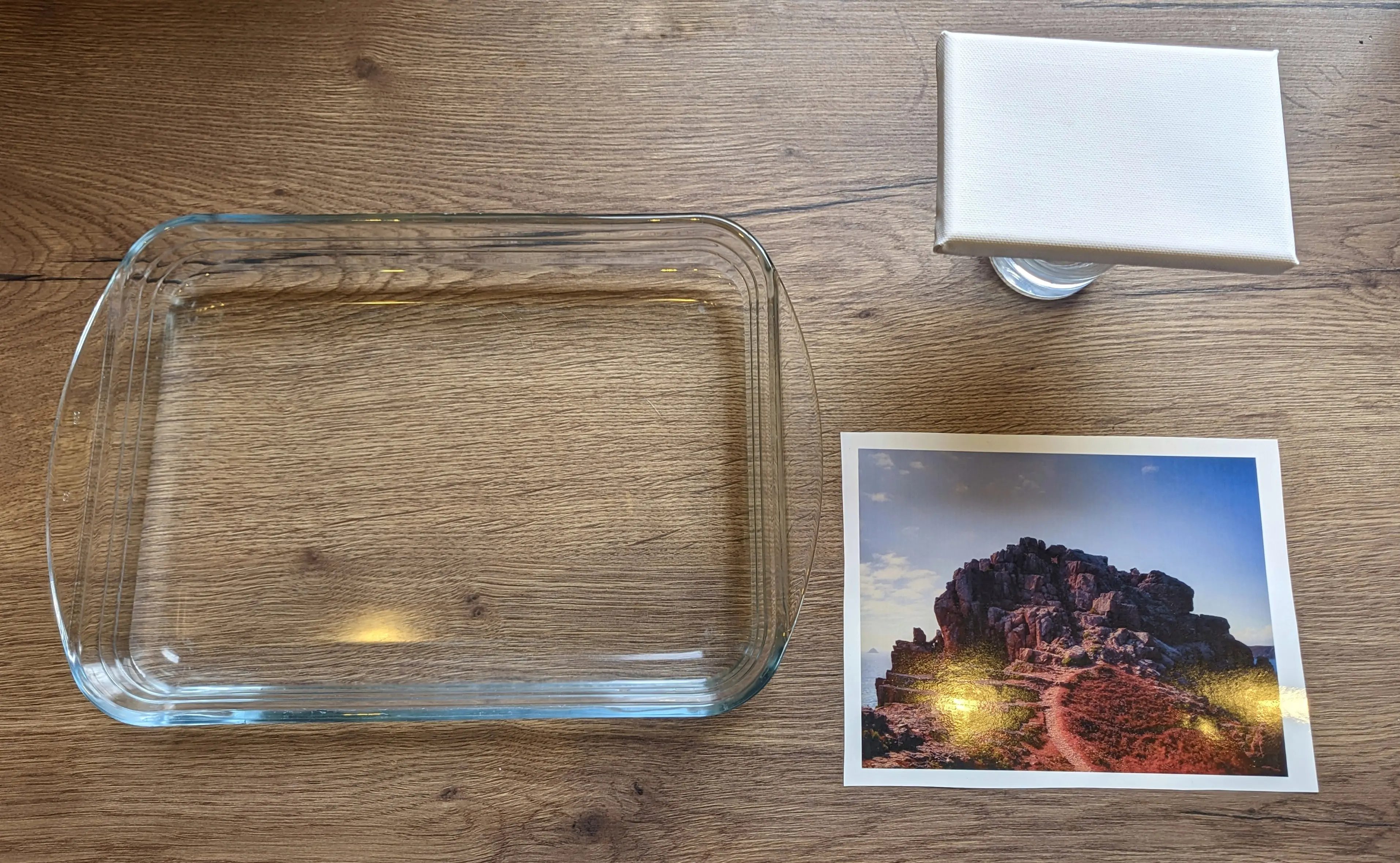
Now place the image in the water bath with the printed side facing up and soak for about 20 seconds.
The exact amount of time depends on the Waterslide Paper you used.
(If in doubt, check the official instructions.)
While the paper is soaking through, use your fingers to dampen the canvas.
This improves adhesion, helps activate the glue on the back,
and prevents larger air pockets from forming when wrapping the film.
You can use your fingers to try and slide off the film from the paper backing on the top right.
If you can lift it off without any issues, you are ready to remove the image.
You can either take out the entire paper sheet and then remove the film from the paper
or slowly start lifting away the film from the paper backing, in the water bath.
Start by lifting from the top right with one hand,
and then use the other hand to lift away the top left.
After lifting away the entire sheet,
you should be left with the plastic film hanging from the top left and right.1
Below is a symbolic process preview, showing the canvas and plastic film from the side.

Align the bottom edge of the image on the film with the canvas edge.
Because we printed the image to be slightly larger than the canvas,
the printed on part won’t properly align with the canvas edge and instead overhang slightly.
Notice how the film is sort of attracted to the damp canvas and sticks to it.
When you feel happy with the alignment, slowly fold it over the front of the canvas.
You might have to lift the edges to get rid of crinkles or to allow air bubbles to escape.
If you want, you can use a wet finger to remove air bubbles and help the plastic film
attach itself to the canvas.
Once the front is done, you can move your finger over the edges of the canvas and attach the sides.
Folding around the sides will form flaps,
you can simply fold them in the direction that better fits the color.
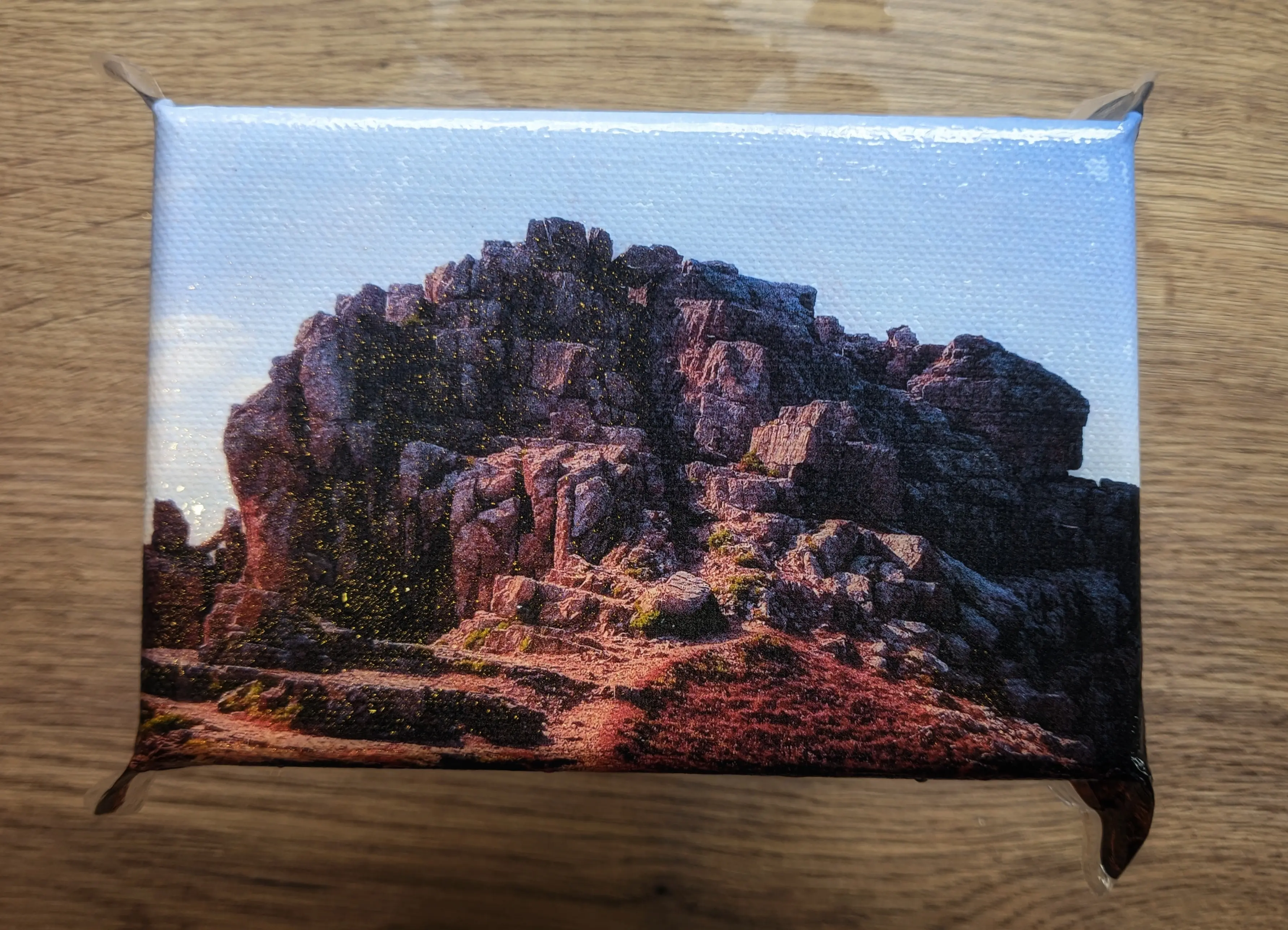
After smoothening the sides, you can carefully pick up the canvas to fold the plastic film over to the back. Make sure the plastic film has proper contact with the fabric on the back. You might have to dampen it first to ensure it stays in place.
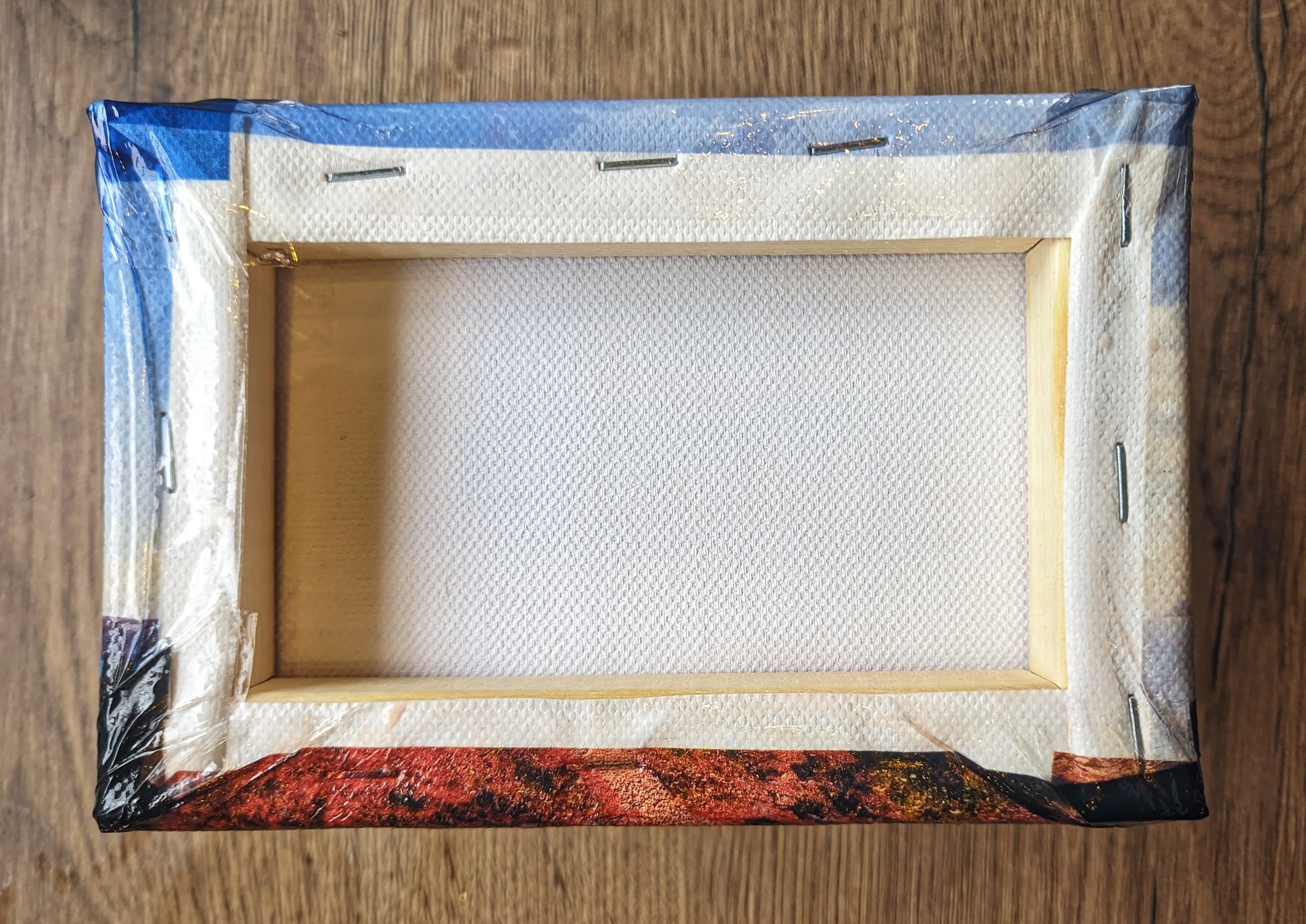
Lastly, flip the canvas back around and place it back on the small bowl, with the front facing up. And leave it to dry. This might take a while, probably around two to three hours.
Results
When the canvas has dried, you can hang it on a wall,
but I would recommend applying a second top coat, to make the glossy texture more consistent
and to prevent the back from coming loose.
I’ll go a little more in-depth into top coats in the last part of this series.
As you can see from my picture, this technique preserves the canvas texture,
which I like a lot.
However, you can also see that I didn’t do a good enough job at removing air bubbles,
especially in the top right.
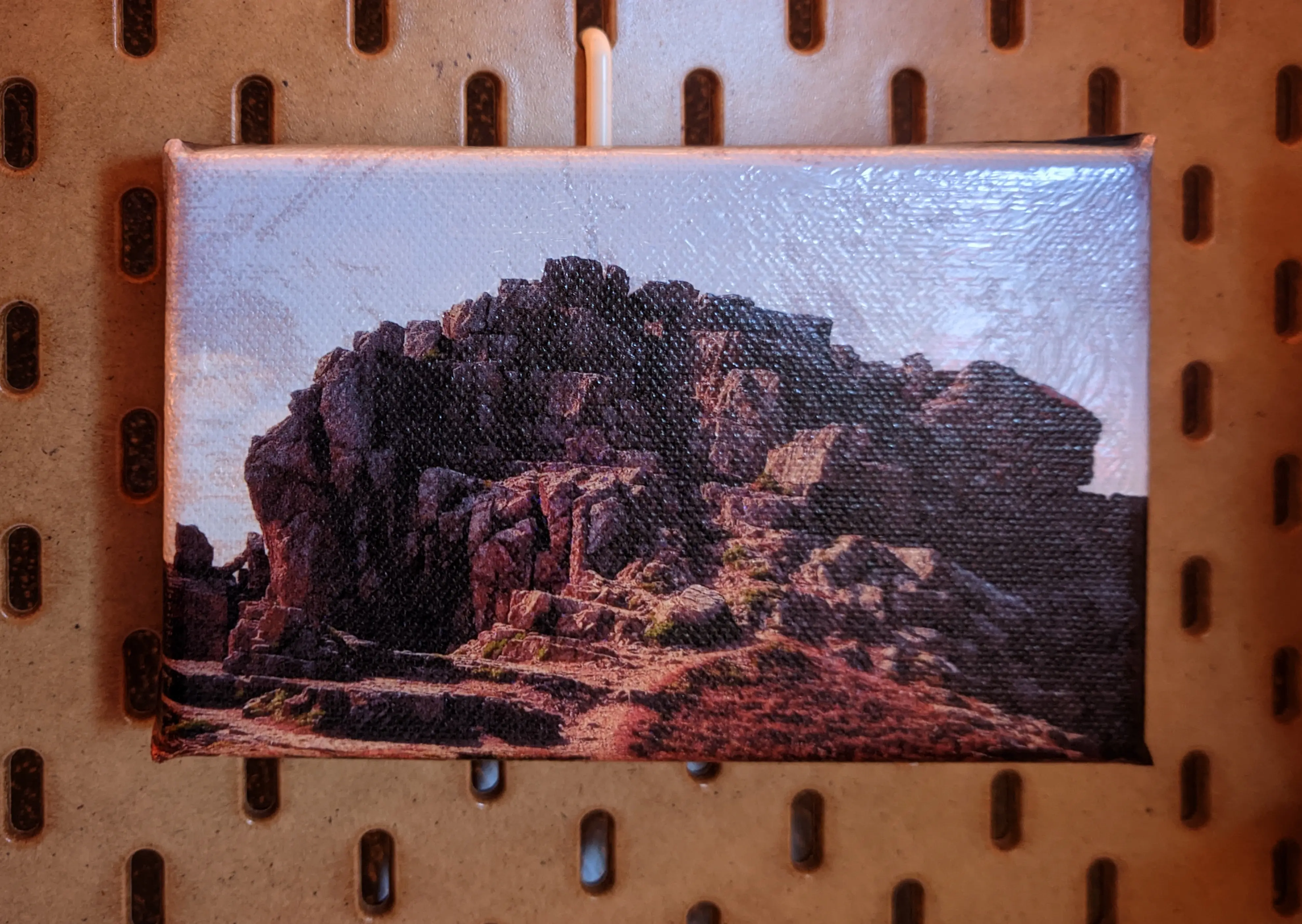
Over the last couple of days, I used this technique on four other canvases,
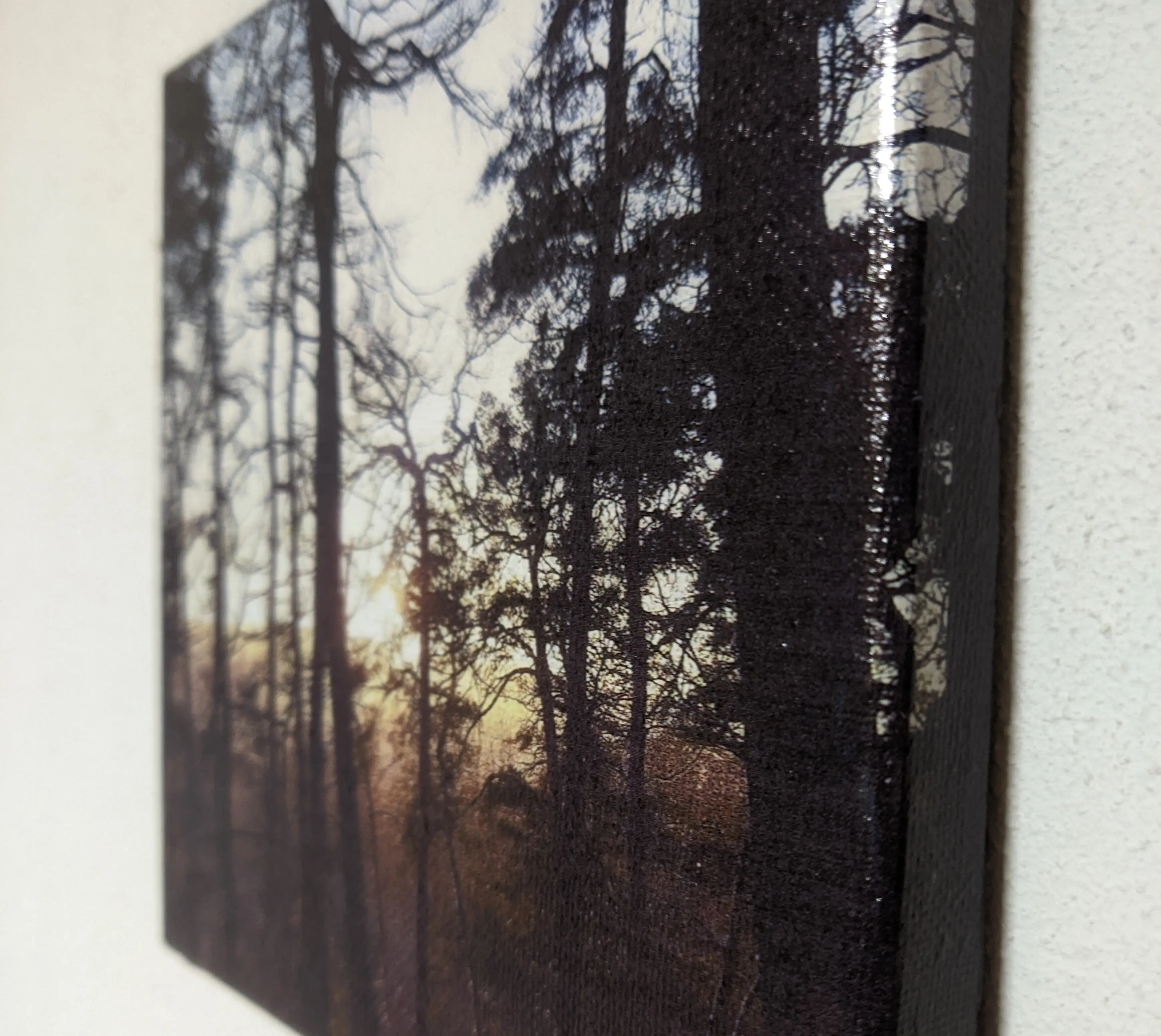
and after figuring out that I can dampen the canvas before, my results had less air bubbles overall.
This is why the instructions above mention that the canvas should damp, but the pictures don’t show a damp canvas.
This is how a wrapped canvas, which was dampened before, looks like:
And that’s a wrap2.
I’ll see you in the next episode, which will show the last technique,
a technique, very similar to this one, but better suited for indoor use.