Making custom earrings
August 11, 2025Almost one year ago, I got my ears pierced, and when I stumbled upon a pair of painted leaf earrings made from wood, I just had to figure out how they were made.
After some trial and error and spending hours looking at them to see how the paint interacts with the engravings, I was finally able to make my own. A pair of soft and cute chick earrings, the graphic of which I got from a Signal sticker pack.
In this post I’ll guide you through the steps of making your own earrings, by following the making of my most recent GoToSocial earrings.
Requirements
- Access to a laser cutter
- 1/8" wooden sheets (I used basswood)
- Painting supplies (paint (i.e., acrylic paint), small brushes, …)
- UV resin & UV light
- 4 mm earring posts & backs
Finding a graphic
After talking with a friend about how I still don’t own a Mastodon plushie,
I noticed that instead of the mastodon plush, I should actually own a GoToSocial plushie.
Unsurprisingly, there is no official plush, but I still felt challenged by the response to my question.
So I decided that while I might not be able to make a GoToSocial plush, I could still make some cute earrings.
This is how I landed on the GoToSocial logo, which I promptly downloaded for further editing.
Uhh, btw, their logo is licensed under the Creative Commons Attribution-ShareAlike 4.0 International license,
the terms of which you can find on creativecommons.org.
The content of my blog is also published under the same license (unless indicated otherwise), including all the pictures you see in this post.

Keep in mind, that if you plan on selling your final earrings, you should either choose artwork with a license that permits commercial use, or create the artwork yourself.
Adapting the graphic
I was quite happy to see that the GoToSocial logo was available as an SVG because it made my work a lot easier.
If the image you are trying to work with doesn’t come as an SVG,
you can use a tool like Inkscape to automatically trace the image for you
or manually trace it using different shapes and curves.
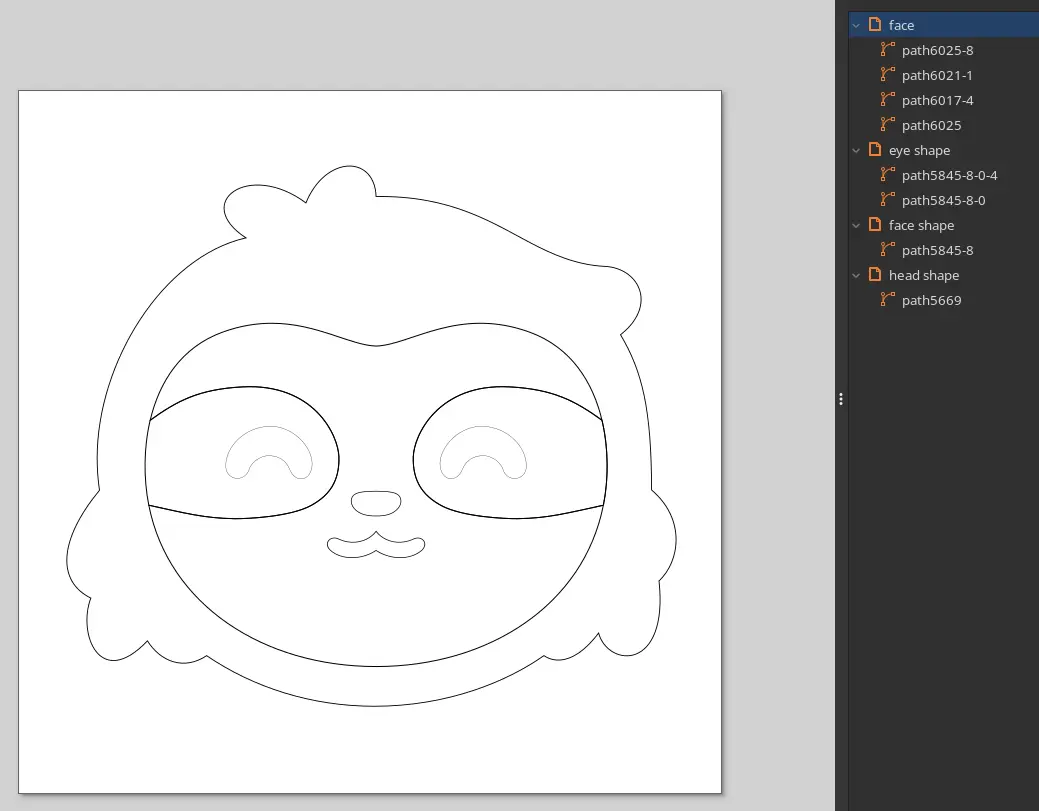
To be able to process the earrings using a laser cutter, you want an SVG that only contains strokes.
The outline of the shape you are trying to cut and the lines for engraving details.
I removed the shadow layers because I didn’t want to engrave them.
(I originally planned on brushing them on later, but disgarded the idea as it felt to cluttered on this small scale).
Additionally, I removed all fill colors and set the stroke color to black, which probably wasn’t necesarry,
but made it easier for me to preview the design.
Then, I removed the main outline from the anchor, as the laser software refused to parse it correctly.
Finally, I exported the new SVG.

Cutting out the shapes
Once you have your SVG, you can fire up the software you use for your laser cutter.
In my case I only have access to an xTool laser, so I have to use xTool Creative Space1.
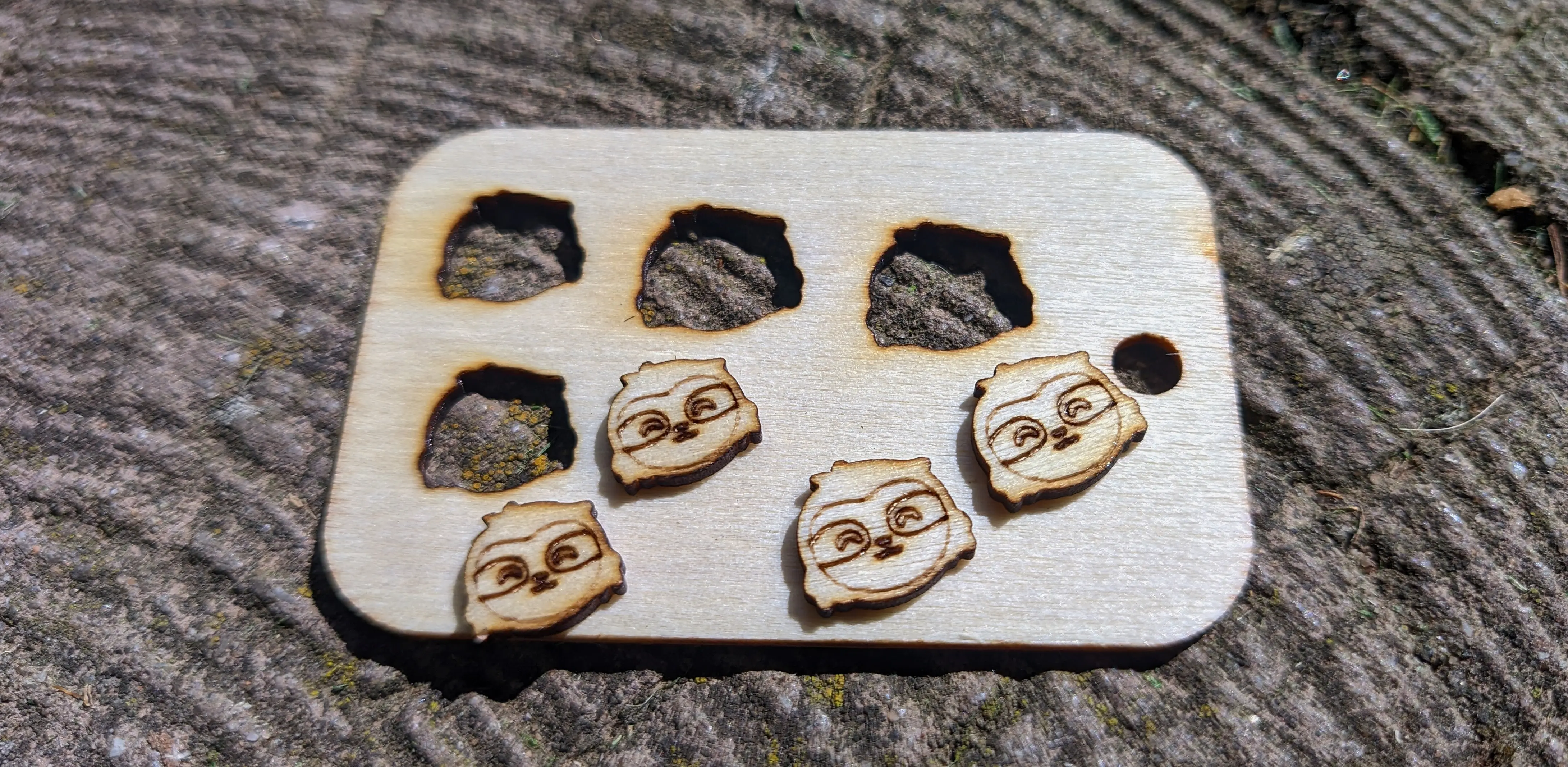
Inside xTool Creative Space, I import the SVG, position it on the wooden sheet and resize it to be about 7-10 mm along the widest edge.
I cut both an 8 mm and 10 mm version because I feared that I wouldn’t be able to paint the 8 mm version.
In the end that worked out fine, so I made a pair of magnets from the 10 mm version, which is another amazing use of this technique.
Afterwards, I ungrouped the SVG and grouped the lines inside the object (without the object outline), leaving me with the outer “loop” and inner section.
Luckily for me, xTool Creative Space comes with material templates, from which I selected 1/8" basswood,
giving me a preview of the cut settings.
Because the cut settings depend on the type of machine, material, and laser you use, I won’t go into much detail here,
but I’m sure you can find that online or in the software for your laser.
The outline should be set to cut to ensure that the laser goes all the way through the material,
while the other strokes should be set to score, as we only want to engrave them.
After configuring everything, you can start the laser process, which shouldn’t take too long, as the objects are fairly small.
Painting
It’s hard to describe exactly what the painting process looks like.
In a way, you just get on and do it - don’t be too afraid, as that will most likely make your hand vibrate more.
I like using double-sided tape to adhere the wooden pieces to a cardboard sheet, allowing me to hold onto them more easily. It also makes moving them easier, as I don’t have to touch them directly.
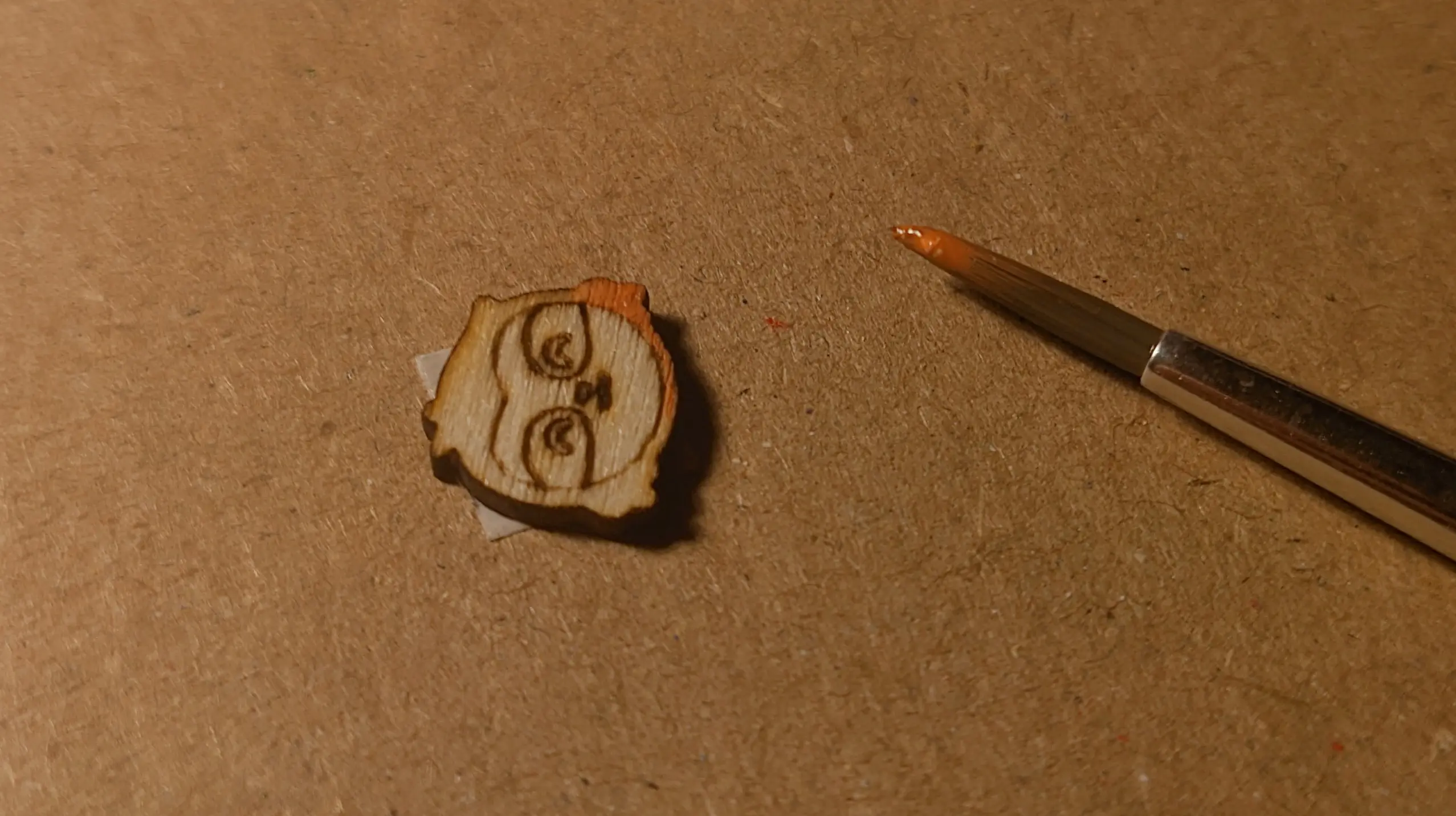
When painting, you only want to use the tip of the brush, as otherwise you might get paint in the wrong areas
or even inside the engravings.
I found that when I accidentally get paint inside the engraved areas, I can chip it out by using the tip of my pliers
and carefully carving along the line.
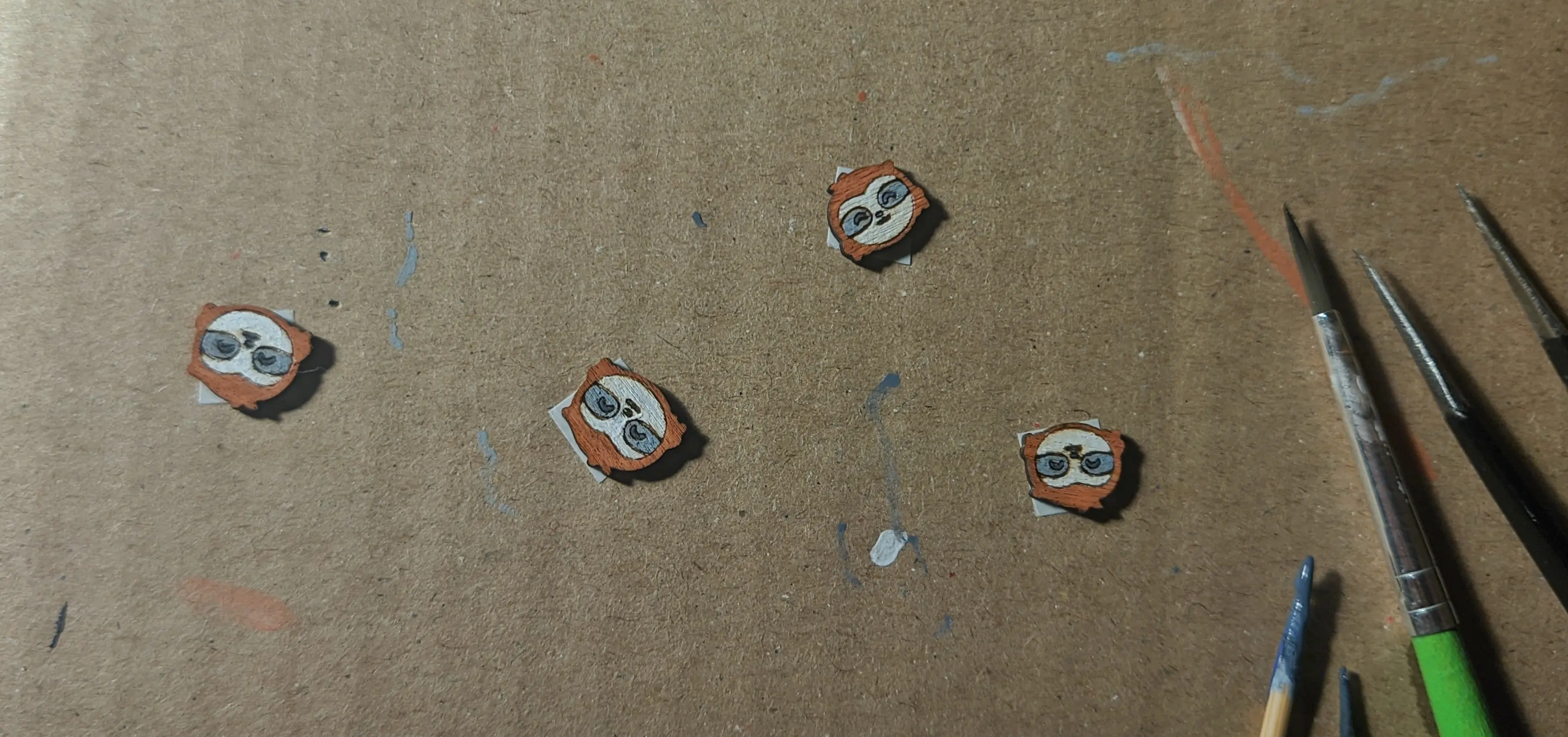
Once you have all the areas painted in the color you want, you should leave the pieces to dry for about an hour, or longer, depending on the type of paint you used.
Applying a top coat
After the color has dried, it is time to apply a top coat, which prevents the color from breaking off and also makes your earrings nice and shiny.
I personally prefer using UV resin for this, as it cures quite quickly when exposed to UV light,
preventing it from dripping off the edges.
To apply it, I use a long wooden rod and slowly brush the UV resin on top until it covers the entire top.
Make sure not to apply too much, as that might cause the resin to spill down the sides.
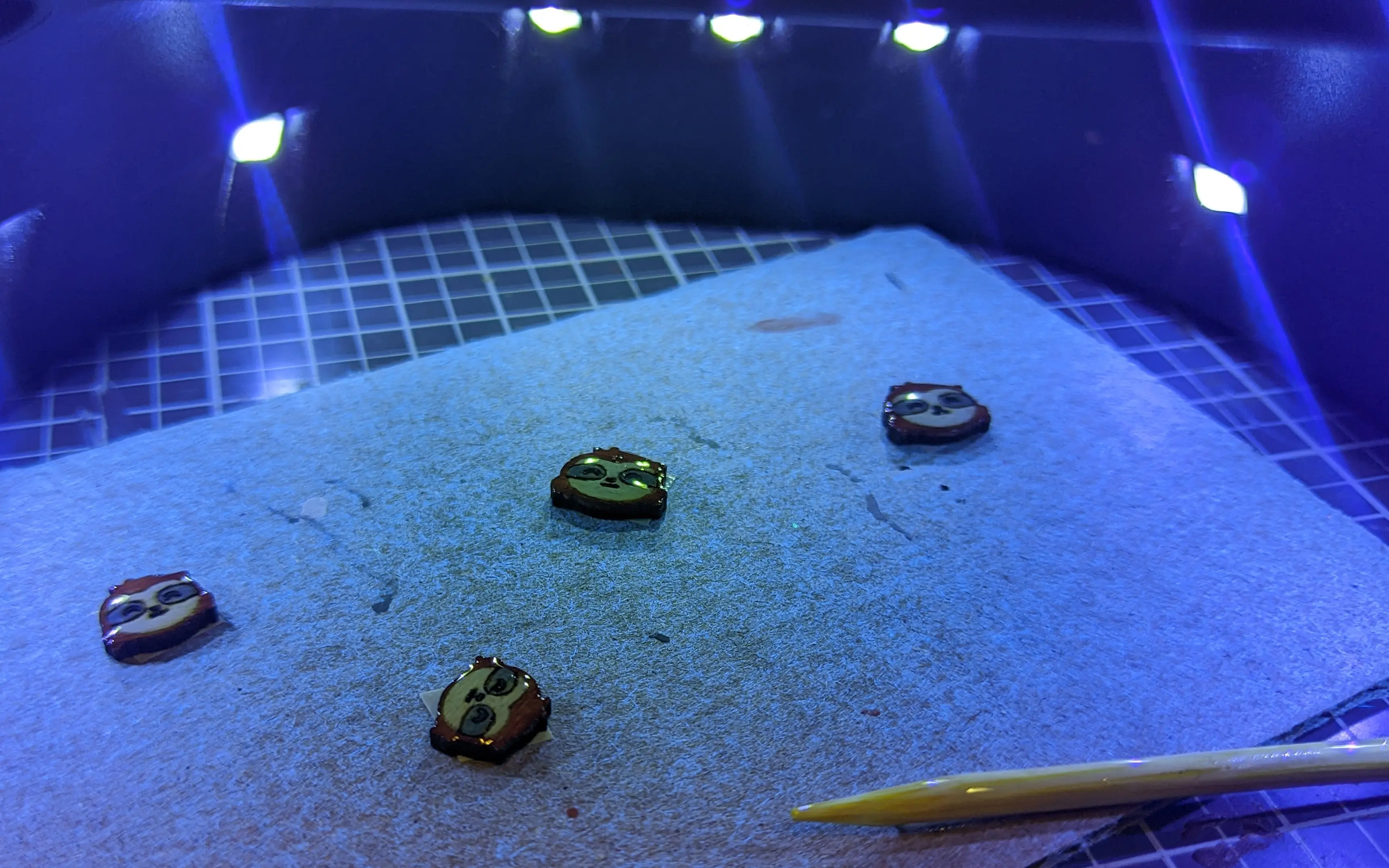
Then place the pieces under a UV lamp to cure them for at least 2 minutes.
You might want to rotate the UV lamp around them to achieve a more even hardening process.
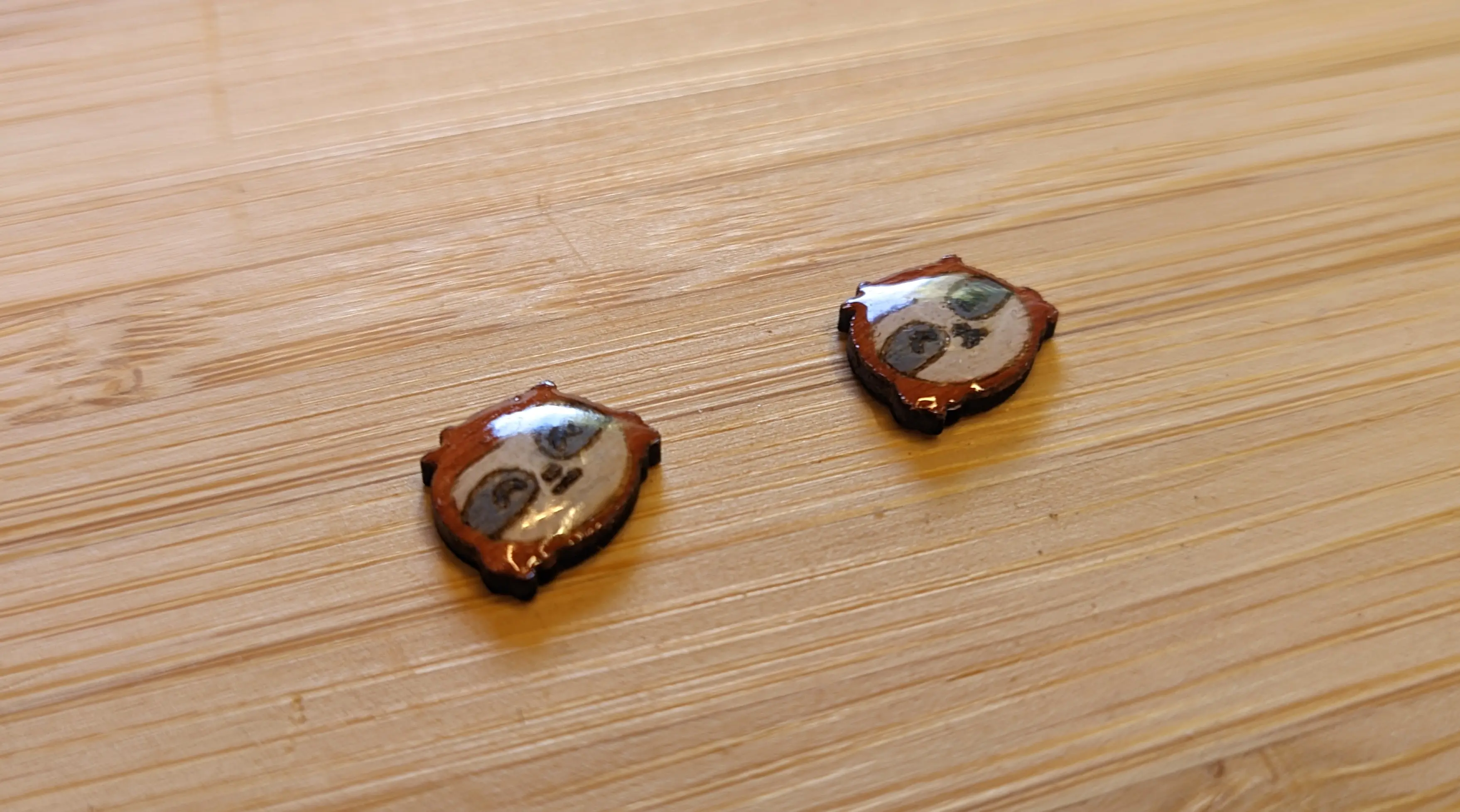
Once you are done, you should be left with a shiny and slightly curved front finish, which neatly reflects the sunlight.
Attaching the Earring Backs
The last step in making your own earrings is attaching the earring backs to the front pieces you’ve just made.
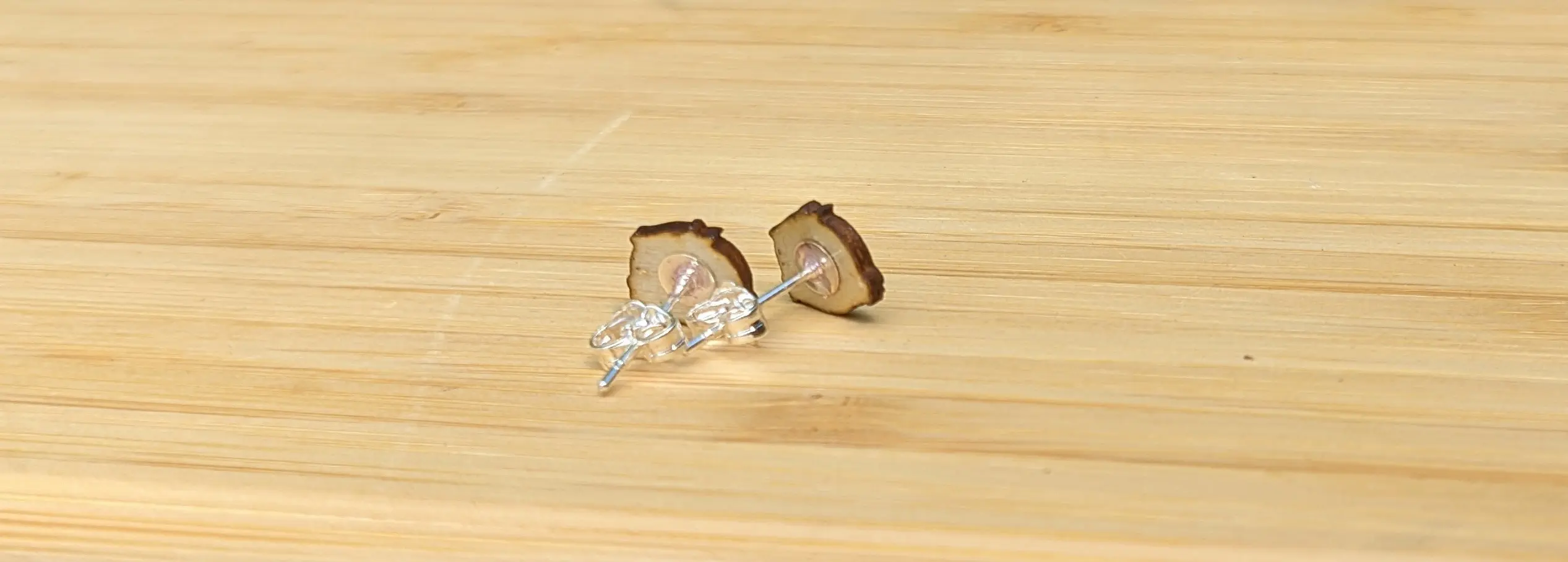
Start by flipping all wooden pieces on their front, exposing the wooden back.
Then add a small blob of UV resin in the center of each of them (or wherever you want to place the earring post).
Press the earring post into the blob, slightly moving it around to suck it down, and press out excess resin.
Now add more UV resin on the top of the earring post metal plate,
making sure it creates a thin seal between the wood and the metal plate.
I simply covered the entire earring back (both the wood and metal) in a thin layer of resin to protect it from dirt.
Similar to how we did on the front, you should then place the earrings under the UV lamp for about 2 minutes to make sure the resin cured.
Results
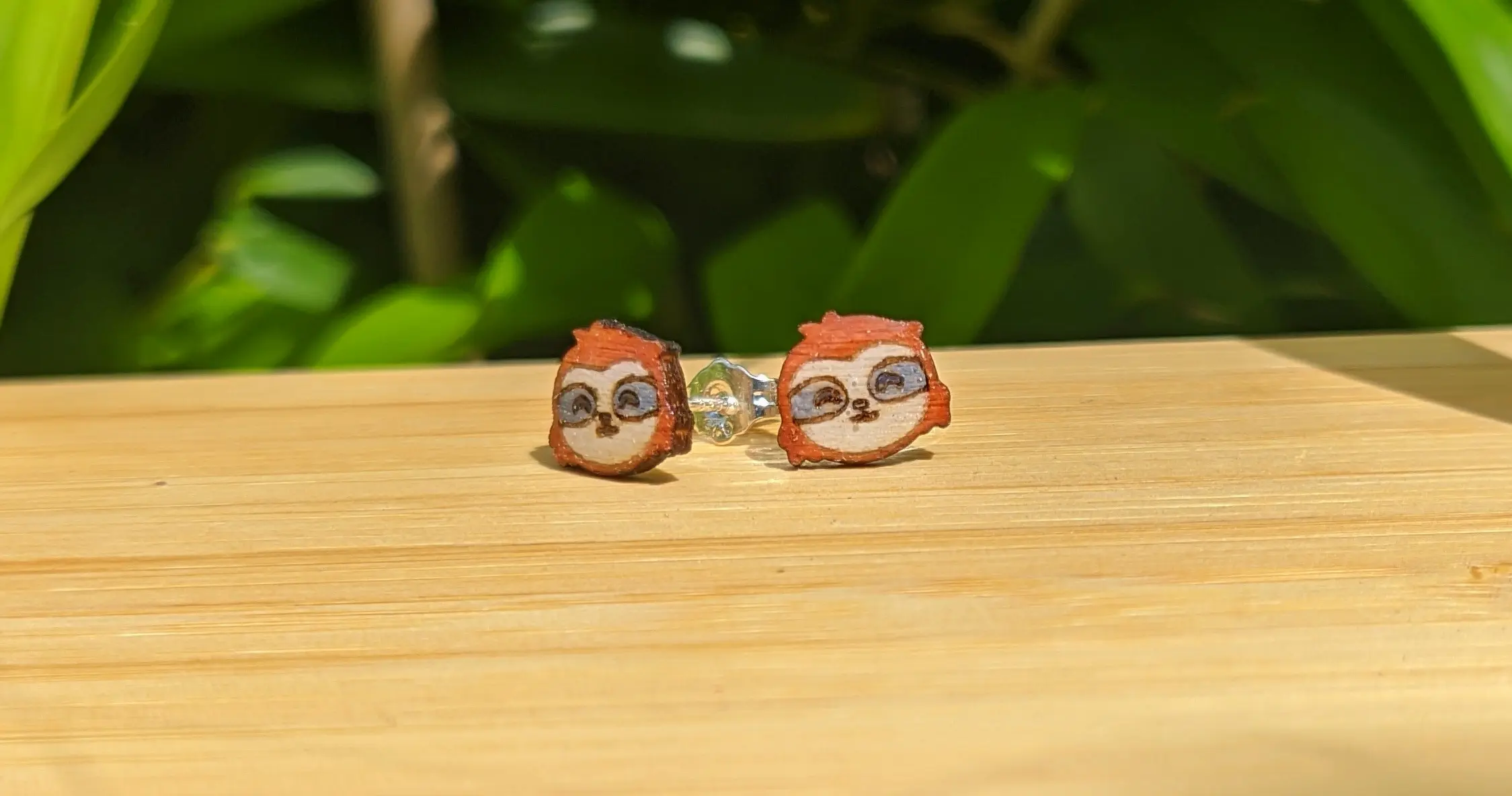
Once the earrings are cured, you can slide on the earring backs and give them away as gifts or wear them yourself.
Note that because they are made out of wood, you should remove them before showering or going for a swim, as they shouldn’t come in contact with water.
But other than that, this is a quick way to make cute, custom earrings from any graphic you like.
If you want to, you can follow me on the fediverse, where I’ll probably be posting pictures of other earrings I make.
Take care 👋
Through wine - because apparently they can’t be bothered to package their Electron app for Linux. ↩︎