Scrapwood Challenge: Building a tiny hut for my turtles
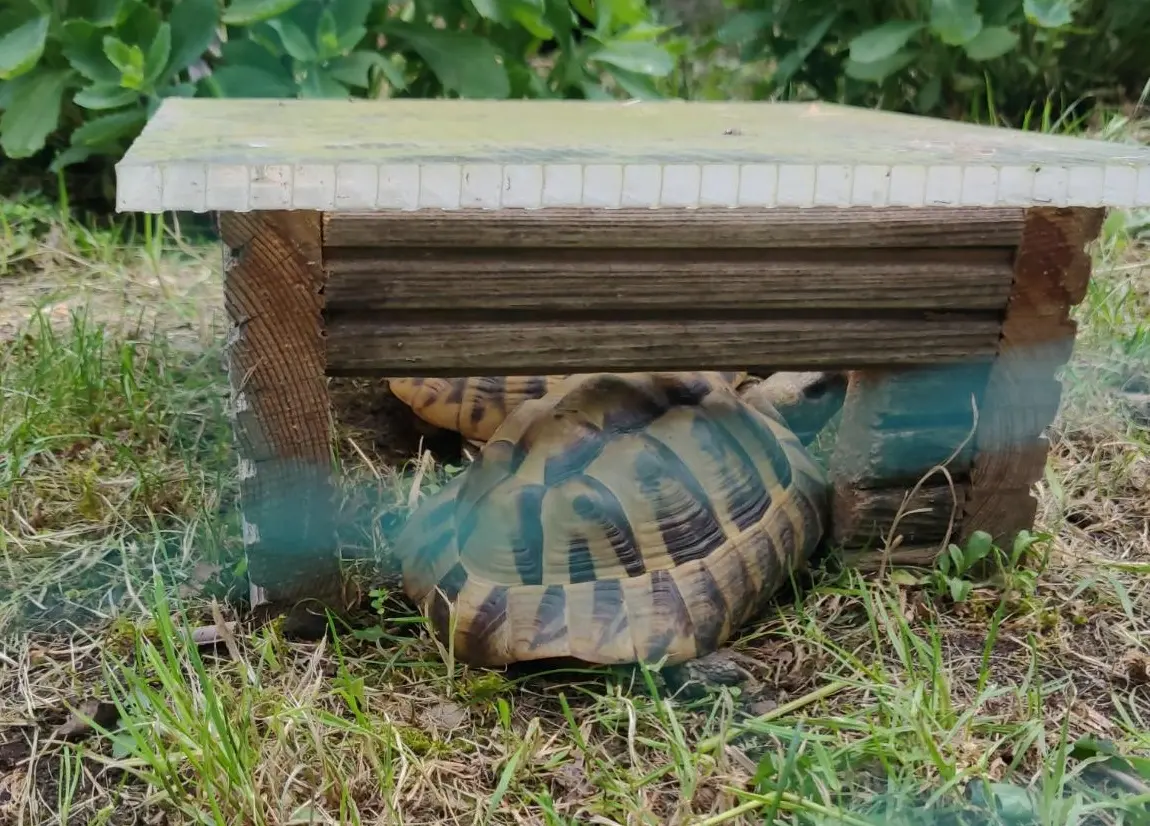
March 31, 2025Last year, I built my turtles a small hut from scrap wood pieces I found in our firewood stack.
Since they loved it, and always tried getting into the hut at the same time,
even though it barely fit them two, I figured I’d build them a second one.
Restrictions
The wood has to come from our firewood stack.
I gave myself at most 60 minutes to build this little hut. (I originally wanted to do 30 minutes)
I allowed myself to use every tool I wanted (unfortunately the bandsaw is broken right now - foreshadowing).
I also didn’t limit the types or amount of screws I could use.
We also had a plastic roof sheet lying around; it didn’t quite fit, but it worked out in the end.
Getting started
I wanted the second hut to essentially have the same size as the old one. Which is why I started by measuring the old hut so that I could pick out wooden offcuts that are large enough.
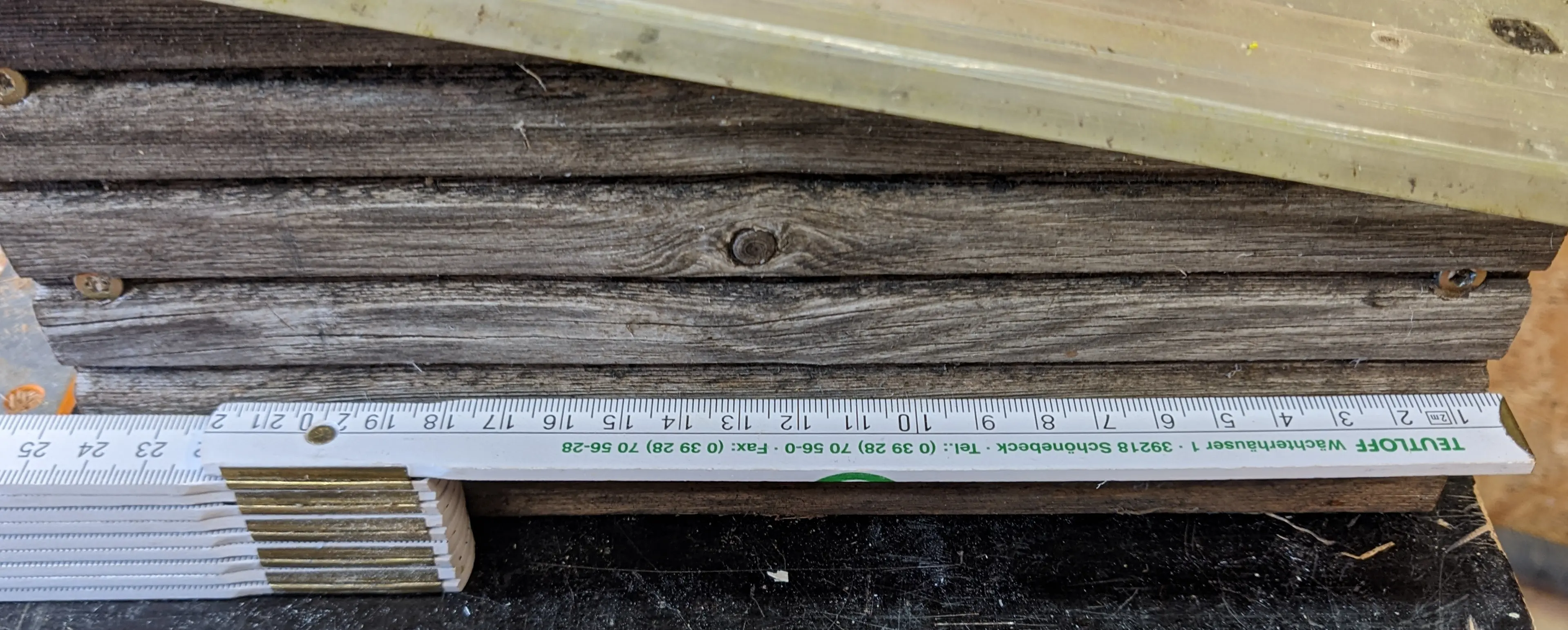
The old hut is 24.5 cm long, and 25 cm wide, measuring 13.5 cm in height at the front
and 8.5 cm at the back.
With that in mind, I went to our firewood stack, and luckily for me,
three pieces of exactly the same type of wooden slab, I used for the old hut, were left.
After taking them with me inside, I brushed the wood chips and spiderwebs off them.
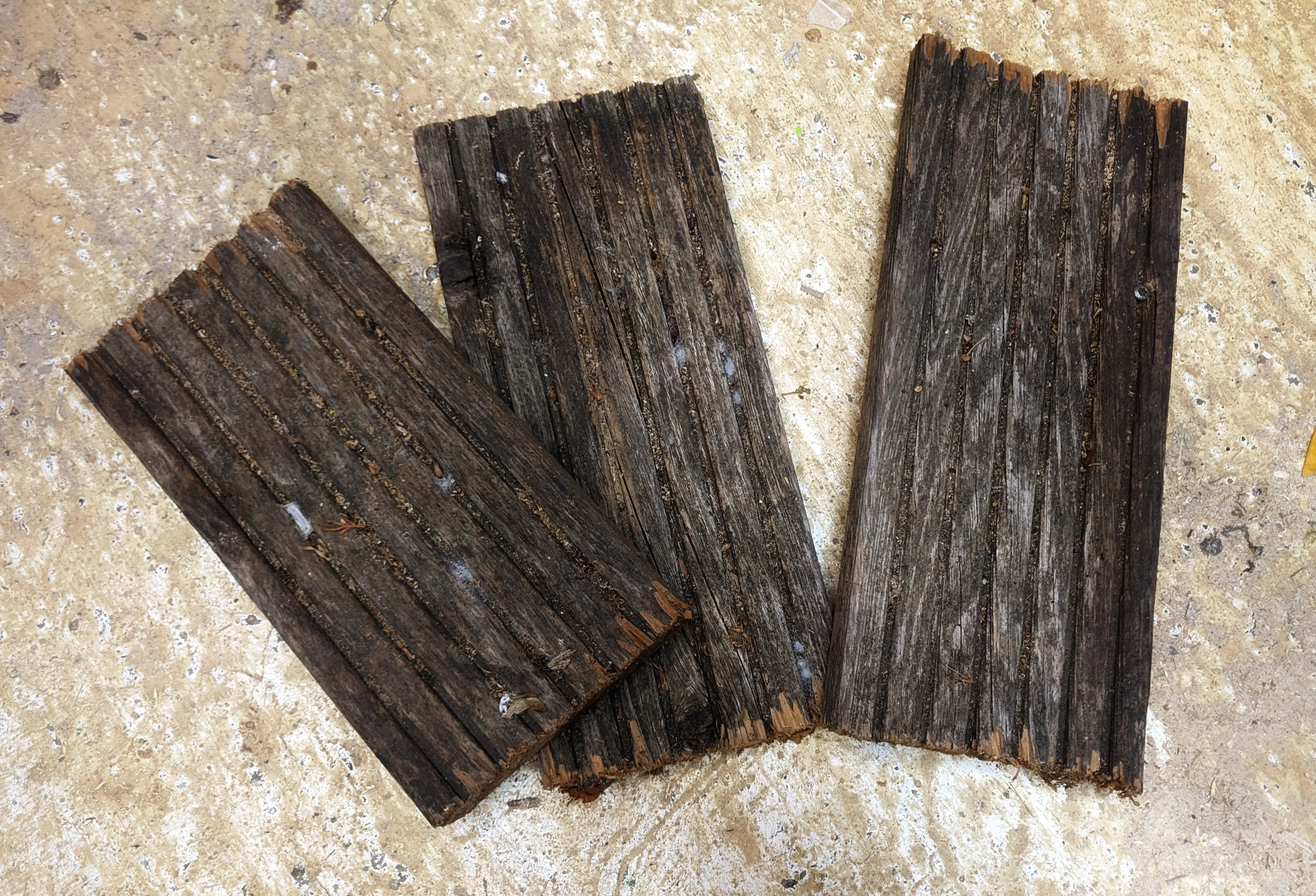
This is when I noticed that one of the pieces had an old screw stuck inside.
With no time to remove it, I was considering going back to check if there were other pieces left.
Then I noticed that, it might just miss the screw, because of the angle the roof is at.
Cutting the side panels
I started by cutting two straight edges across the grain on the first piece using the miter saw.
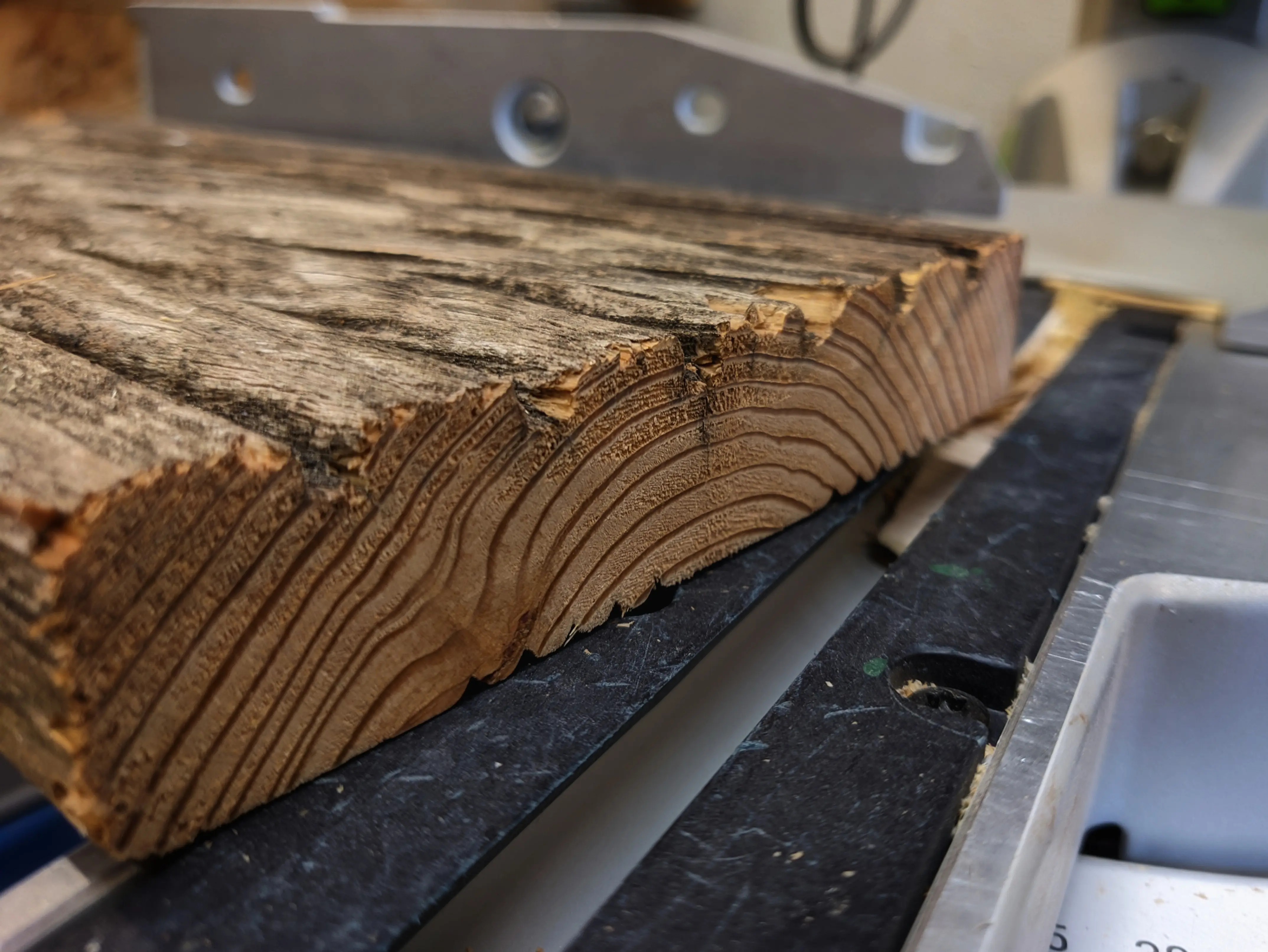
After marking the angle of the roof, I noticed that the cut would be perfect for the bandsaw. Unfortunately, the bandsaw is broken right now, so I had to do with the miter saw (I didn’t want to cut anything this small free-handed on the table saw).
Luckily for me, the miter saw was able to reach across the entire piece.
I ended up going really slow and flipping the piece after cutting through half of it.
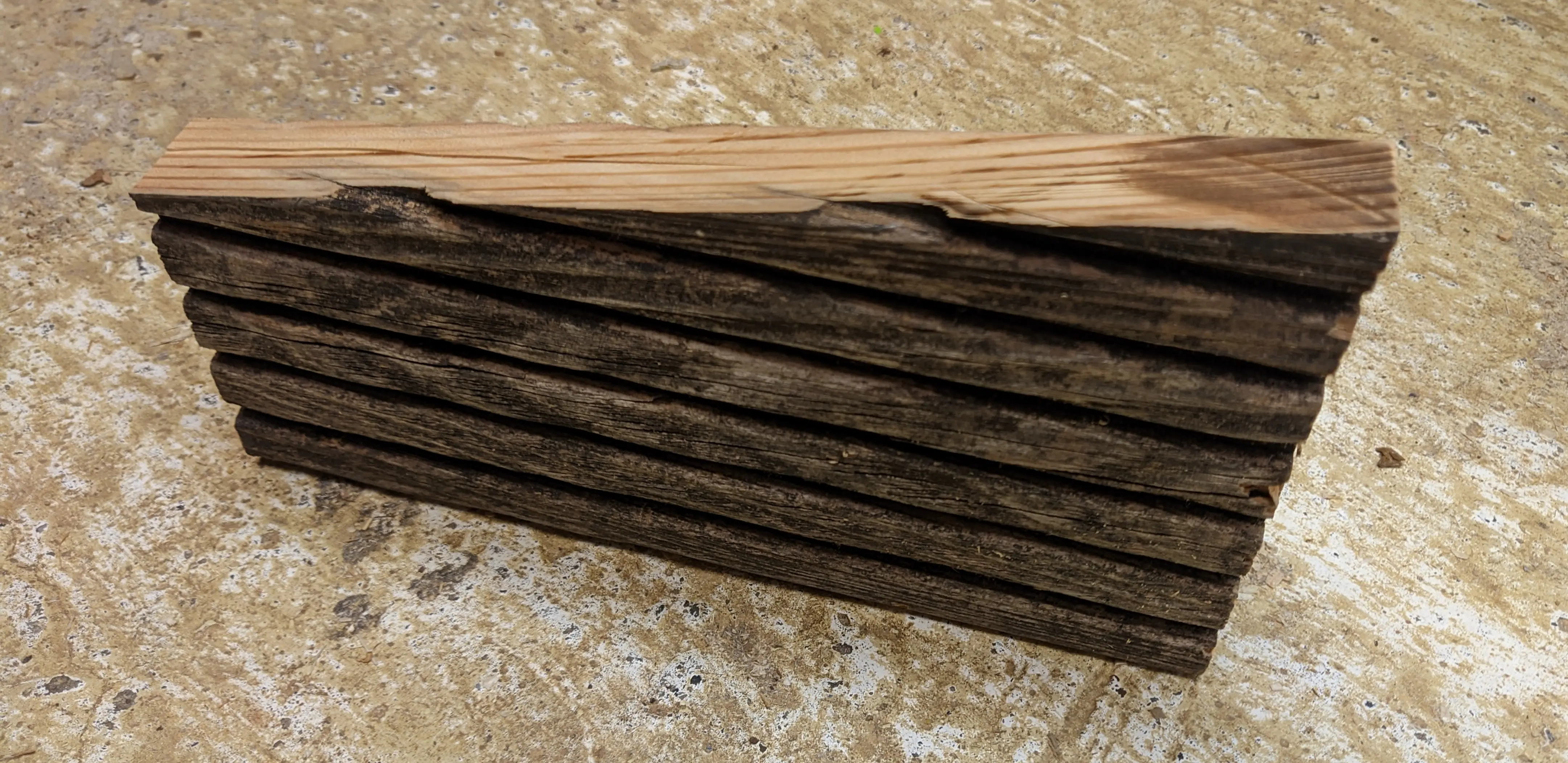
If you are wondering what happened to the screw, it just ended back up on the scrap wood pile.
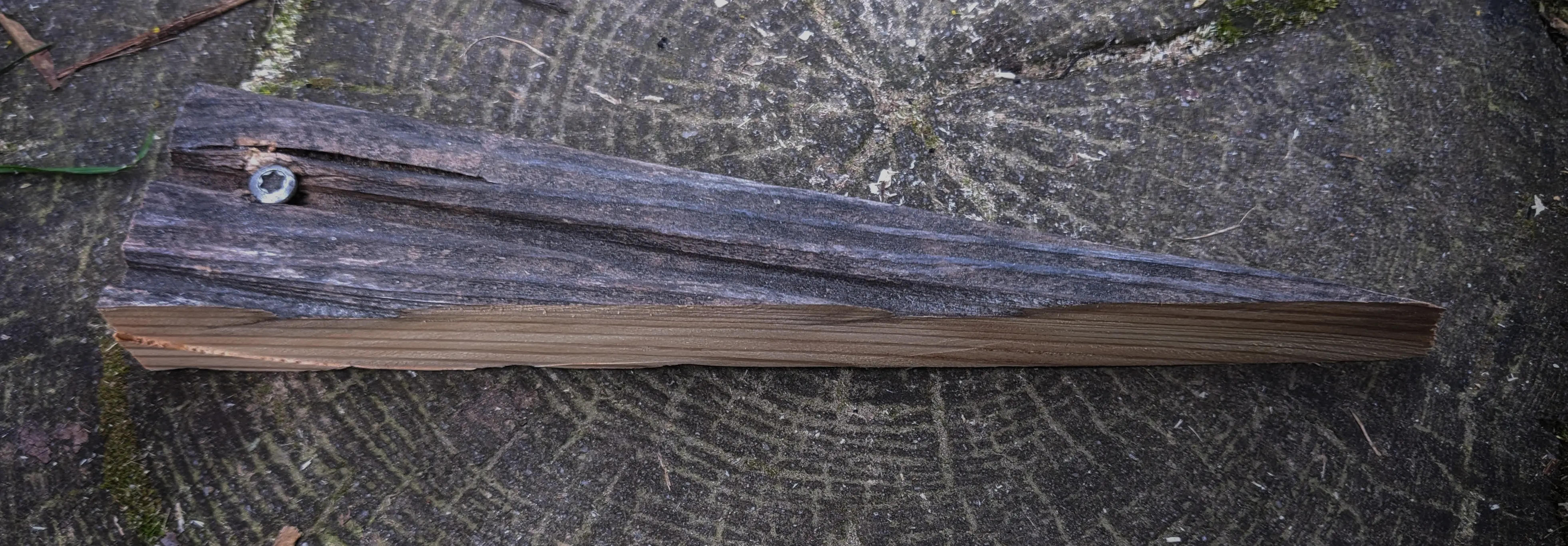
After finishing the first piece, I flipped it, to trace its outline onto the second side piece.
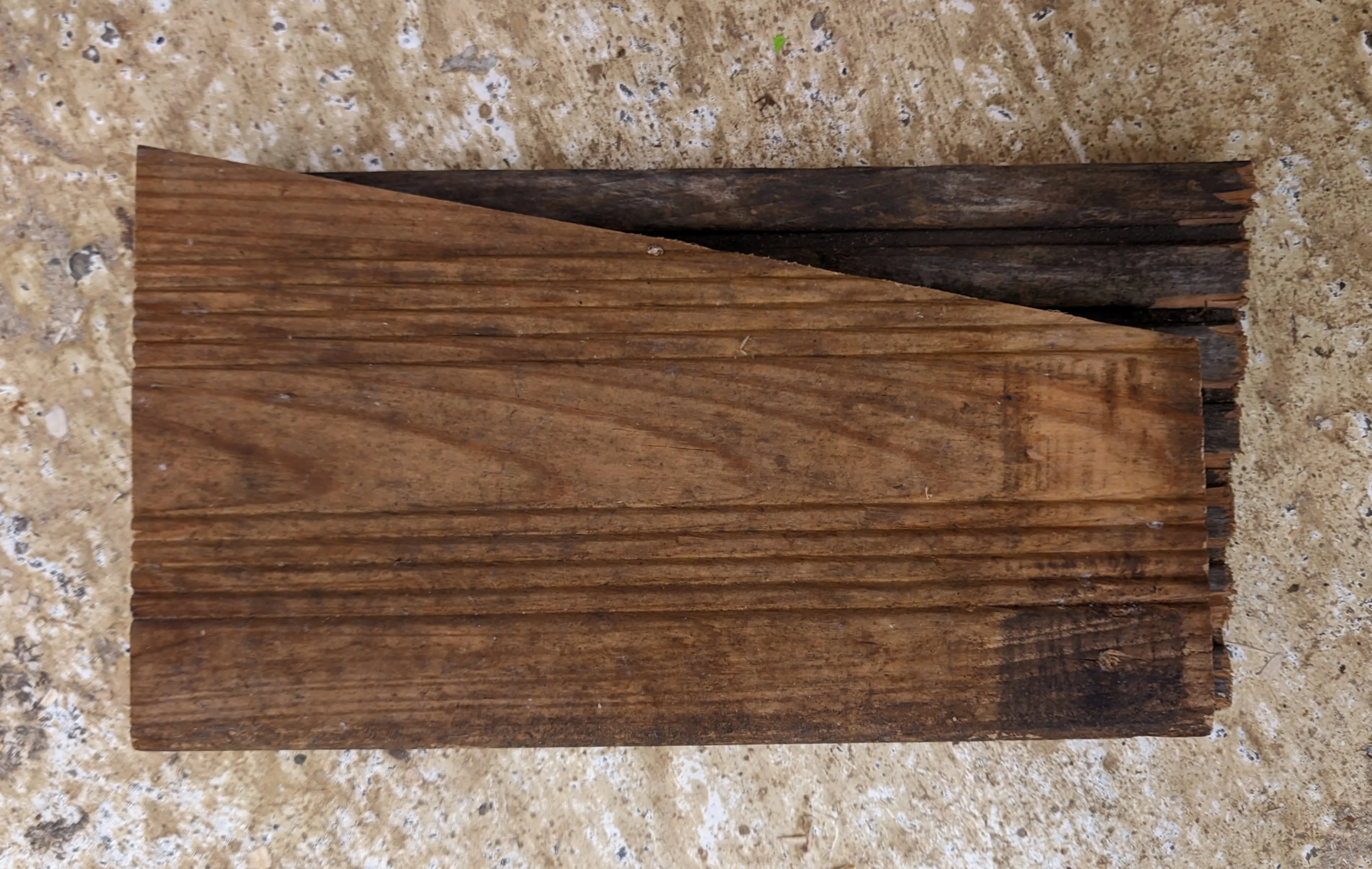
I cut the cross-grain sides first and then went to do the diagonal.
And this is where things started getting chaotic.
Because I started running out of time,
I didn’t clamp down the pieces for the diagonal cuts, allowing them to move slightly while cutting.
It really showed on this piece;
the cuts didn’t line up, and there was a noticeable gap compared to the first piece.
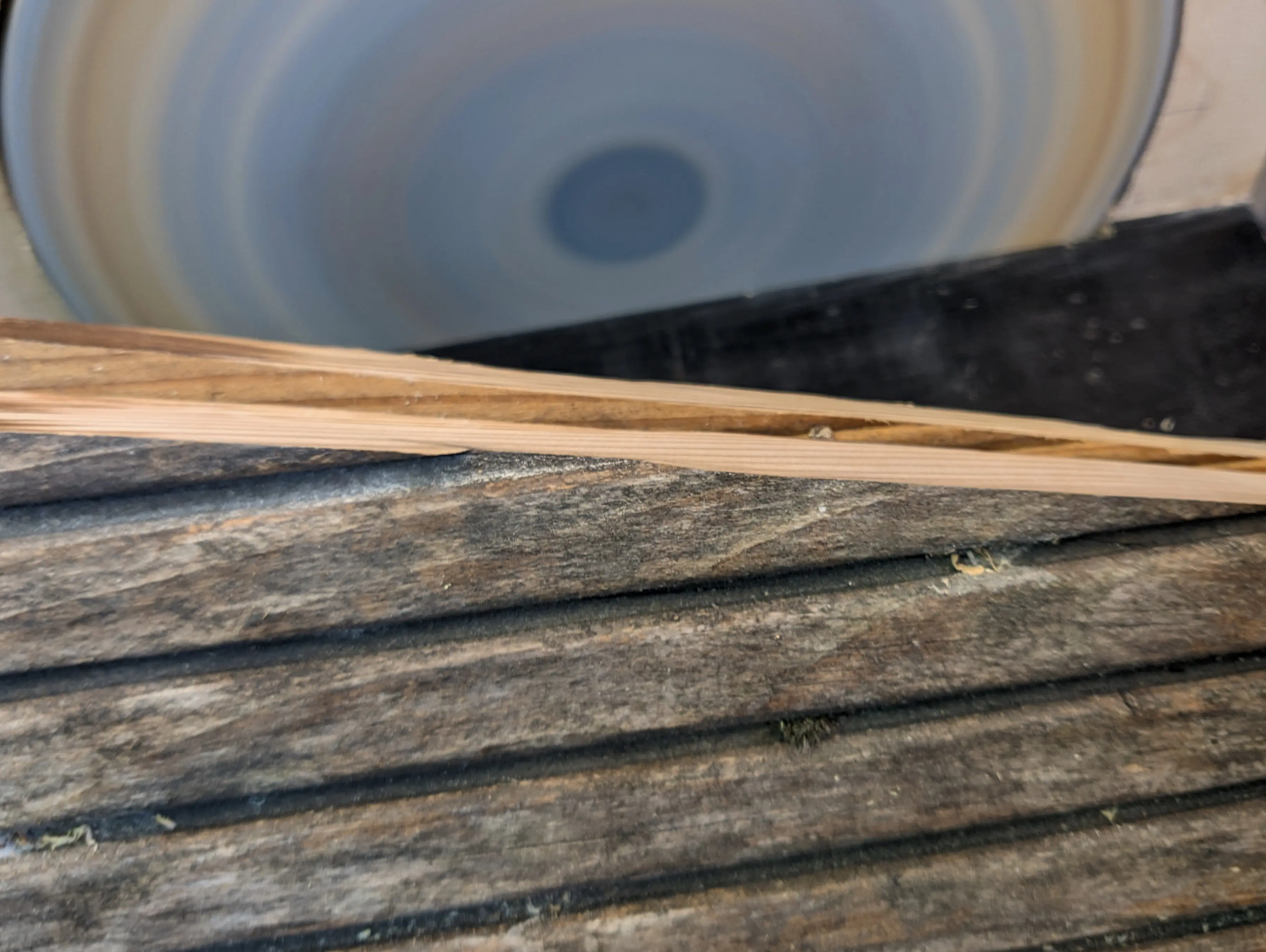
I didn’t feel comfortable correcting this on the miter saw,
so I used the sander to sand them flat.
This took a while - it also filled up the room with sawdust,
and probably wasn’t that good for the sandpaper,
but well, that is what happens when you rush a task.
Cutting the front and back
After finishing the side pieces,
it was time to move on to the front and back pieces.
Sadly, things didn’t go any smoother from here on.
I cut both cross-grain sides flat again and marked the height of the back side, by using the side pieces as a reference.
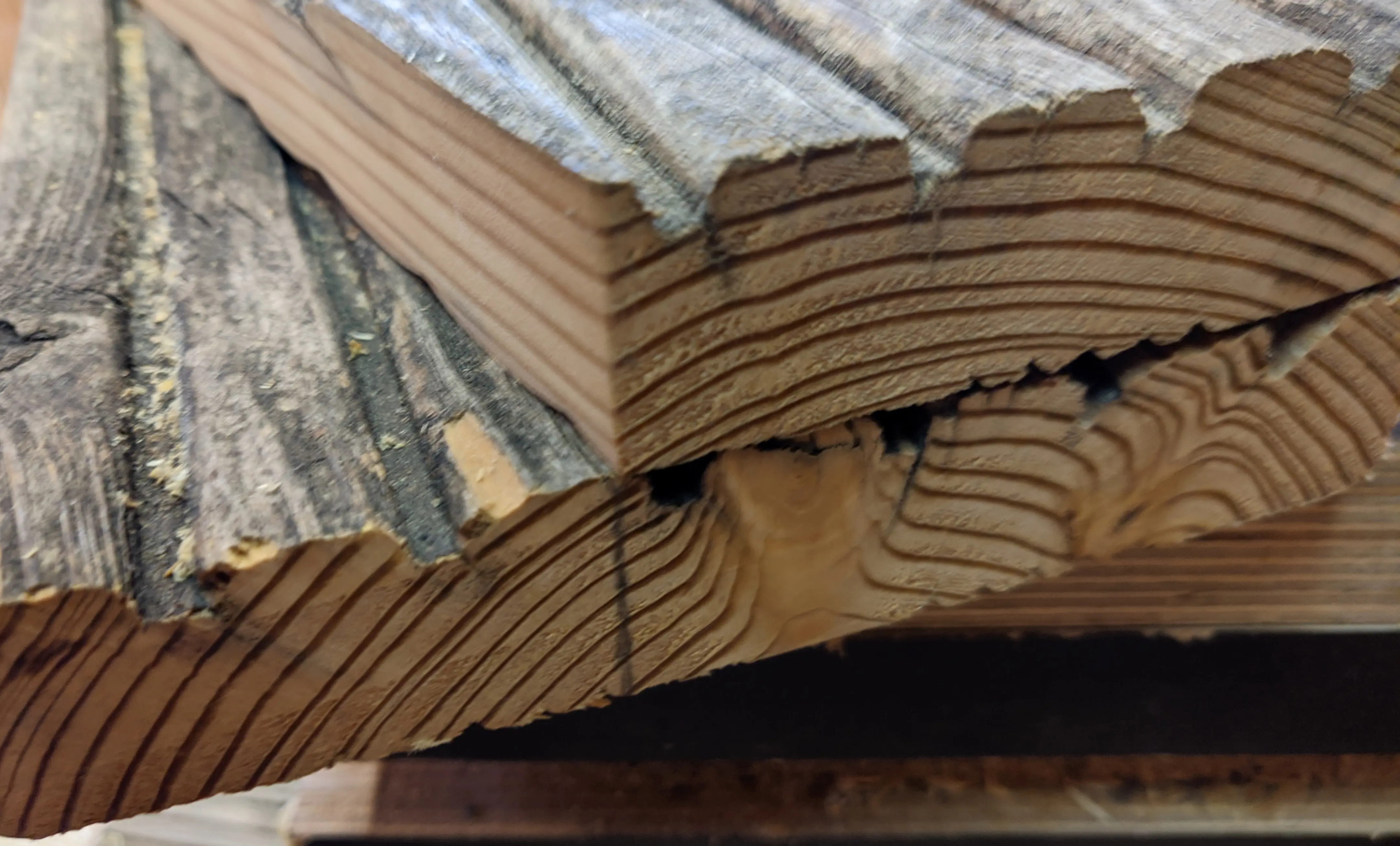
I chose to make the back part 22 cm long, as I wanted the turtles to have more space,
especially if they continue growing.
Again, the bandsaw or table saw would have been perfect for a 22 cm cut,
but at this point I already exceeded my initial time limit of 30 minutes,
so I tried working as fast as possible.
And did the cut on the miter saw - again.
However, this time, things were even worse, and the two sides didn’t line up at all.
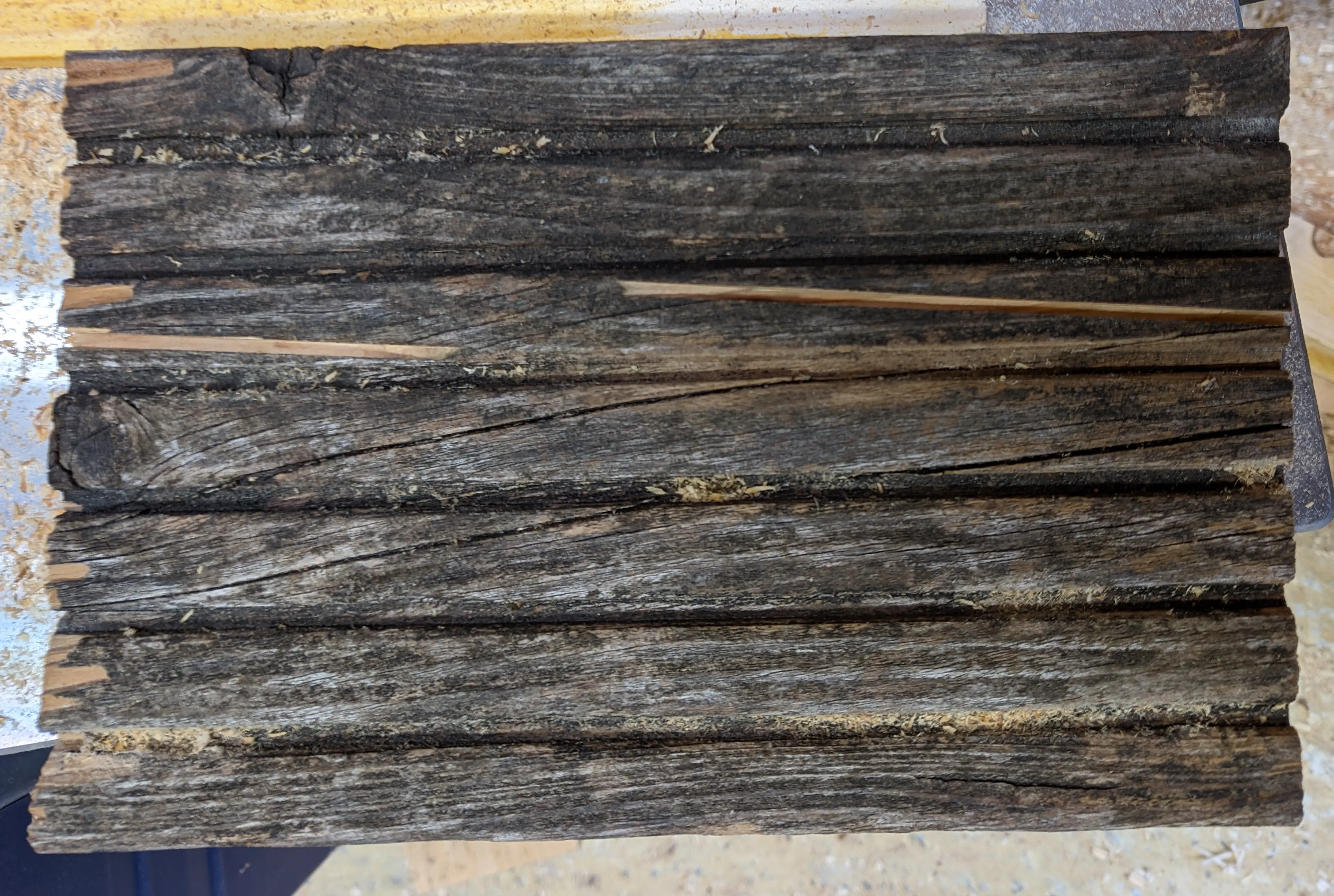
Luckily, I noticed this before cutting all the way through,
but the damage could have been prevented, had I checked the cut beforehand.
I ended up aligning the piece by eye to get the cut I wanted,
knowing that it still meant that the sides weren’t .
(But hey, they don’t have to be straight)
Putting it together
Because I didn’t want to risk anything else, I decided to predrill the holes, by aligning everything on a flat surface.
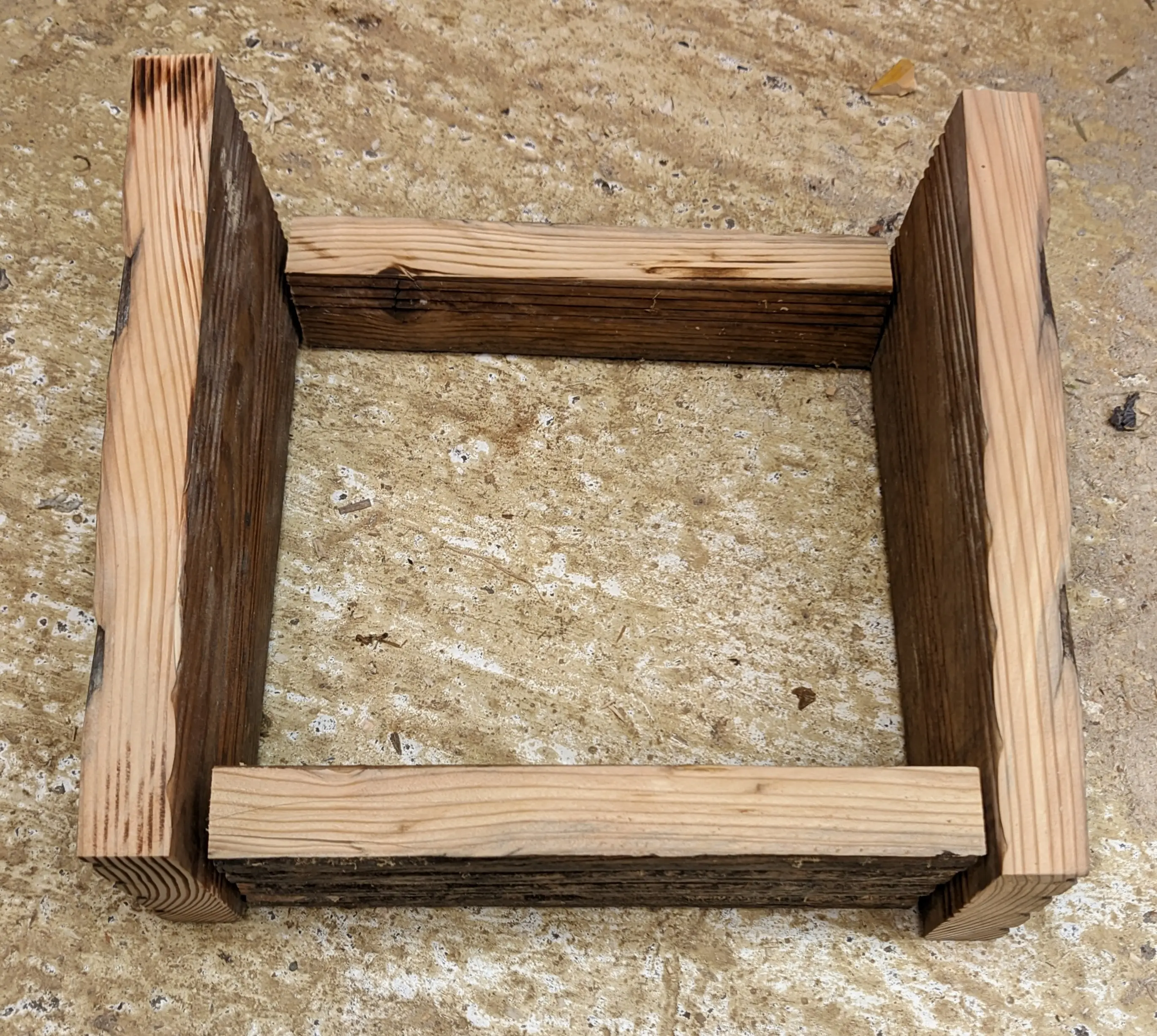
I then used 4.5 x 45 mm screws to screw the panels together.
And if you ignore the slight offset on one of the corners,
it actually worked out pretty well.
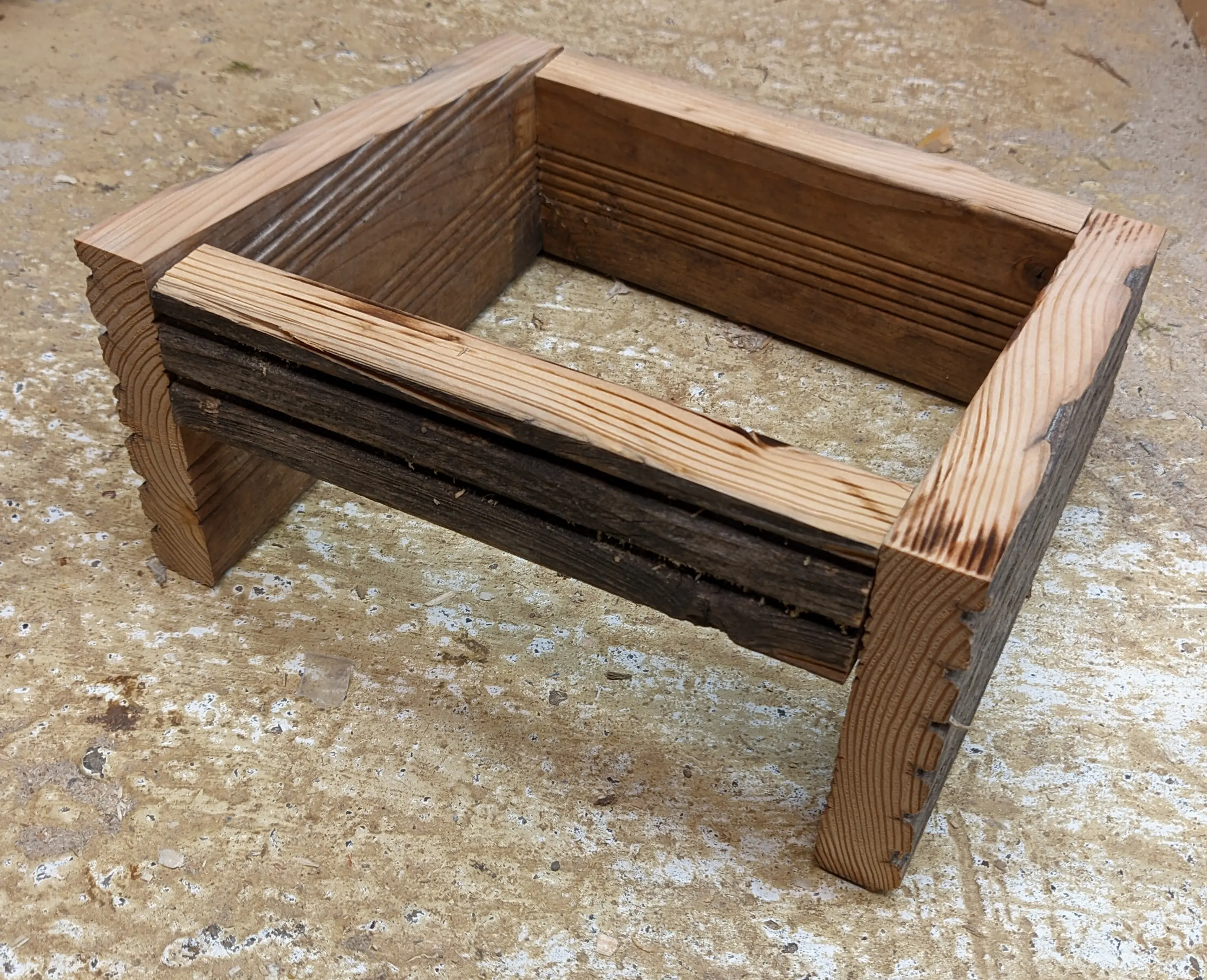
Earlier, when I cut out the front and back panels,
I checked if the roof panel was big enough to fit the entire hut,
and I knew that it wouldn’t fit.
However, I didn’t want to compromise on size,
so I knew that I had to overlap them.
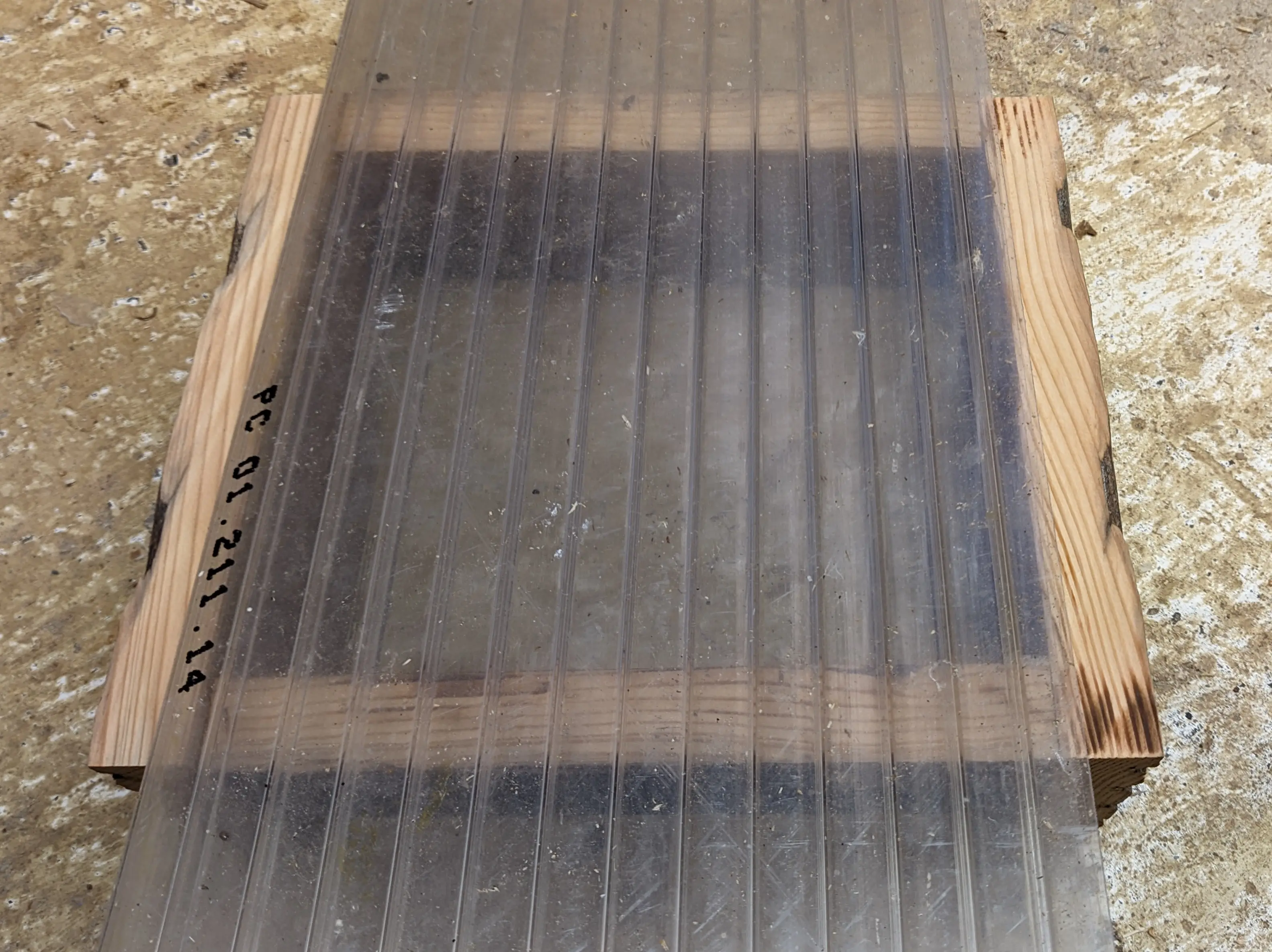
I initially tried cutting the plastic panel using a knife,
but gave it up fairly quickly and went with a handsaw instead.
The saw literally cut through it like butter,
which felt great - finally something went according to plan.
After cutting out the first panel, I cut out a panel of the same size
and then measured how much I would have to cut off, for them to overlap in the middle.
Once that was done, I aligned the panels using the plastic-bridge-lines and the inside of the walls.
At first, I tried screwing the screws (3 x 35 mm) straight through the plastic,
but they had no grip, so I had to predrill all the holes.
I also decided to use 3 screws for the front and back
so that I could fix the overlapping plates together,
to reduce water dripping through later.
Conclusion
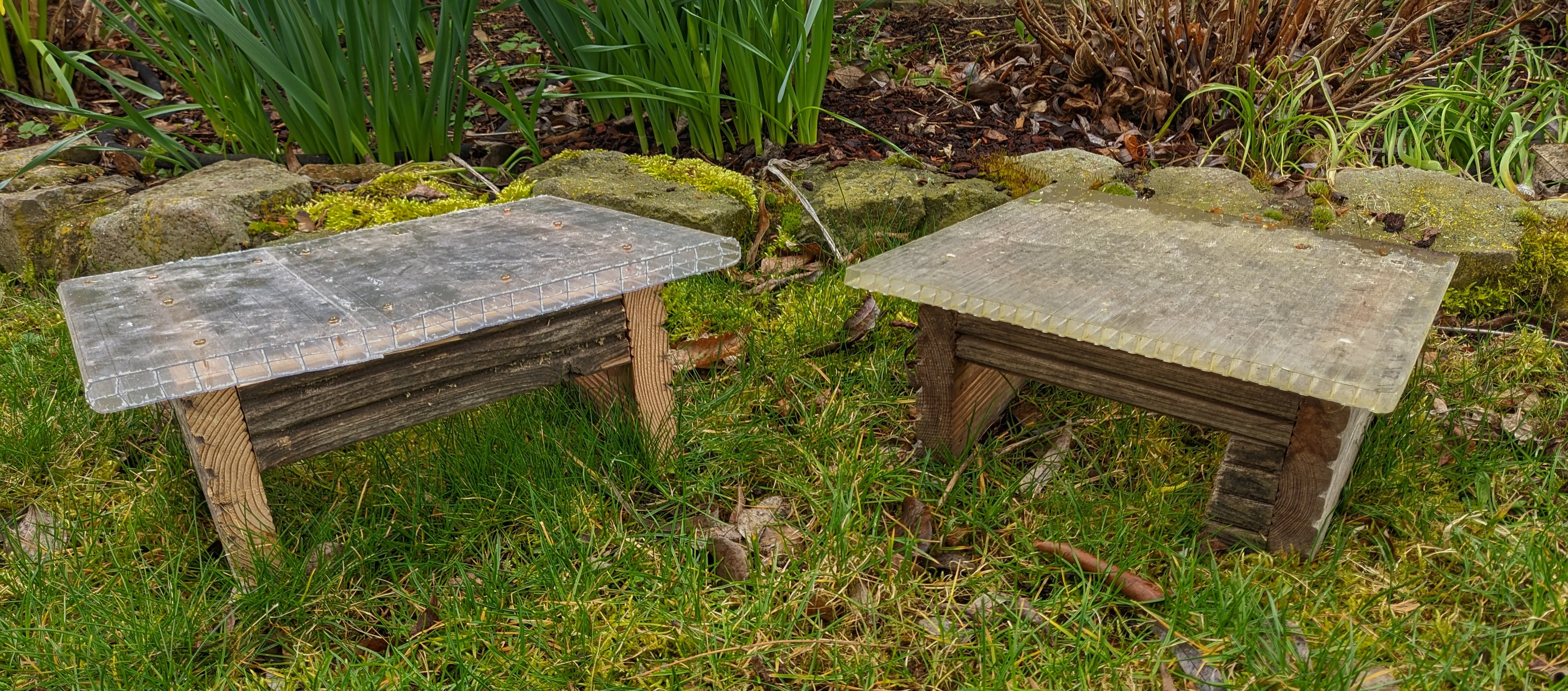
I had a lot of fun building this new tiny hut. But next time, I would probably take a little longer, to ensure that everything fits together properly.
Honestly, I somehow think that this attempt is a perfect representation
of the saying, that you don’t need expensive tools or access to every tool.
Because I obviously achieved what I set out to do,
using only a handsaw and a miter saw.
But it also shows that sometimes, having better tools or access to more tools
can improve the quality of the work or reduce the time spent.
I would love to show you a picture of the turtles enjoying their new hut,
but unfortunately they are still asleep, and probably will be for the next couple of weeks.
You can follow me on the Fediverse, where I’ll probably post a picture of them in the new hut
once they are back outside.