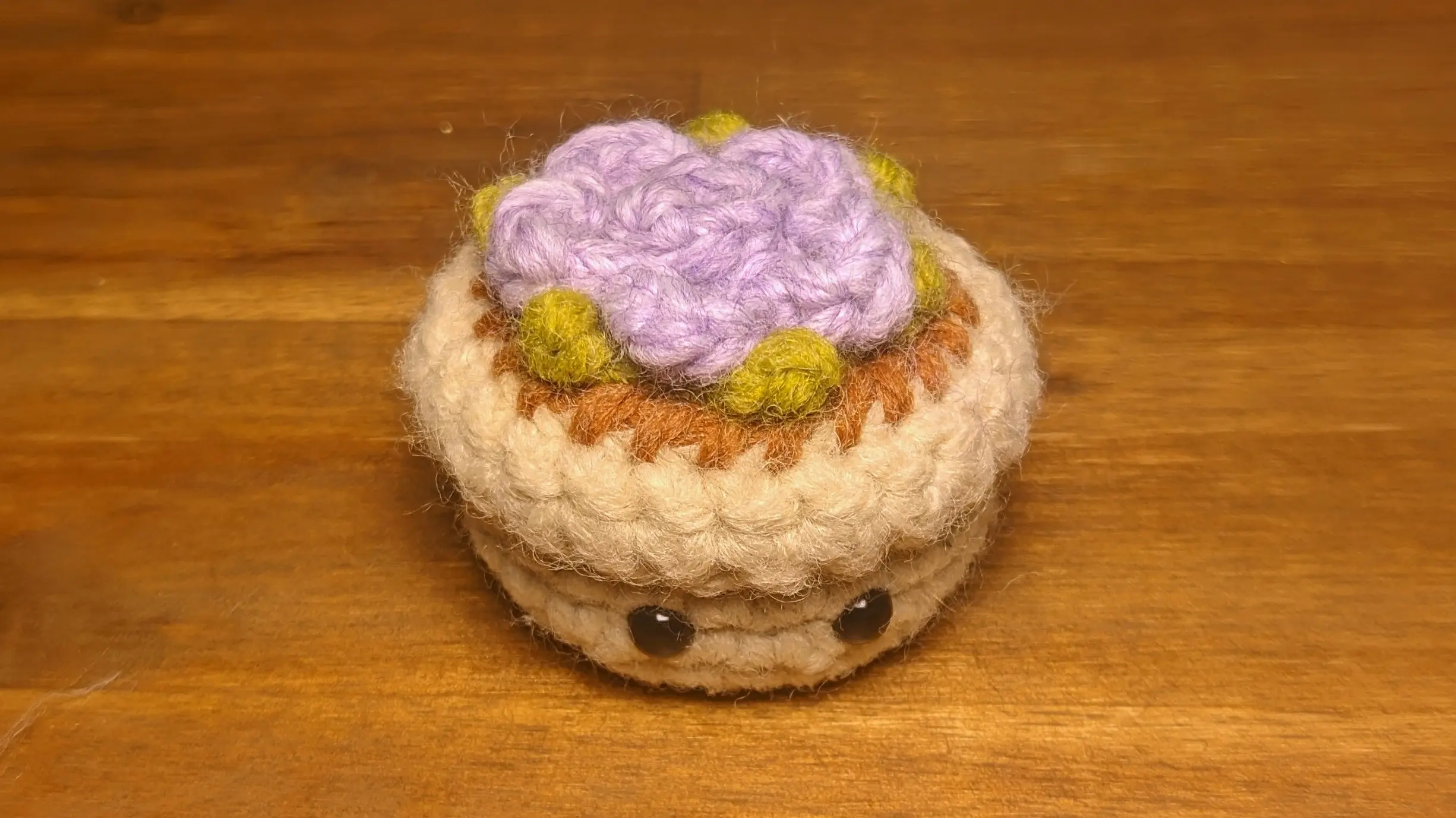
TinyFlowerpots: A small rose
December 22, 2025It’s almost Christmas, so I figured we could make another plant for our tiny flowerpot.
In this episode, we are going to make a small flower plant with rose-like petals
and plant it in one of the flowerpots we made in the Tiny Flowerpots Introduction post.
This plant is my personal favourite, as it looks really stylish but also incredibly cute.
Materials
- Yarn for the leaves (green)
- Yarn for the flower (i.e., lavendrr/purple or white)
- Crochet Hook (2 to 3 mm, depending on your yarn)
- Needle that can fit your yarn
- A crochet flowerpot without a plant.
Names
Before we start, let’s take a brief look at the abbreviations I use for the different stitches:
- SC = single crochet (One stitch in the next loop)
- SLST = slip stitch (Yarn over and pull through both the last stitch and the new loop on the hook)
- HDC = half double crochet (Yarn over, push hook through stitch, and pull yarn through. Then yarn over again and pull through all three loops)
- CH = chaining loops (by pulling yarn through loop)
This guide assumes you already know how to crochet
and mostly just lists the steps or stitches required.
The stitches themselves will be highlighted in bold.
Leaves
We are going to start with the leaves, which will be placed below the flower petals.
The pattern for the leaves is fairly simple, as you just repeat the same four steps as many times as you like to get as many leaves as you want.
You start with a loop formed around your hook and CH 4.
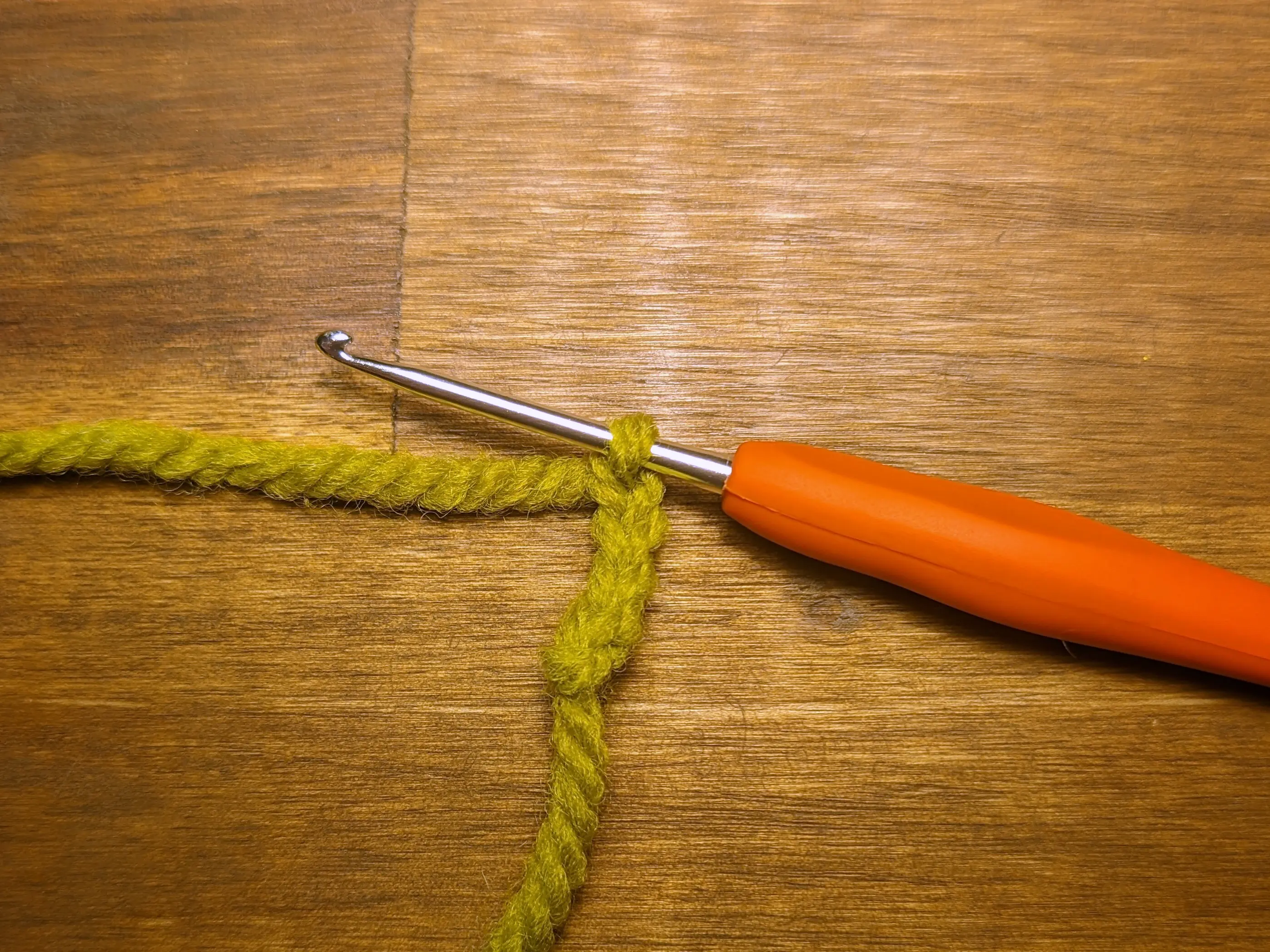
Afterwards, you’ll work your way back down the chain. First of all, SLST into the loop on the left of the hook. Then SC into the next ST and HDC in the last loop of the chain.
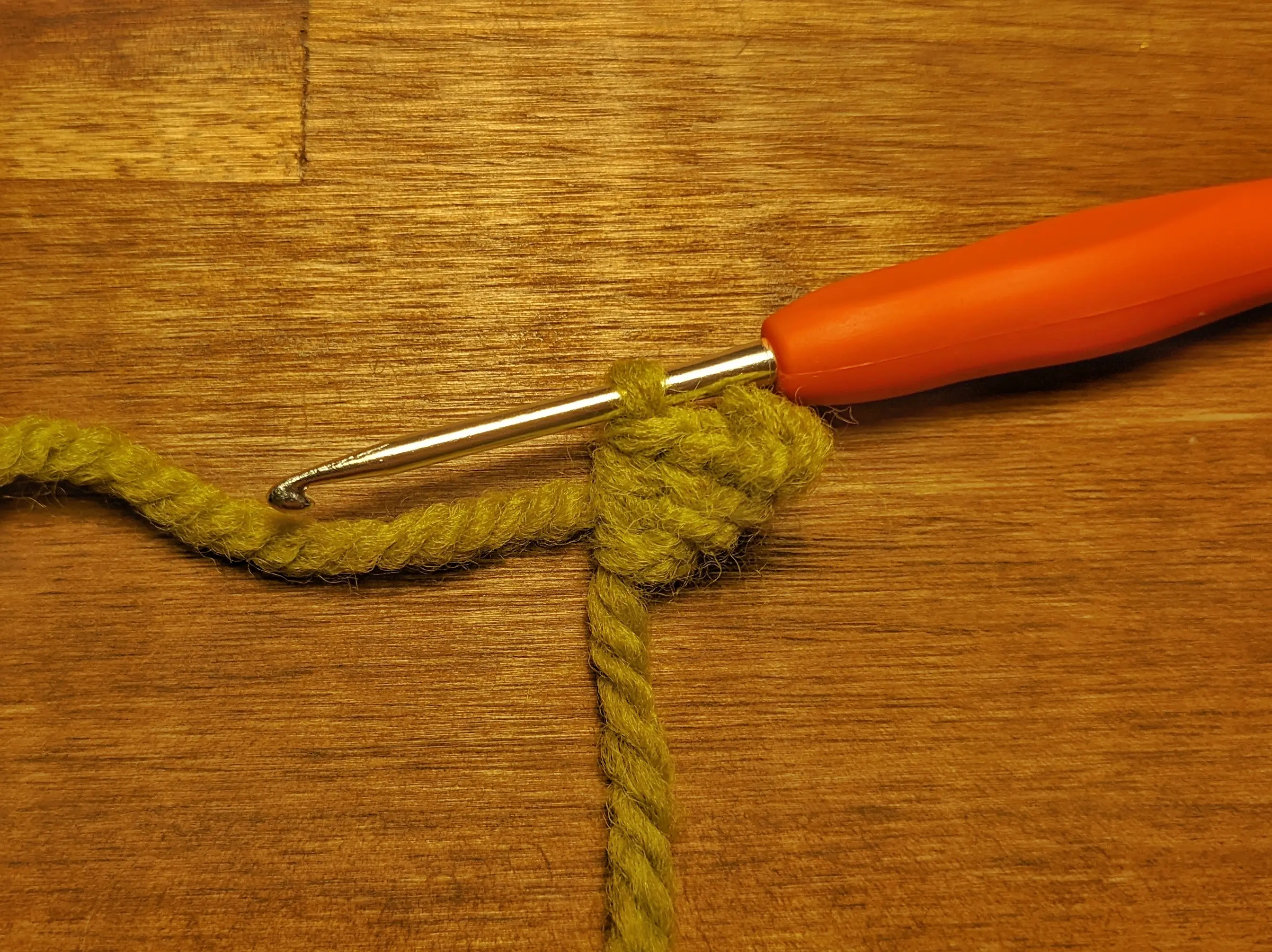
Now you basically repeat those steps again until you have as many leaves as you want.
I prefer 6 leaves in total, but up to 8 leaves might look good too.
- CH 4
- SLST into the third loop of chain (the one left of the hook)
- SC into the second loop of the chain
- HDC into first loop of chain
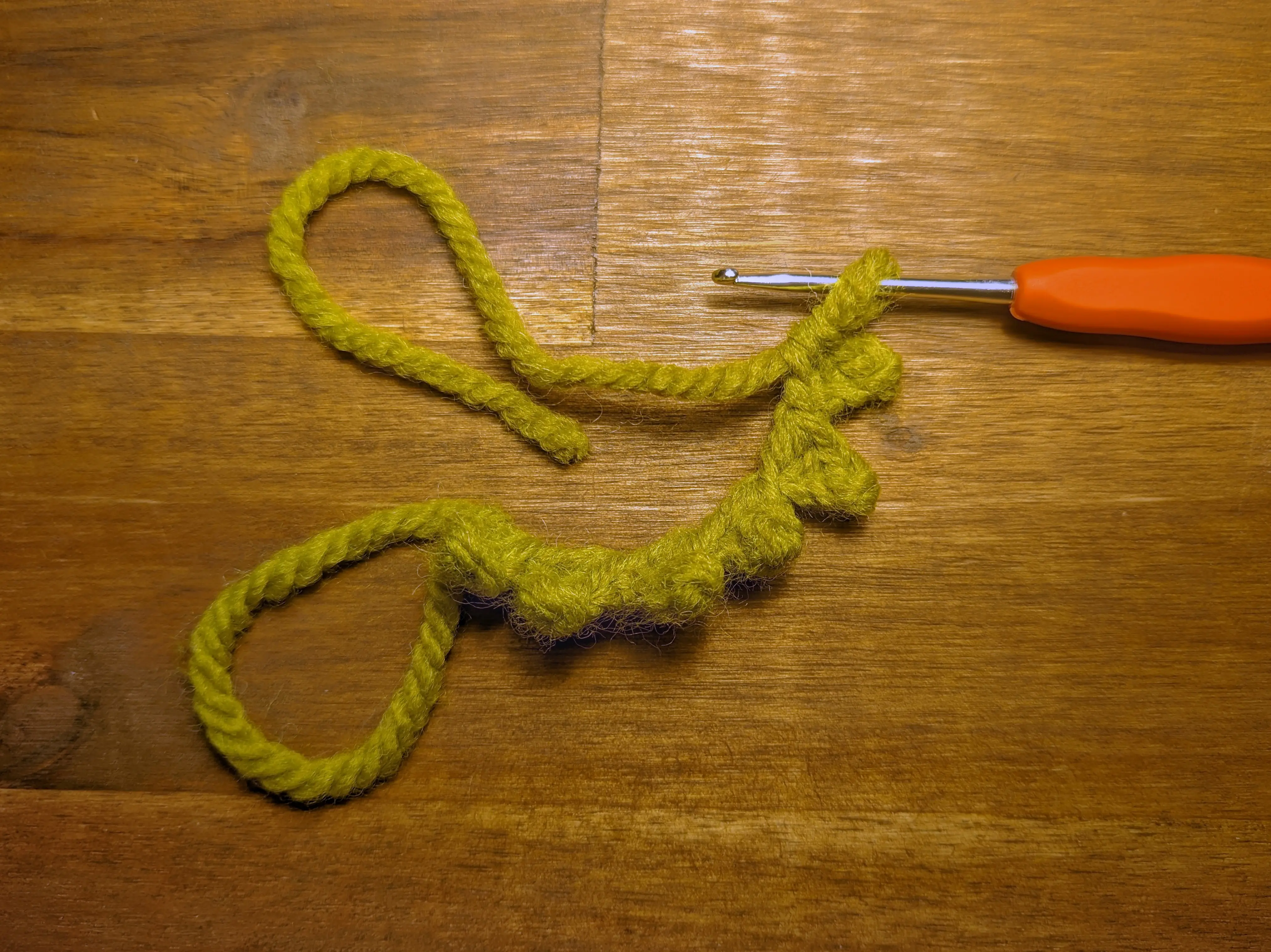
To close the chain, cut off the yarn, leaving some excess. And pull it through the loop currently on the hook.
Flower
The flower petals are almost as easy as the leaves, but they tend to get harder to work with the further you get along, because the strip wants to curl in on itself.
Again, you’ll start with a loop formed around your hook, but CH 13.
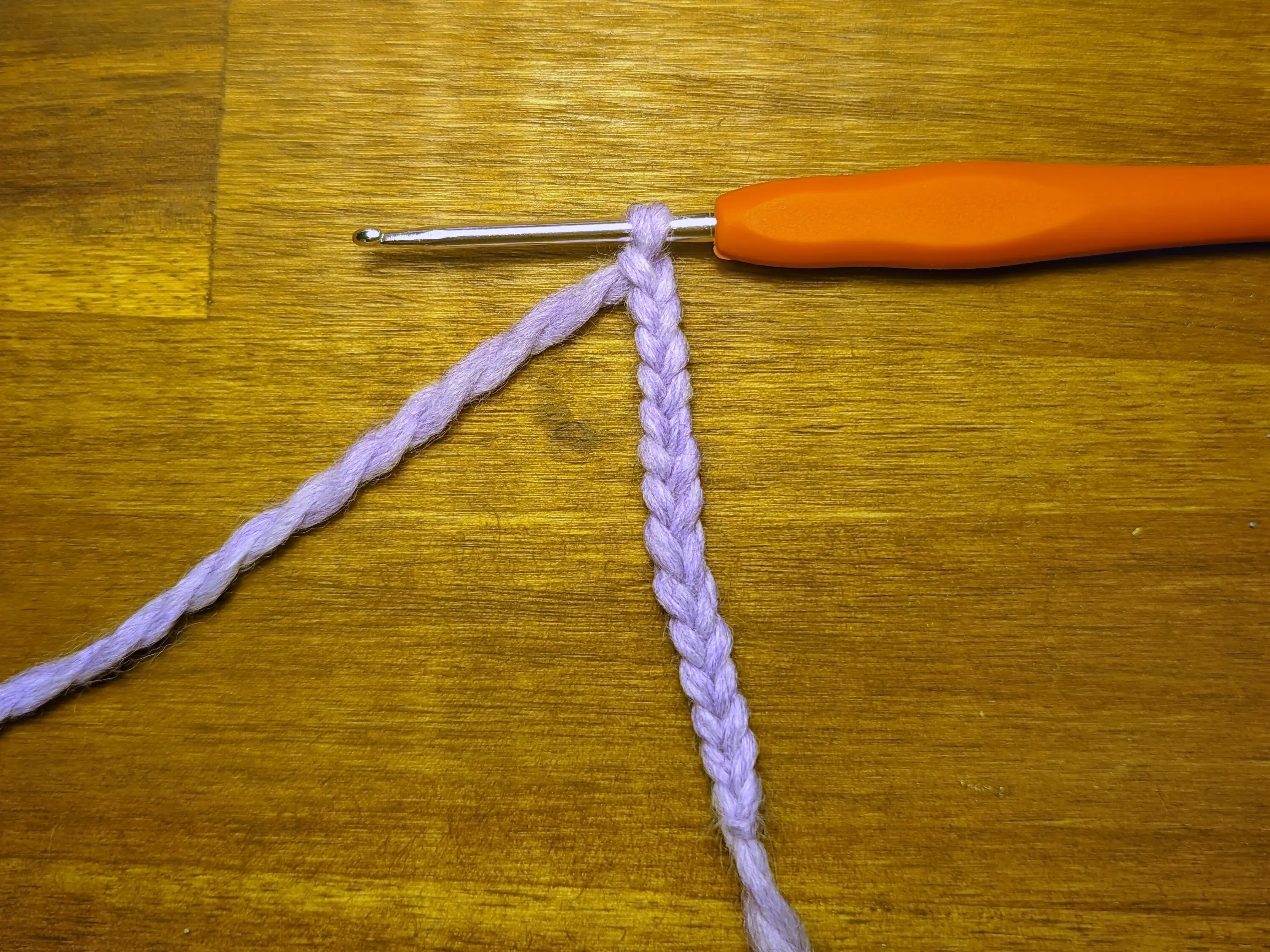
To make the petals, we’ll work the chain back to the beginning by repeating the same steps.
First of all, add 6 HDC into the next stitch, then SLST into the stitch after that.
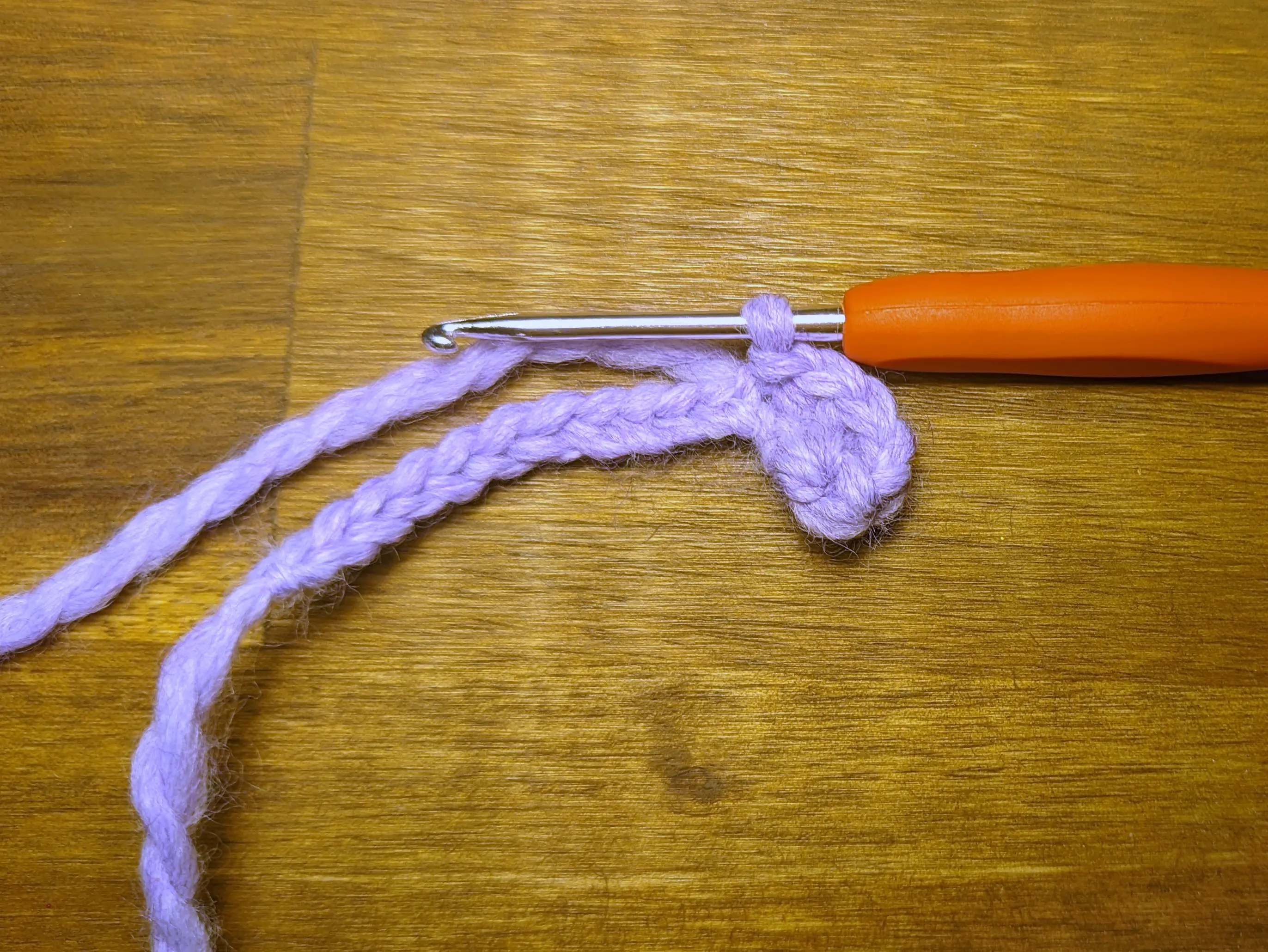
Repeat those two steps until you reach the beginning.
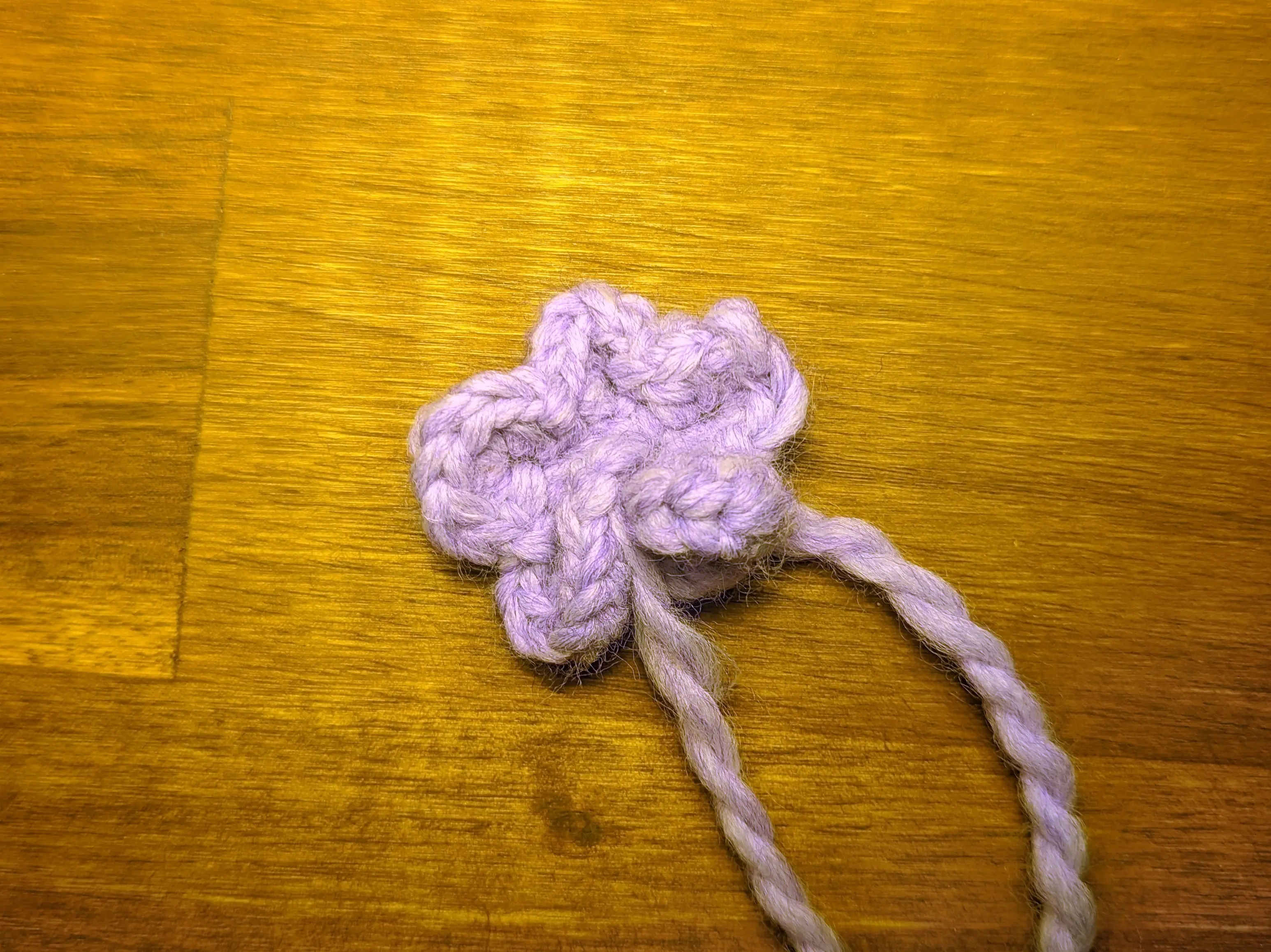
You should end up with six petals.
To finish off the petals, you can cut off the yarn, leaving about 6 cm of yarn. Use the hook to pull the yarn through the active loop.
Then tie a knot using both ends of the yarn to lock them close.
Assembly
With all the separate pieces done, it is time to assemble the plant.
We’ll start by pinning the leaves on the empty pot using some needles.
Make sure the strand of leaves forms a circle, which is centered on the pot.
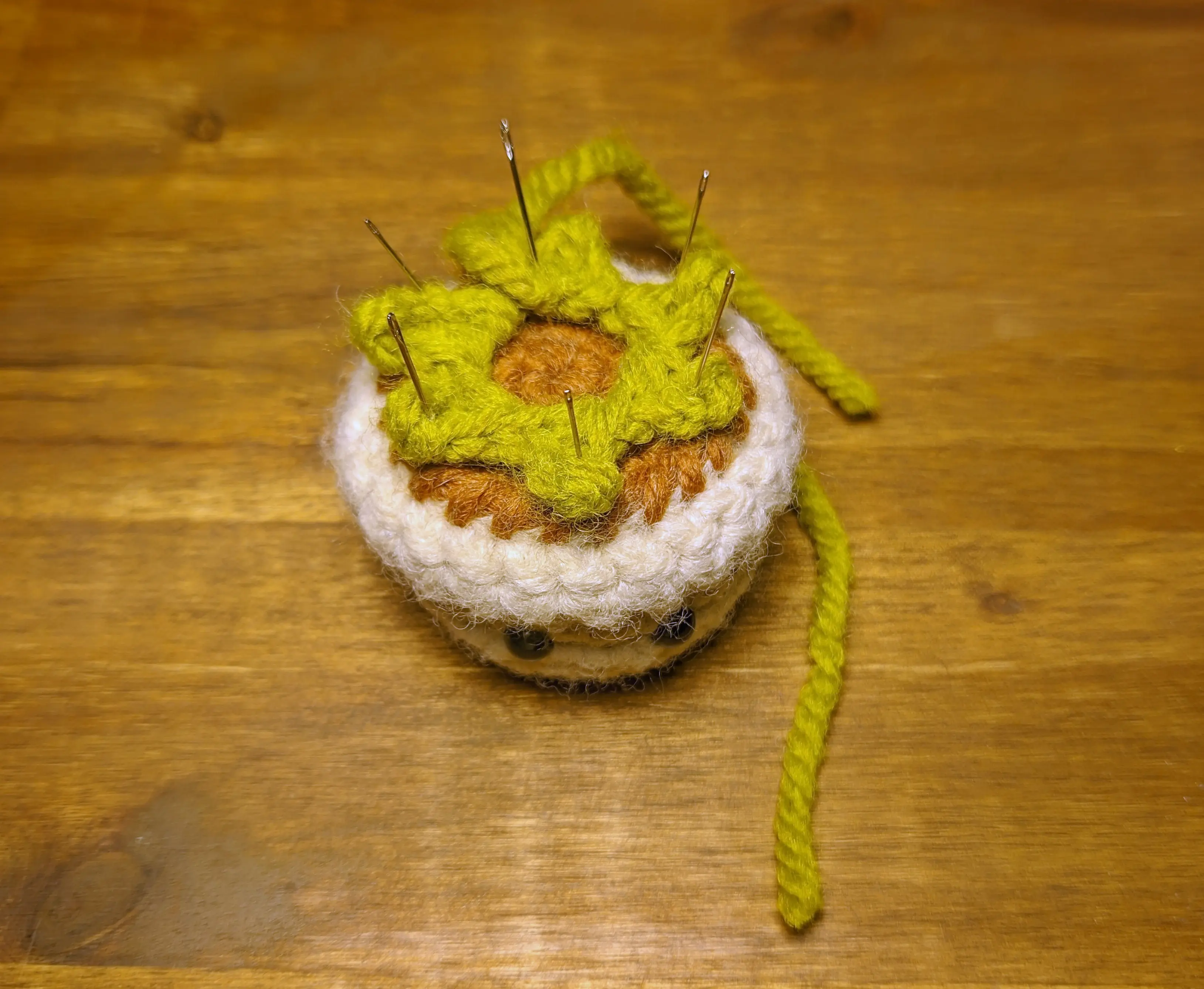
To get a sense of how the finished pot will look, I also like to pin the flower petals in place on top of the leaves.
I quite like to place them so that five petals are facing outwards and one petal is placed in the middle.
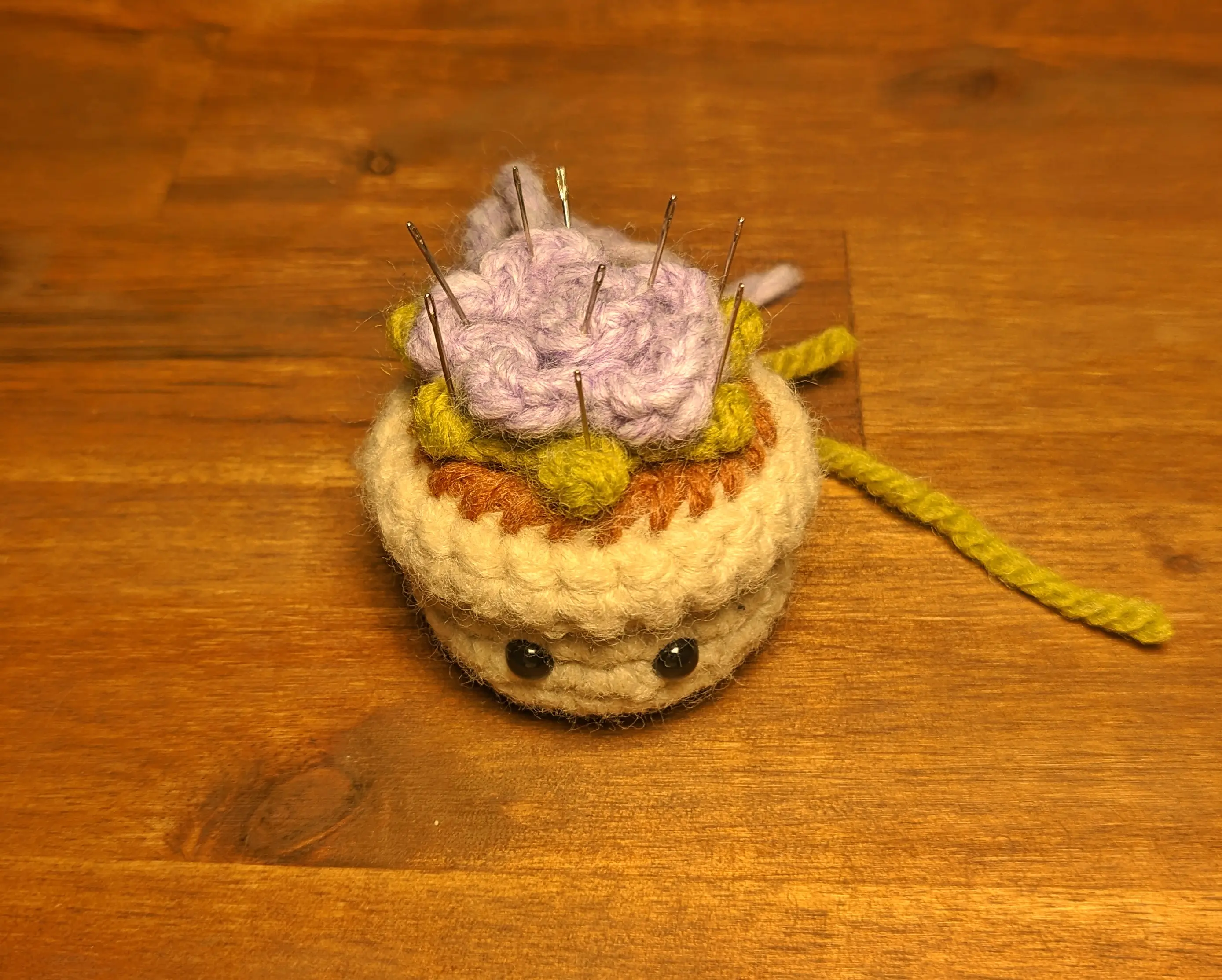
Before sewing on the leaves, remove the petals. Then use the excess yarn to hold the leaves in place.
If, like me, you don’t have a lot of yarn left on the leaves, just pull it inside the pot and use new yarn for sewing.
As I’ve explained before, you sew them on by moving the needle through a loop in the bottom of the pot and making sure to enter it through exactly the same loop.
That way your sewing stitches won’t be visible from the outside.
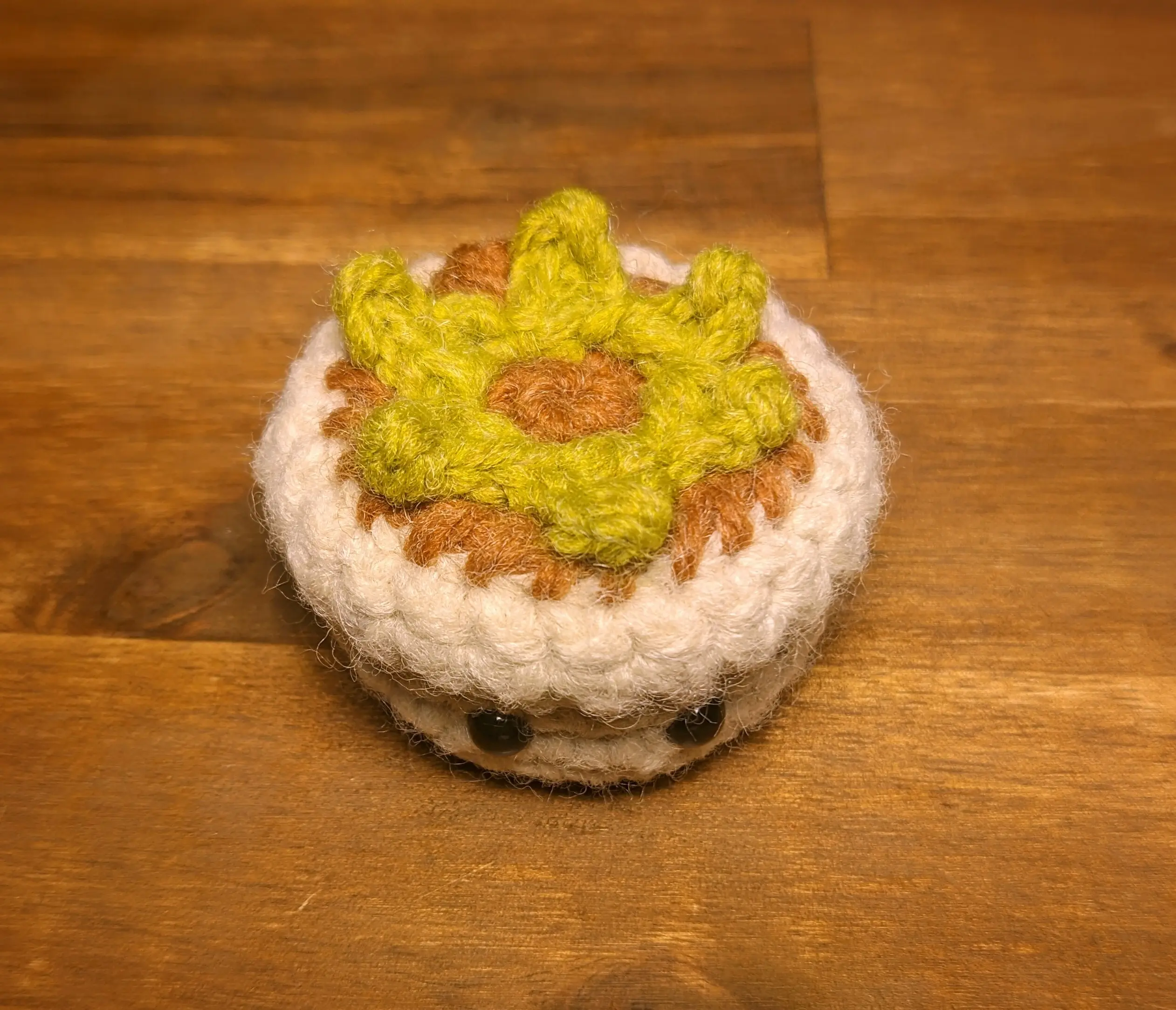
After sewing on the leaves, you can pin the flower petals back in place, aligning them just the way you like.
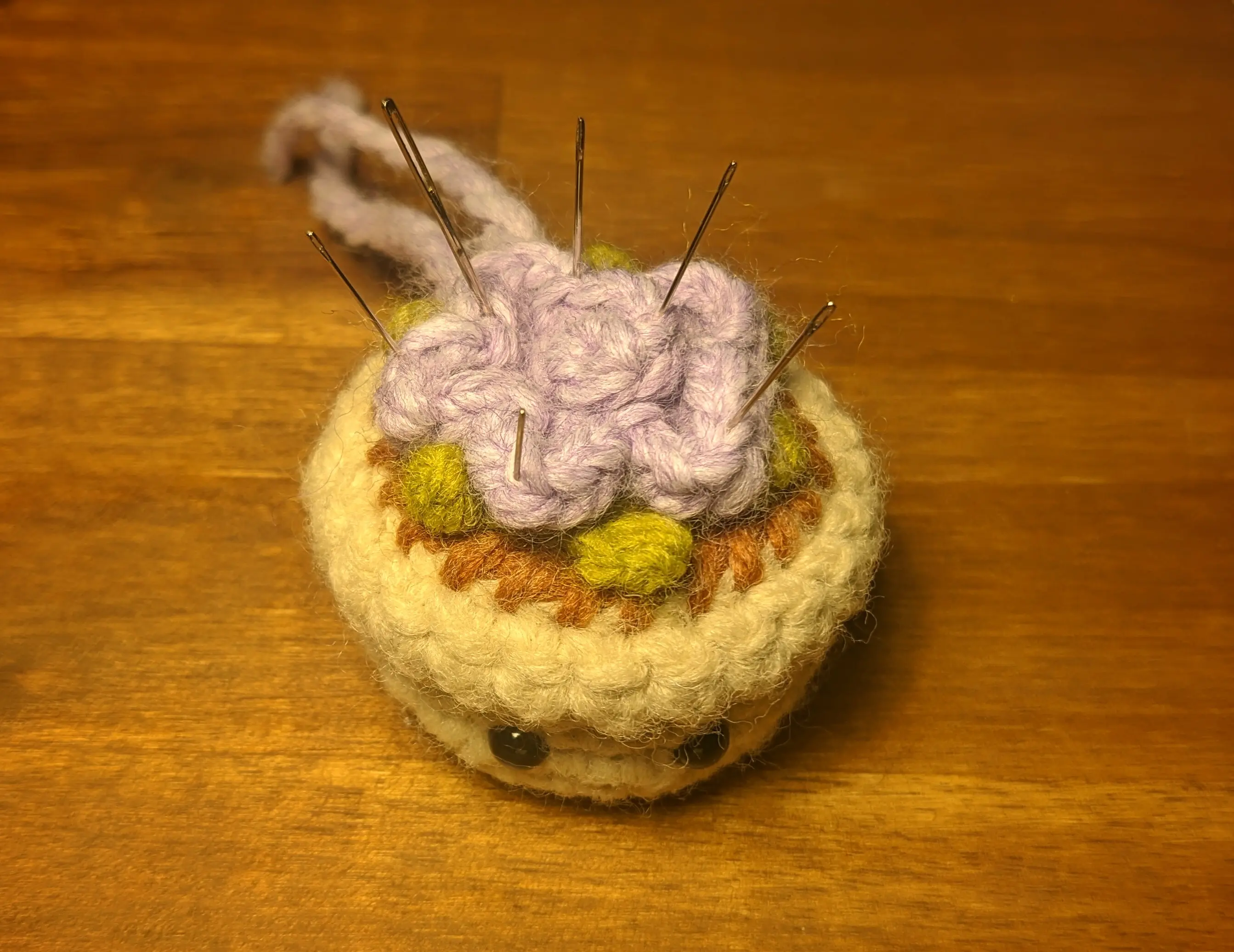
Lastly, work the excess yarn into the pot and use more yarn to sew the petals in place.
I would recommend not sewing them on too tightly. Instead, loosely fix them in place to give them a softer and more natural appearance.
And you’re done. Your cute flower is blooming and spreading happiness wherever it ends up.