TinyFlowerpots: Making a round pot
November 30, 2025As we are slowly entering gift-giving season.
I thought we would finally take a look at the tiny flowerpots I made last year as Christmas presents.
They are a perfect gift for loved ones and also make perfect decoration for your room.
You’ll also find that patting them is amazing 😍.
This project has been on my ToDo list since some time in 2024.
As you probably know, it is almost 2026.
So instead of pushing the project off for even longer, I decided to split it into multiple parts,
similar to what I’ve done with my ongoing It’s Canvas series.
I hope that this will finally give me the energy to make some progress.
So here we are, the first post in the new Tiny Flowerpots series.
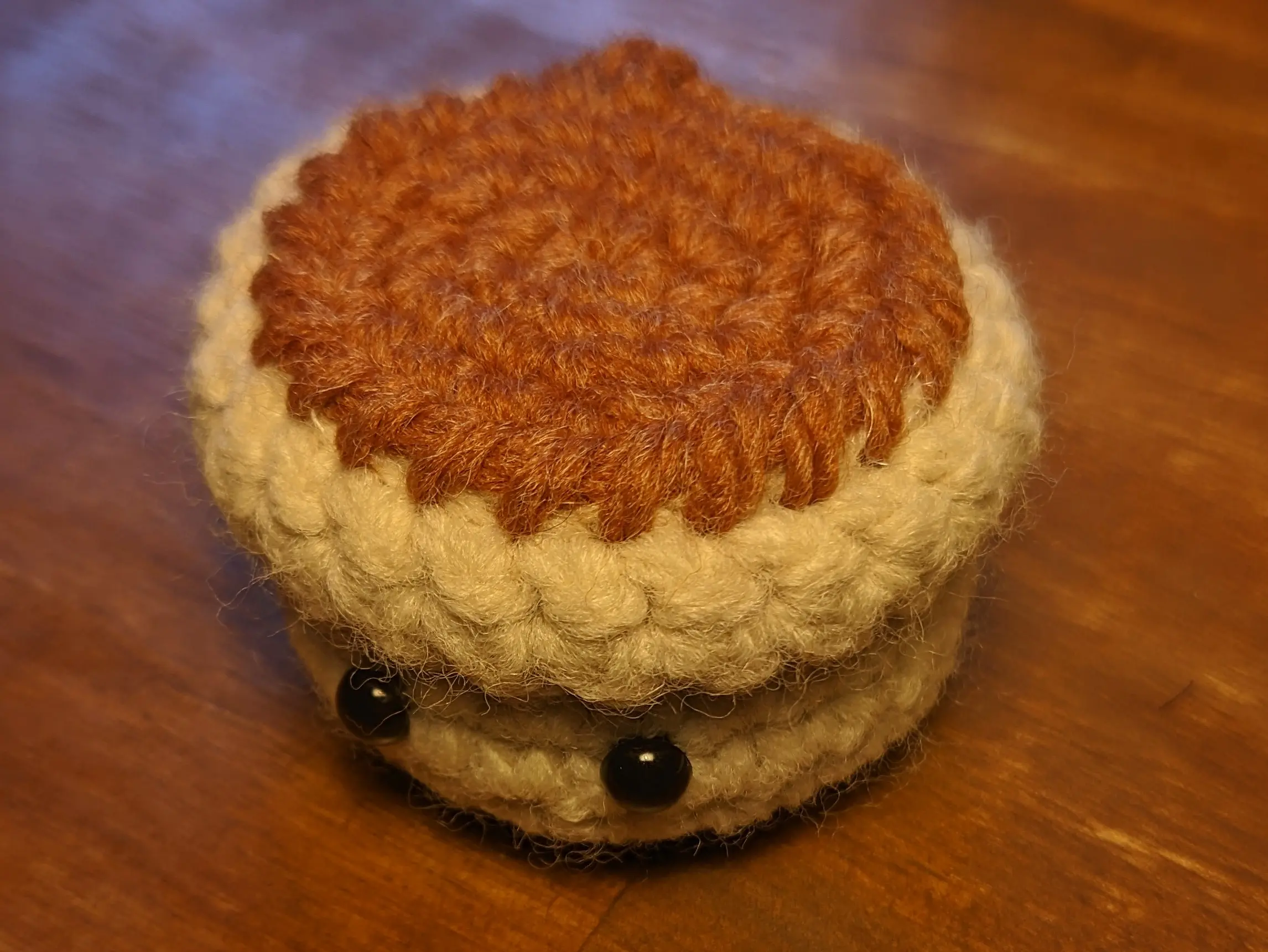
In this post, we’ll cover how to crochet the pot itself,
how to add the topsoil layer and how to fill the pot.
We’ll cover different plants that you can plant in your flowerpot in future episodes.
Materials
- Yarn for the pot (I use a sandy/wheat color)
- Yarn for the soil (I use a chocolate/chestnut color)
- Safety eyes (6 mm)
- Stuffing (i.e., cotton or polyester)
- Crochet Hook (2 to 3 mm, depending on your yarn)
- Needle that can fit your yarn
- Stitch marker
Names
Before we start, let’s take a brief look at the abbreviations I use for the different stitches:
- SC = single crochet (one stitch in the next loop)
- INC = increase (two stitches in the next loop)
- SLST = slip stitch (yarn over and pull through both the last stitch and the new loop on the hook)
This guide assumes you already know how to crochet
and mostly just lists the steps or stitches required.
The stitches themselves will be highlighted in bold.
Flowerpot
We’ll start by making the pot itself,
working outwards and up from the center on the bottom
using the sandy yarn.
Form a magic circle with 6 loops.
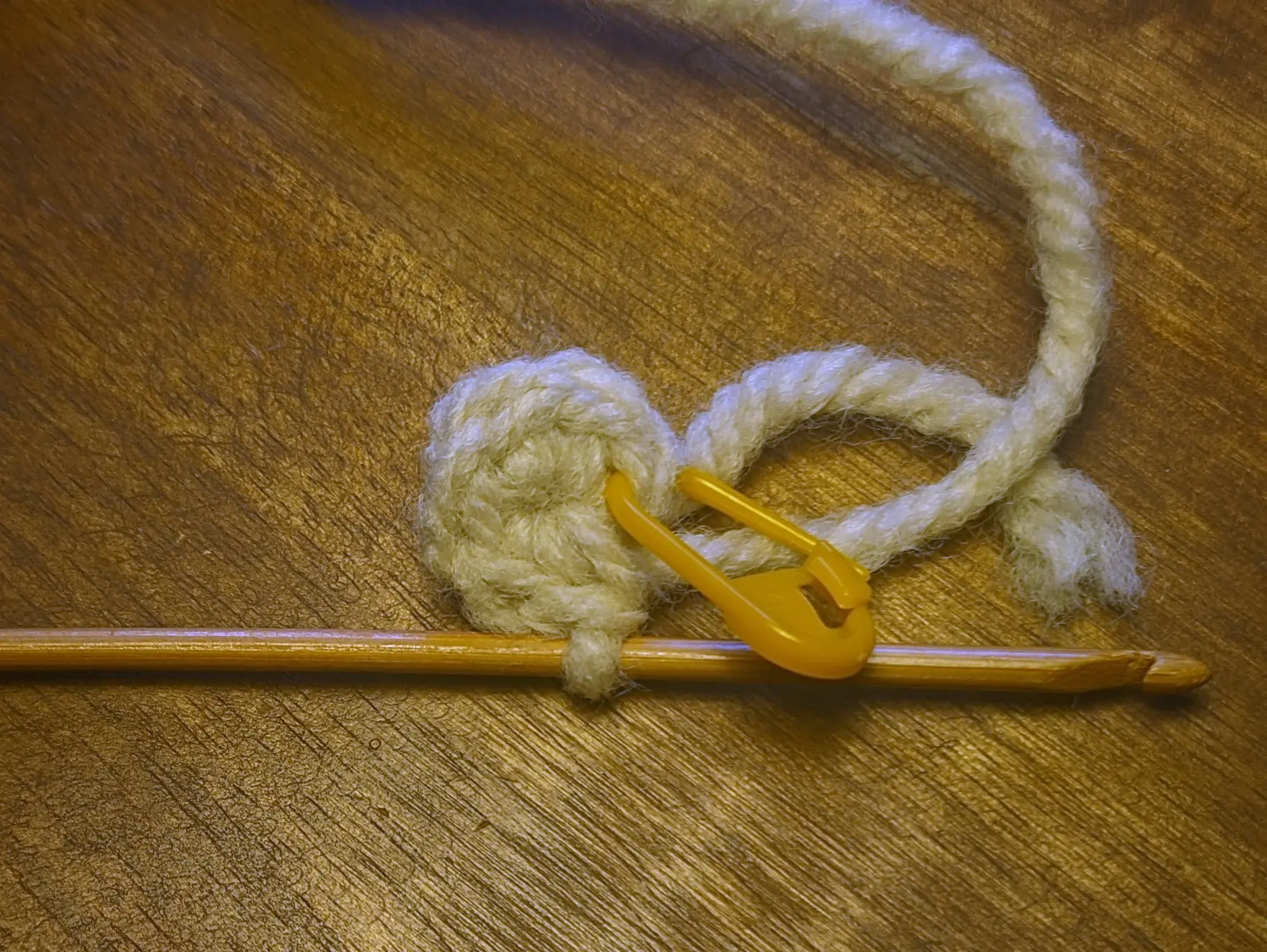
Starting from this, you’ll want to spin outwards by first
INC all around, going from 6 to 12 outer loops.
Afterwards alternate (SC, INC) 6 times (-> 18 outer loops).
Lastly, do (SC, SC, INC) 6 times (-> 24 outer loops).
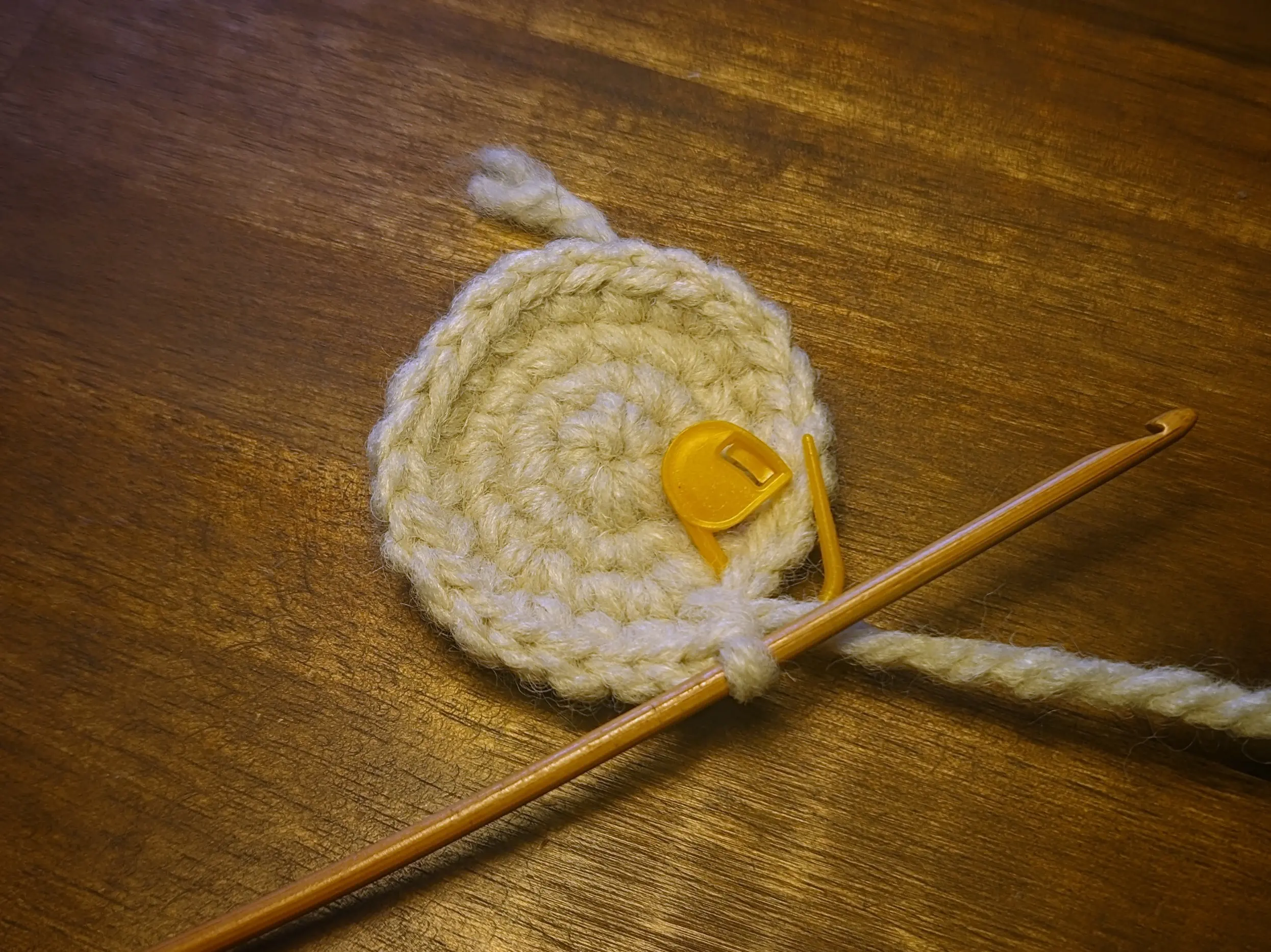
To transition from the bottom to the sides, SC all around in the back loop once.
This will make the bottom corner of the pot more pronounced later.
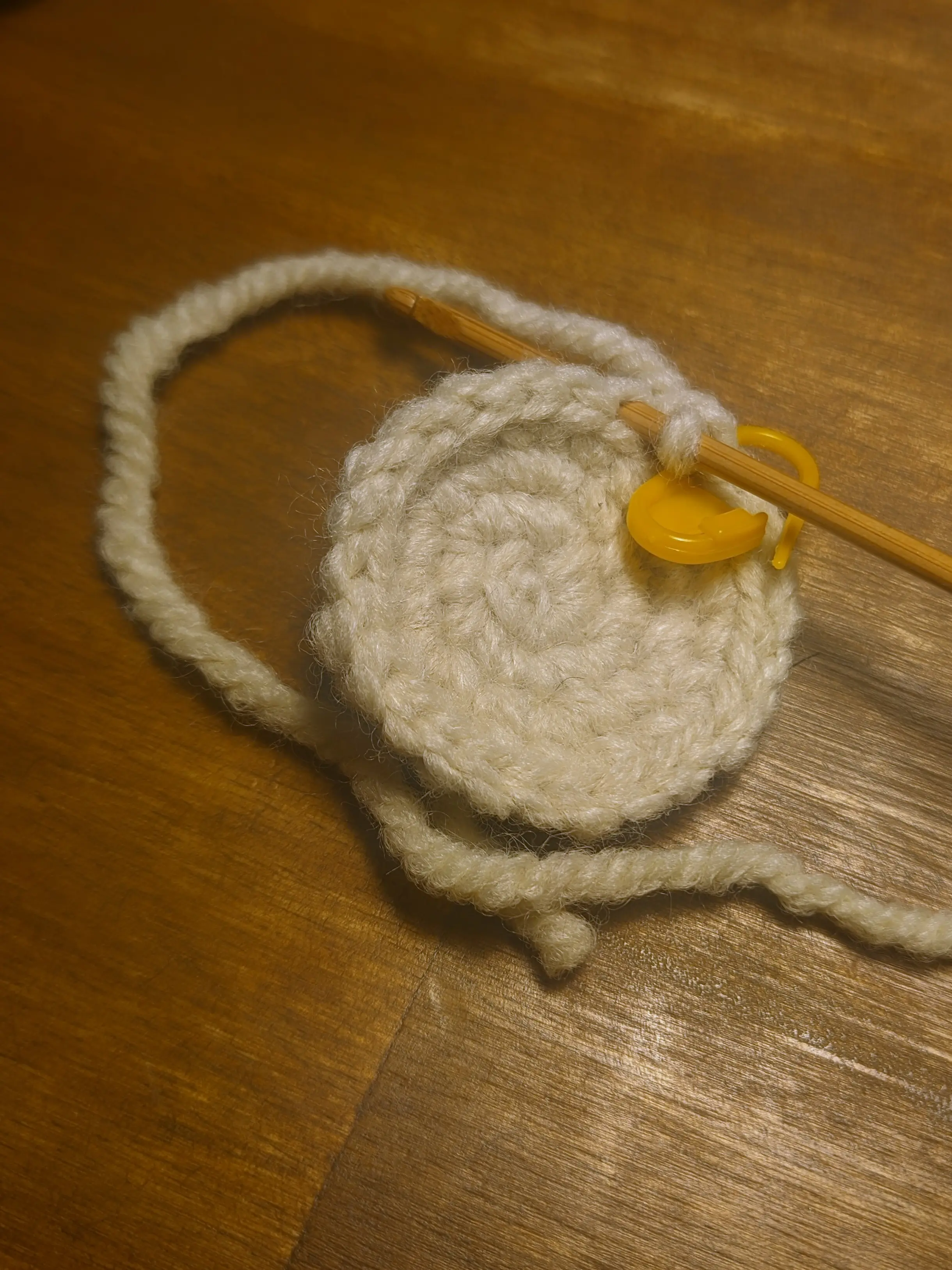
Then SC all around four times to form a cylinder with a closed bottom.
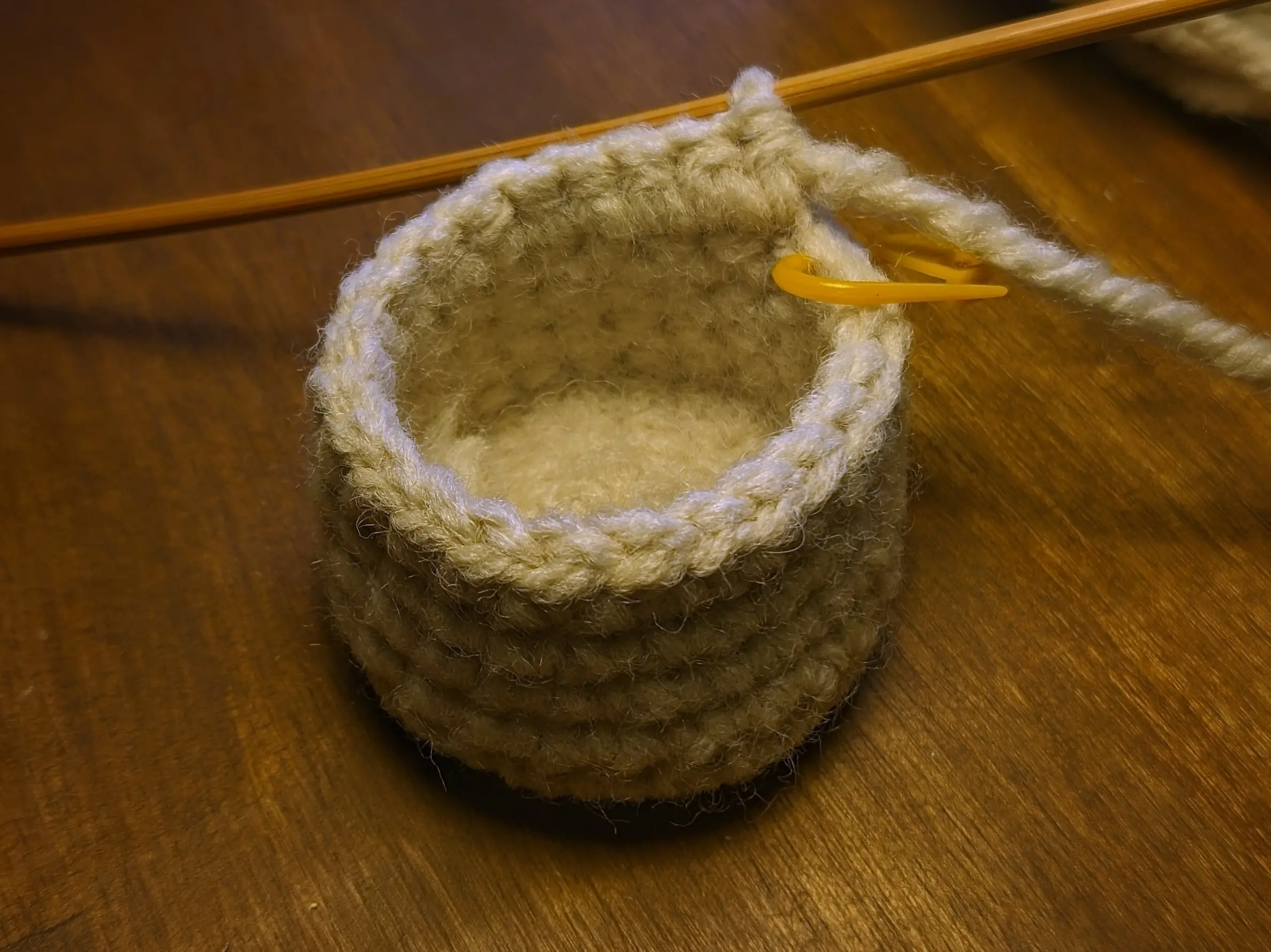
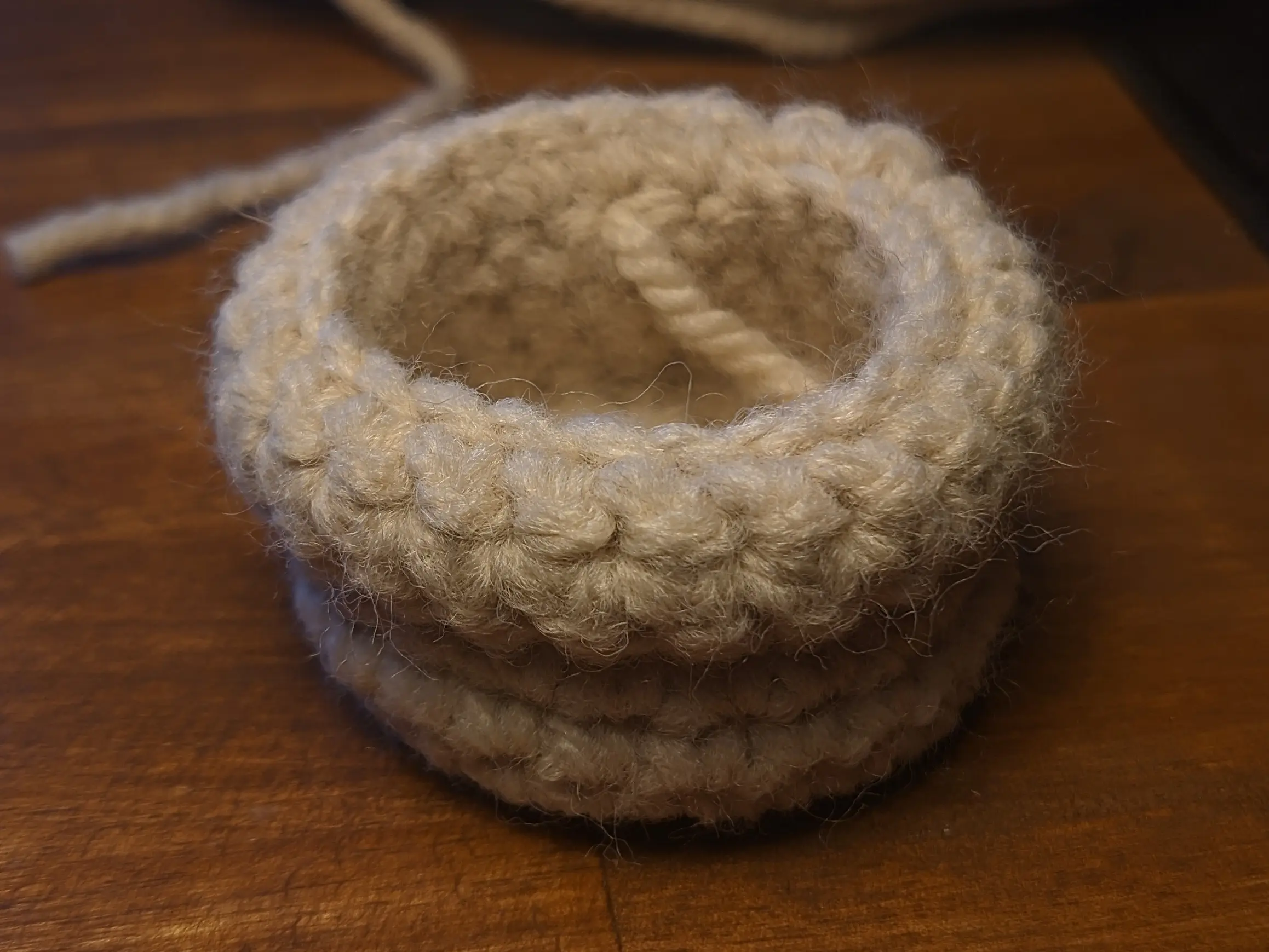
To finish off the pot,
we’ll add an overhanging section.
As part of the transition from the walls to the overhang,
we’ll again SC all around in the outer loop only.
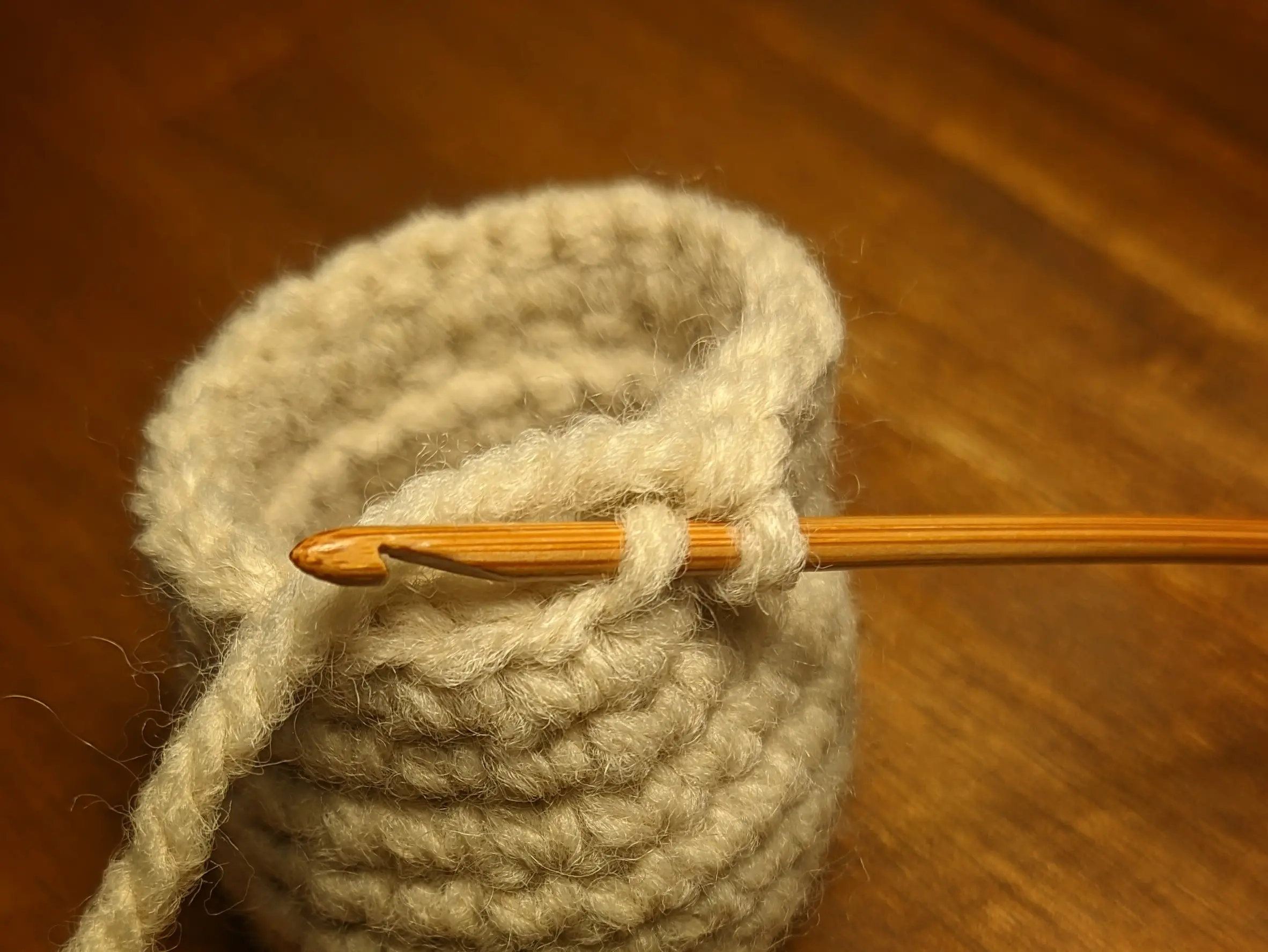
For the proper overhang section, you’ll want to SC all around once.
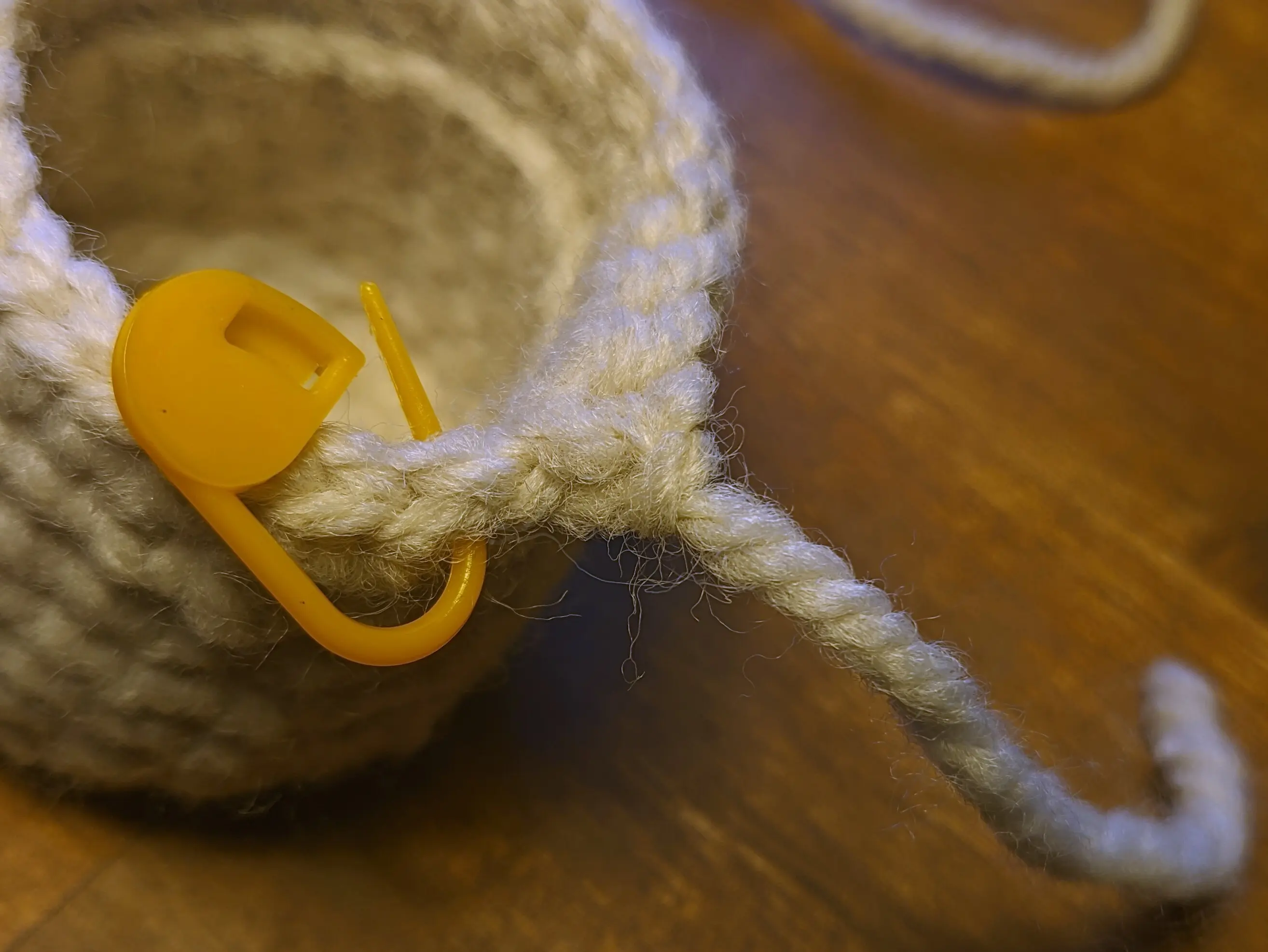
The overhang should simply fold over along the last outer-loop line.
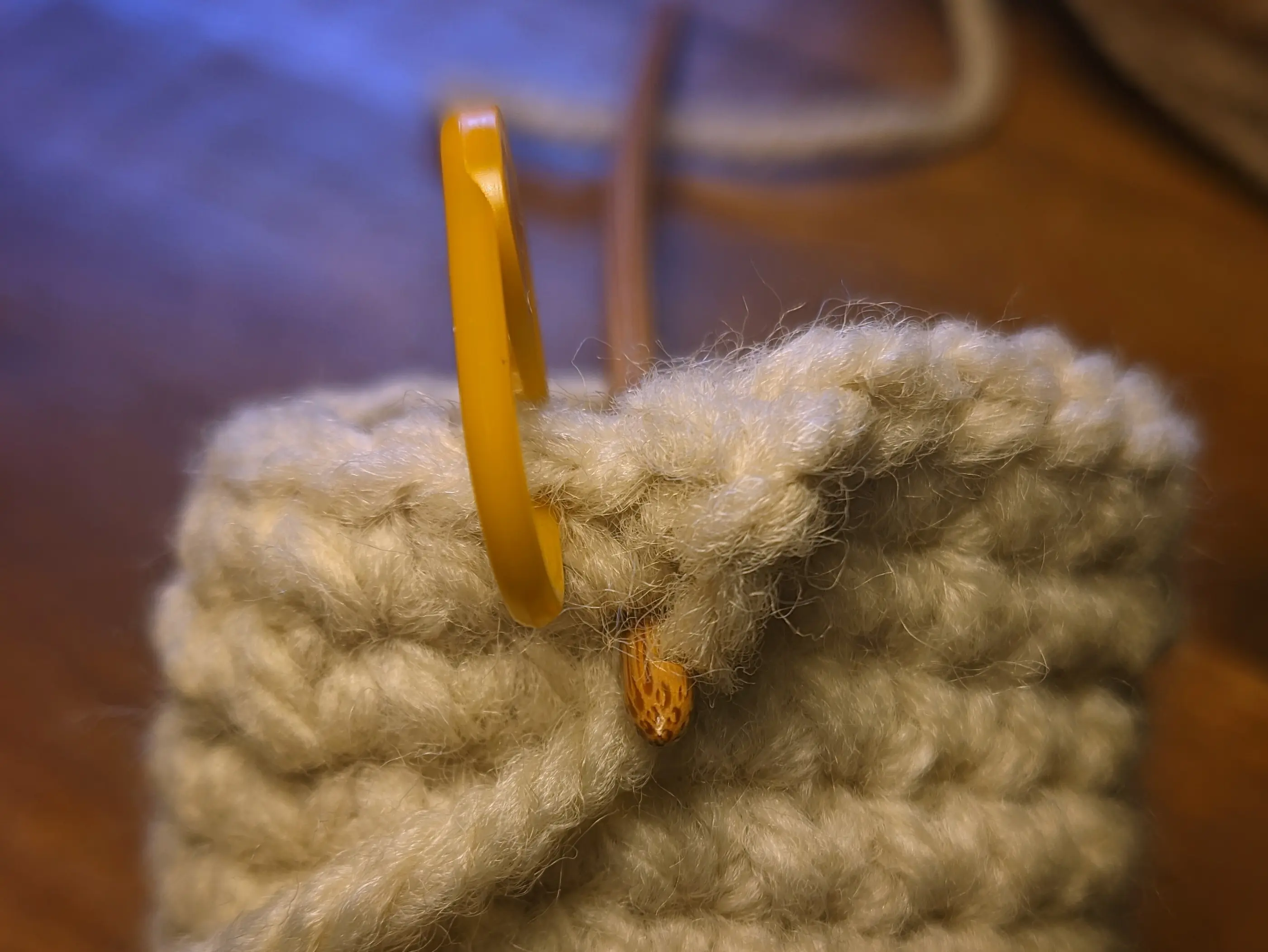
To fix it, you can SLST into the front loop, cut off the yarn 6 cm from the end, and pull it through the corresponding stitch on the second row from the top of the cylinder walls.
Eyes
The placement of the eyes heavily impacts the character of the flowerpots.
They will also make them irresistibly cute and impossible not to get attached to.
I personally like to go with 6 mm plastic safety eyes,
which I place on the second row from the bottom,
with roughly three empty stitches between.
As the cylinder loops tend to form a seam along the back,
I like counting 11 loops from the seam and placing the eyes
in the corresponding space between the loops.
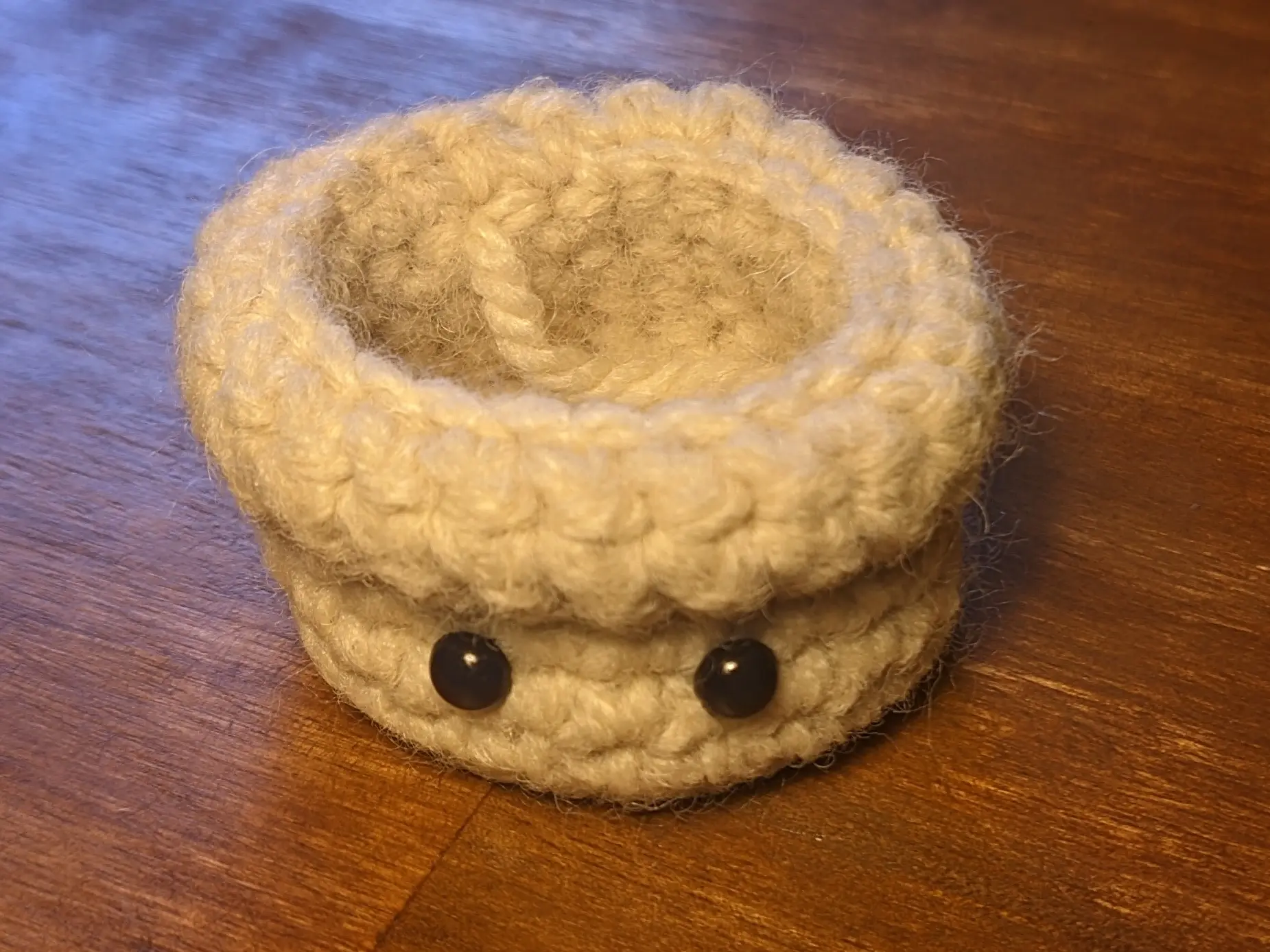
You might want to play around with different eye placements to see what you like best.
Soil layer
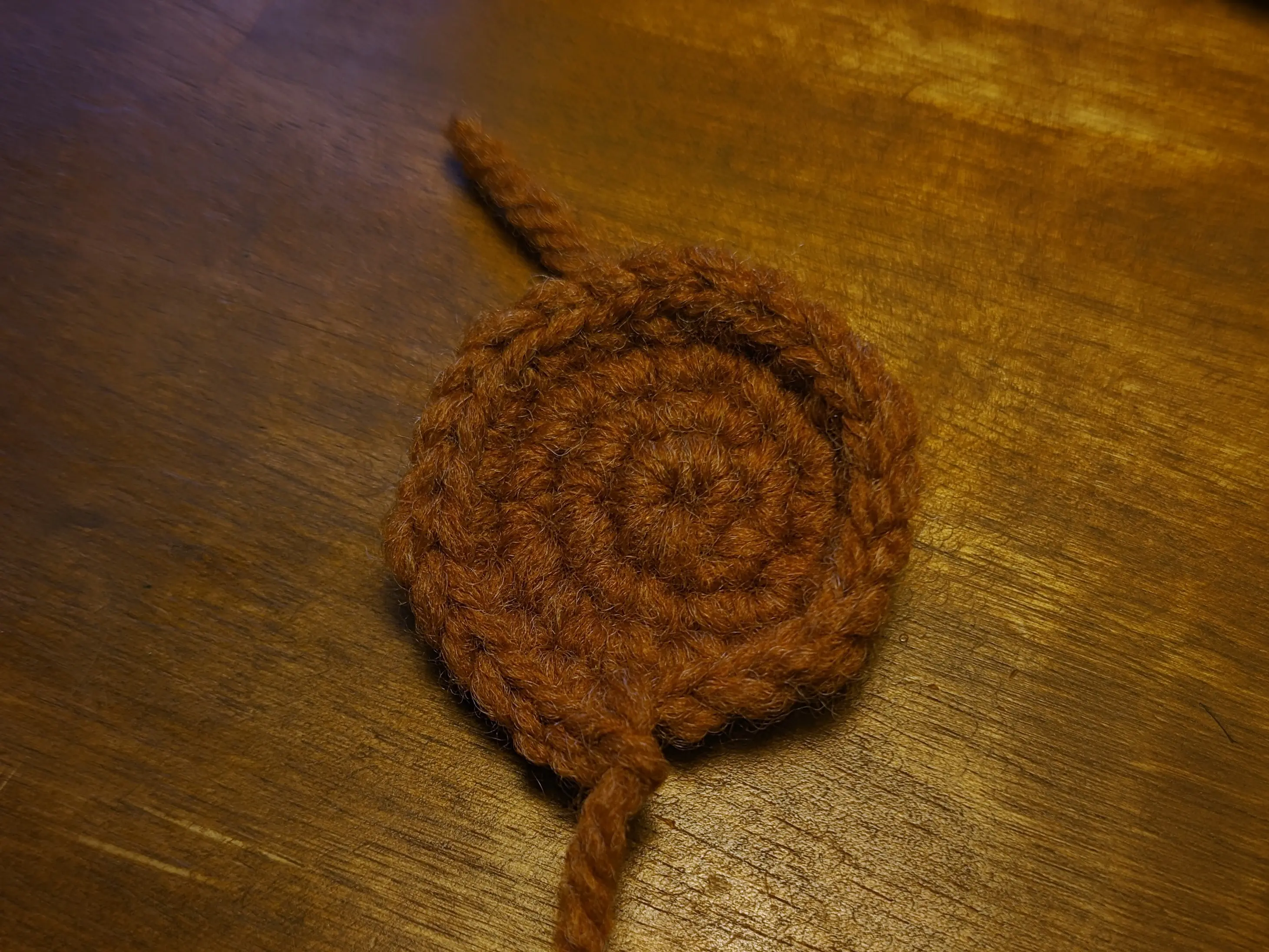
To close off the planter base,
we’ll cover it with a topsoil layer
made from brown yarn.
As this layer has the same size as the base of the flowerpot,
you can repeat the steps from above:
- magic circle 6
- INC all around -> 12
- (SC, INC) x6 -> 18
- (SC, SC, INC) x6 -> 24
Finish off the dirt piece by doing a SLST in the next loop and cutting the yarn roughly 30 to 40 cm from the end.
Putting it together
With the pot and dirt layer done, we can finally assemble them.
We’ll be using the needle to sew the dirt layer in place.
With your yarn pulled through the needle,
align the end of the dirt layer with the seam of the pot itself,
and push the needle through the previously untouched inner loop.
(We only used the outer loop when forming the overhang.)
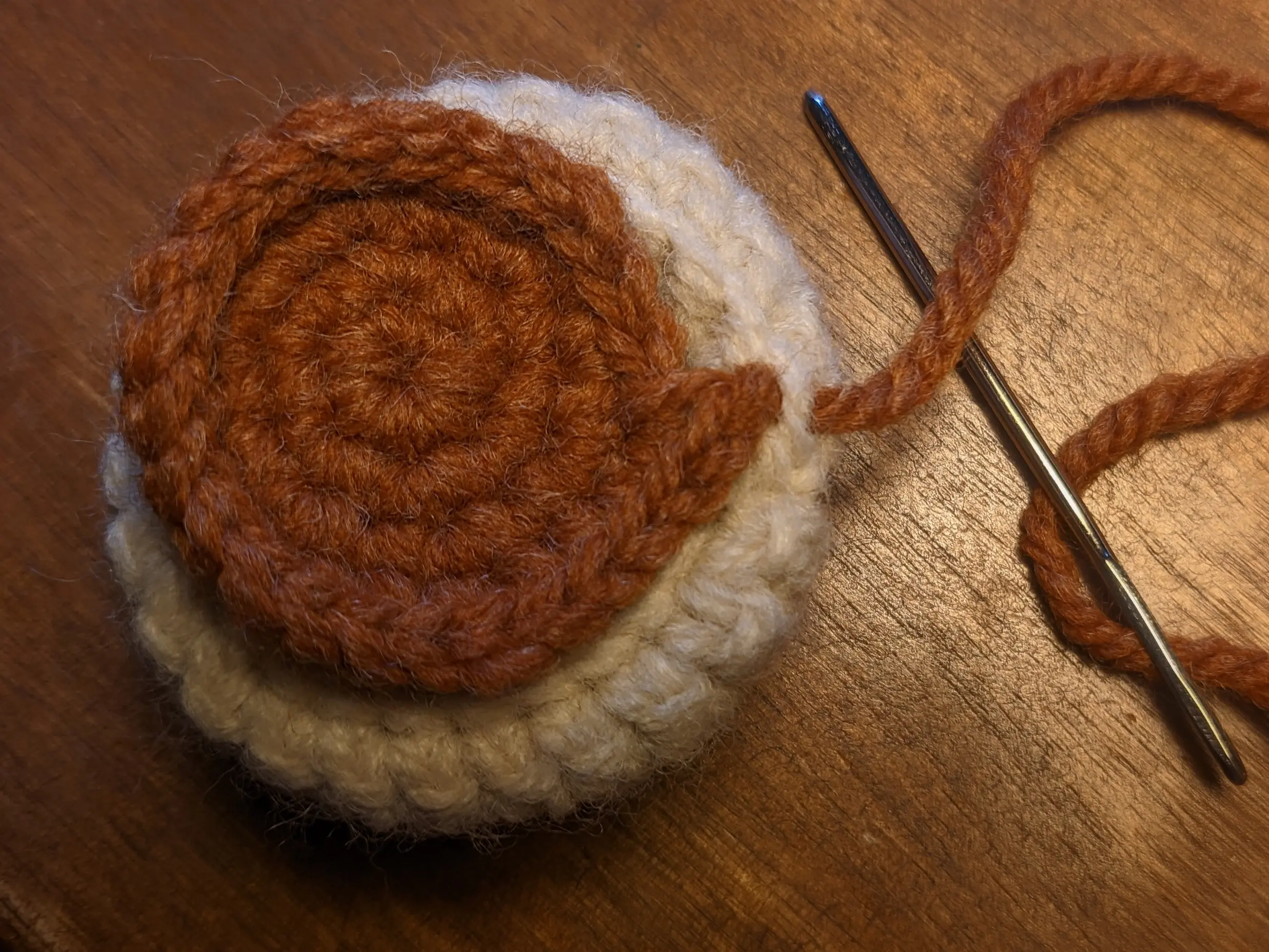
Now go all around the pot, pushing the needle through the inner loop from the inside and over it into the next stitch.
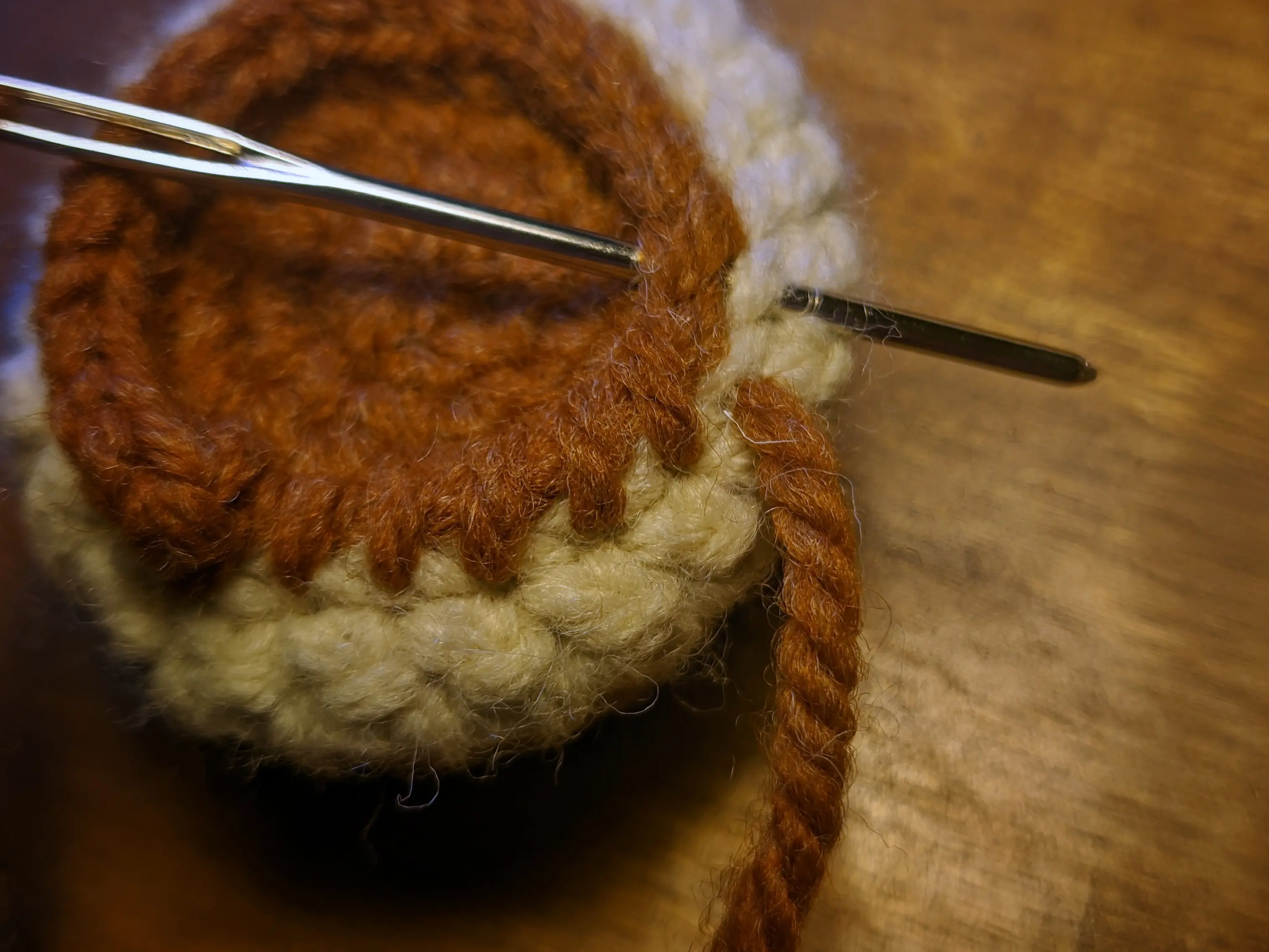
When you are done with slightly more than half of the loop,
you can start adding the stuffing, adding more as you go.
I like adding enough stuffing that the pots are towards the hard side
but still squishy and not bulging outwards.
Feel free to experiment with different amounts of wadding.
Once you’ve completed the round,
push the needle back inside the pot and out through the bottom.
Loop it back up through the same stitch,
so it isn’t visible from the outside, and repeat it on the top.
Lastly, push the needle back out through the bottom,
slightly stretch the yarn, and cut it off.
It should automatically pull itself back inside the pot, hiding it from view.
Next steps
As explained at the start of this post,
this post is only the beginning.
Over the next couple of weeks (hopefully),
I’ll be showing you a couple of different plants you can plant in your flowerpots.
And hopefully, by the end of this, you’ll have your very own collection of flowerpots.
Or a bunch of flowerpots to gift to other people.
You can sew on all the plants we’ll be looking at after finishing the pot, so you can safely make a few pots and add the plants later.